
'Insufficient' Defence Investment Plan slammed for lack of help for Royal Navy fleet that's 'falling apart'

One former First Sea Lord said the focus on the news drones and ships was ‘very sexy’ but ‘doesn’t affect the price of fish’
Former Royal Navy personnel and current military experts have criticised the Defence Investment Plan (Dip) for its lack of immediate support for the force.
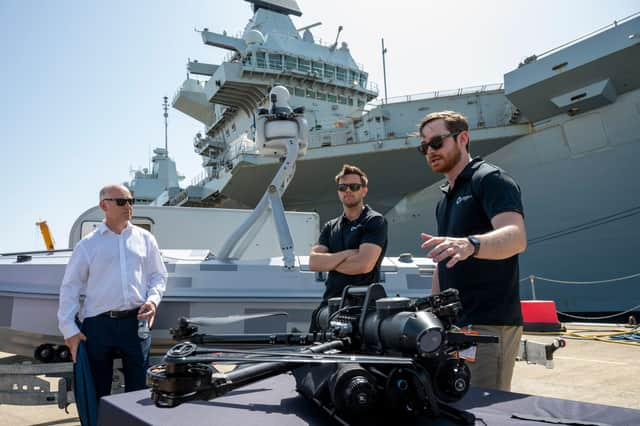
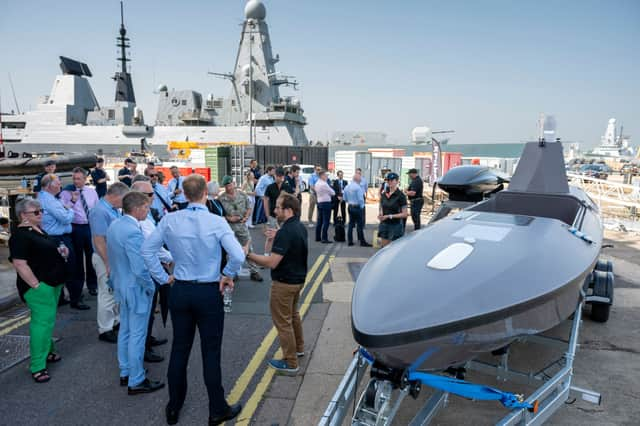
The £15bn programme set out billions of pounds of investment into future capabilities, but there are concerns that short term issues have been ignored. The biggest centres on the hybrid navy, where conventional warships will be supported by autonomous systems.
Mike Critchley, a former Royal Navy Lieutenant Commander and Conservative district councillor, said the focus on drones and un-crewed ships comes at the cost of investing in manned platforms. The Gosport native told The News: “The cynic would say it’s the cheap option.
“We’ve got nothing else unfortunately. The Tories decimated the forces by not ordering replacements fast enough. It takes ten years to design, build, and commission a modern warship. The problem is now coming to the fore. There is nothing to replace these ships imminently.



The current state of the fleet
The Dip, which sets aside £15bn worth of spending for the armed forces, outlines that six Common Combat Vessels (CCVs) will be built to replace the six Type 45 destroyers. They’re expected to be delivered in the early 2030s. Previous plans to produce a Type 83 destroyer were scrapped.
CCVS will be supported by the eight new Type 26 and five Type 31 frigates while on operation, as well as Type 91 uncrewed missile platforms, Type 92 uncrewed underwater sensing platforms, Type 93 Extra-Large Uncrewed Underwater Vehicles and Type 94 uncrewed sensor platforms.
It also secured investment into the Daring-class destroyers, from equipping them with Directed Energy Weapons to upgrading their Sea Viper missile system and expanding its counter drone capabilities. What was lacking is the lack of immediate support for boosting the crewed Royal Navy fleet.
Type 26 and 31 frigates won’t be fully commissioned until he early 2030s, while they’re Type 26 predecessors are aging out. Time also still needs to be taken for all the Type 45 destroyers to undergo their Power Improvement Project (PIP) upgrades. In the immediate future, the available fleet will continue to shrink.
Lt Cdr Critchley said: “Drones are small, fast, and don’t put humans on the front line, but they still have problems. How do they work in rough conditions? Who repairs them? I can’t see it.
“The core isn’t there at the moment, same with aircraft. You have to have proper ships to escort practically. I can’t see this being the answer. We’ve got so few ships. It boils down to defence not winning votes, welfare does. With things like pensions being included in defence budgets, it’s all a bit of smoke and mirrors.”
“Doesn’t affect the price of fish”
Former First Sea Lord, Lord Alan West of Spithead, raised concerns about levels of funding. Previous warnings have been made that exercises will need to be scaled back without sufficient support. He said: “I find the business around the Common Combat ships jolly good and all very sexy, but it doesn’t affect the price of fish.
“That’s ten years if they get the design done and everything happens. If you look back ten years, you suddenly realise how the world changes all the time. I have no difficulty going for more unmanned vessels, it sounds sexy and we’ll see what the designs look like, but the reality is the amount of money is insufficient.
Even though some of it is pulled early, not enough of it is early enough. We’re not recruiting the numbers, so we’re not training enough and not doing the exercises we need. We’re not getting the spares we need, and not getting the docks up to speed so the repairs can be done.
“We need to get the ships we’ve got operating at sea rather than being stuck in the harbour. Nothing in this plan seems to show a massive push in that way. It’s all very exciting looking at drones in ten years time. I’ll be dead in ten years time, and we might have had a war before then. I refuse to get excited by all this.”
Lord West said most ships spend their lives preventing wars rather than fighting them. He’s concerned it doesn’t address the immediate problem of the fleet shrinking due to older ships deteriorating before the new ones are ready.
“The new frigates are great, the Type 26s in particular, but they were all ordered far too late and we’re in a race to get them into the fleet before the rest of it falls apart,” he said. “Our people are so good and do the best they can with everything, but it’s unfortunate that we’re finding it difficult to get people to sea to train. People join the navy because they want to go to sea. They aren’t able to get there. Training on simulators doesn’t solve the problem.”


A big leap
Dr Matthew Heaslip, Senior Lecturer in Naval History at the University of Portsmouth, said the Royal Navy has taken several innovative leaps in its history. This included scrapping the entire battleship fleet following the end of the Second World War and taking the gamble to move towards carrier aviation.
He said there are several signs that naval forces will become hybrid, “but it’s a big leap”. “The hybrid navy is crewed and un-crewed, not just one,” the academic added. “In a very dangerous world, where there’s a lot of tasks for the navy to do, you still need those crewed ships.
“That doesn’t appear to be a source of new investment. The navy is thin on crewed ships. The concept is great, but the Dip is underwhelming. The Royal Navy needs to get its existing ships to sea, and a few extra crewed hulls in the medium term. That hasn’t come through.”
Dr Heaslip said there are several tasks which un-crewed ships can’t do entirely on their own, including civilian evacuations, naval diplomacy, and disaster relief. He added that the next two years will be an “incredibly tough period” for the force given the struggling frigate timeline with the Type 23s.
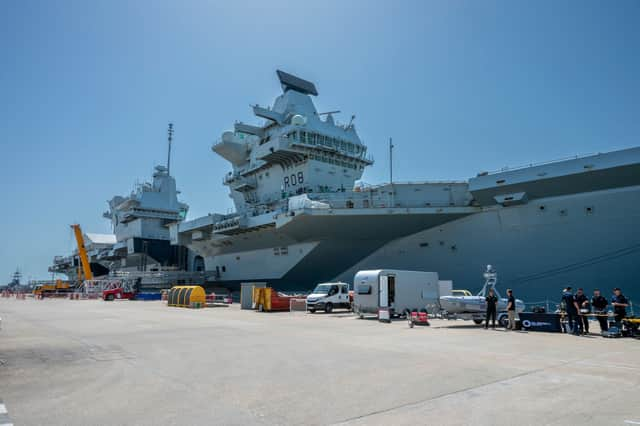
“They’re falling apart one by one,” he added. “The Type 26s and 31s aren’t here, and mysteriously the Type 32 has completely disappeared from the Dip. It hasn’t been said if it’s cancelled or on the backburner. All those vessels are needed.”
Dr Matthew Powell, Teaching Fellow in Strategic and Air Power Studies at the University of Portsmouth, said meeting spending commitments will be a challenge for the government. The Dip sets out a defence spending increase from £54bn to nearly £80bn in 2029, the equivalent of 2.7 per cent of GDP. Prime minister Sir Keir Starmer previously pledged to Nato that core defence spending would rise to 3.5 per cent of GDP by 2035.
Funding, and the Dip’s contents, was one of the reasons why previous defence secretary John Healey resigned from government. He expressed at the time that it would put personnel in harms way. Dr Powell said: “I don't think it necessarily puts the forces in immediate danger, but it will mean tough choices will have to be made with regards to intensity and length of exercises and operational sustainment.
“The focus on greater autonomy would suggest the thinking is that advances in technology will increase the efficiency and effectiveness of the UK's military forces without having to spend the vast sums required on sophisticated cutting-edge technology weapons systems. This is a gamble as it makes the assumption that the character of future war will be similar to that of Ukraine, which as history suggests, is unlikely. The delays to the publication of this Defence Investment Plan will certainly cause allies to be more hesitant in believing UK promises that extend out into the next Parliament.”