
Defence Investment Plan: Where is the money being spent? Boosts to Royal Navy and HMNB Portsmouth - full list

A total of £15bn has been allocated to the forces over the next decade
Billions of pounds will be invested into the armed forces following the publication of the Defence Investment Plan (Dip).
After being delayed since the autumn of last year and mired in controversy, the Dip was finally announced today and outlined by prime minster Sir Keir Starmer. The programme has seen former defence secretary John Healey and defence minister Al Carns resign.

Frantic changes were made to shore up the Dip following arguments between the Ministry of Defence (MoD) and Treasury over funding. The £15bn set aside is a far cry from the expectations of top brass, who wanted an extra £30bn given the shortfall in MoD spending.
Finances will increase from £54bn a year to £80bn a year by 2029, the equivalent of 2.7 per cent of GDP. The MoD said the uplift will create 60,000 extra direct and indirect jobs. Aiming to set out the funding parameters for the reforms in the Strategic Defence Review (SDR), the Dip heavily invests into new equipment and technology which ranges from drones to autonomy and AI.
The full document has not been released to the public yet, but the MoD has provided highlights of key programmes.
Below are the key programmes and how much money is being handed to them:
Hybrid Royal Navy
A total of six Common Combat Vessels are being produced to replace the Portsmouth-based Type 45 destroyers. They have been described as hubs for un-crewed systems.
Working alongside eight Type 26 and five Type 31s, the new ships will be joined by Type 91 un-crewed missile platforms, Type 92 autonomous underwater sensing platforms, Type 93 Extra-Large Uncrewed Underwater Vehicles, and Type 94 un-crewed sensor platforms. The amount of money for this is not yet clear, with the new ships effectively still in the concept phase.
The current Type 45 destroyers will see upgrades made to their Sea Viper missile systems. Investment will be made into Directed Energy Weapons for the ships, as well as expanded counter drone systems.
HMNB Portsmouth
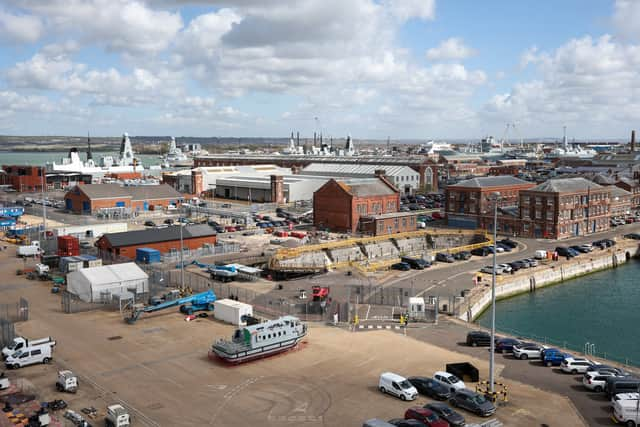
The three largest Royal Navy bases will receive billions of pounds in upgrades. The MoD said Project Royal Oak will see £26bn invested over the next decade, branded as the biggest naval base upgrade in 45 years. Funding will support HMNB Portsmouth, Faslane, and Devonport.
More than £63bn over the next four years will be used to strengthen the UK’s nuclear deterrent. It will fund the construction of Dreadnought and SSN-AUKUS submarines, a new warhead, and other crucial nuclear work. The money will also be used to buy 12 F-35A fighter jets, and join Nato’s nuclear mission.
Global Combat Air Programme (GCAP)
GCAP is a defence partnership between the UK, Japan, and Italy, which aims to develop and produce the next-generation stealth fighter jet for the RAF. More than £8bn has been allocated to this over the next four years.
Drones
More than £5bn will be invested into drone technology over the next four years. From this, £650m will be used to build inexpensive expendable autonomous systems including drones and uncrewed ground vehicles for the Army, Commando Force, and Special Forces.
Autonomy is also a focus. Nearly £2bn will be used to create a digital targeting web. The MoD said this will “enable faster decision-making and speed in destroying identified targets and will be underpinned by world leading AI and software”.
Land defences
British and overseas bases will receive £790m for enhanced protection over the next four years. This will primarily focus on dealing with aerial, drone, and missile threats. New radars and sensors will be bought, with a new Integrated Air, Space and Missile Defence Operations Centre being established.
Munitions
British stockpiles will be increased with £11bn set aside for munitions and weapons. This includes long-range strike weapons, low-cost cruise missiles, and one-way effectors, which detect and track targets. The MoD said at least six new energetics factories will be built by 2030.
Procurement and AI
The MoD said £900m will be used to reform procurement and make it more efficient. This includes a £500m Transformation Fund to deliver productivity improving investments in AI and workforce transformation, as well as an initial £400m contribution to setting up the Multilateral Defence Mechanism.
A further £100m will be set aside for Rapid AI Delivery Taskforce (RAID), which will accelerate the deployment of AI-enabled capabilities into the hands of our Armed Forces. To raise the UK’s defences against threats from AI, £115m will be invested. AI will be used to improve biosecurity, and mitigate risks posed by autonomous AI agents.