
Defence Investment Plan: Starmer outlines Royal Navy military finance boost while promising to 'spend better'

The Defence Investment Plan has been delayed since the autumn of last year
Financial boosts to defence are being made to produce a hybrid navy amid promises to “spend better”.
Prime minister Sir Keir Starmer said the amount of money in the Defence Investment Plan (Dip) is “the right choice for the country”. Speaking at the Malloy drone factory in Berkshire - which produces heavy lift capabilities for the Royal Navy and Ukraine - he told attendees that defence spending will increase from £54bn to almost £80bn by 2029 - the equivalent of 2.7 per cent of GDP.
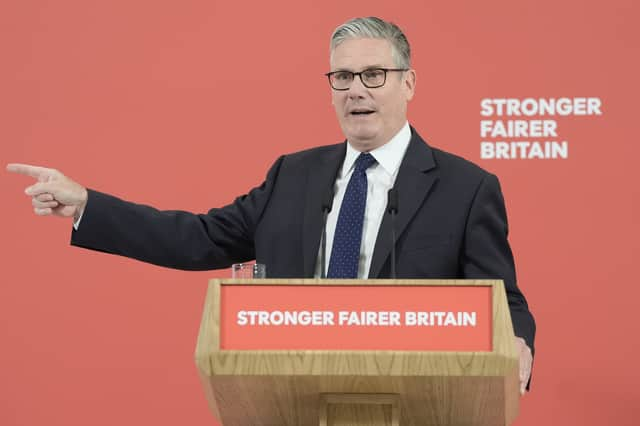

He added that this is the equivalent of a real terms increase of 27 per cent, but also warned that some “not immediately vital” immediate road and energy projects will be scrapped. “We can’t just spend more, we’ve got to spend better,” Sir Keir said.
“We’ve examined every penny of this plan so make sure it brings a positive benefit to this country. We will build a new hybrid Royal Navy. When our frigates move to intercept a threat to British interests, like a Russian ship in our waters, they’ll do this with un-crewed systems above and below the sea.”
He said the Army will be ten times more lethal through the use of drones and other equipment, with sophisticated AI systems supporting the RAF. “This is about harnessing cutting edge technology on every front,” Sir Keir added.
Attempting to silence any doubts
The Dip has proved controversial and has cast a shadow over the UK’s armed forces. Delayed since the autumn of last year, the programme was repeatedly pushed back due to arguments over funding. The plan promises an extra £15bn of spending, when military officials said it needed nearly £30bn.
Former defence secretary John Healey, and defence minister Al Carns, both resigned due to its contents and said it puts armed forces personnel into a more dangerous position. Sir Keir said is fully costed line by line, and said further borrowing would only have increased interest rates further.
He added that the plan was sharpened and strengthened in recent weeks, and the plan “represents our best judgement of what the country needs to meet the moment”. Sir Keir said: “We have reversed the corrosive hollowing out of our armed forces, and we’re transforming a defence programme that for too long is underfunded and unsuited for the threats we face. We want to avoid war. The best way to avoid it is to prepare for it.”
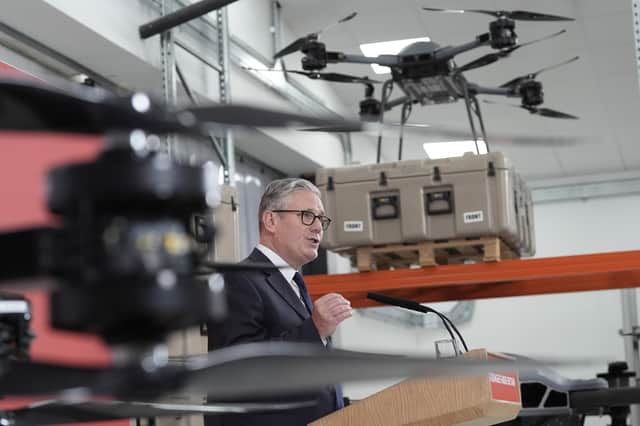
Funding has been allocated to produce four autonomous naval platforms: Type 91 uncrewed missile platforms, Type 92 uncrewed underwater sensing platforms, Type 93 Extra-Large Uncrewed Underwater Vehicles and Type 94 uncrewed sensor platforms. This will be alongside six Common Combat Vessels, intended to replace the Portsmouth-based Type 45 destroyers. Original plans to build Type 83 destroyers have been scrapped.
Upgrades to HMNB Portsmouth, Devonport, and Faslane will be made as part of Project Royal Oak, which has been allocated £26bn over the next decade. A further £5bn has been set aside to produce drones for the tri-services, with the Commando Force receiving £500m for high speed boats, strike drones, and other technology. These are just some of the areas receiving financial boosts.
The armed forces need to “fight and deter now”
Sir Keir said: “We have reversed the corrosive hollowing out of our armed forces, and we’re transforming a defence programme that for too long is underfunded and unsuited for the threats we face. We want to avoid war. The best way to avoid it is to prepare for it.”
Chancellor Rachel Reeves said national security equates to economic security, with the Dip securing an extra £15bn after “re-prioritising spending across government”. She added: “Defence and readiness for now are not remote contingencies. They’re not far away possibilities. They’re an immediate and pressing requirement. By defending ourselves, we defend our allies and values.”
New defence secretary Dan Jarvis is tasked with presenting the programme. The replacement to John Healey served in the British Army and has been deployed to Kosovo, Northern Ireland, Iraq, and Afghanistan.
He said there has been no shortage of column inches and specialisation regarding the document, but “we shouldn’t lose sight of what the defence investment plan is truly about”. “The central purpose of the plan is to get the kit and technology the armed forces need, so they can fight and deter now, and in the years ahead,” he added.
“This plan recognises that the conflict in Ukraine has completely upended the ways of war. This is the UK’s biggest investment in drone warfare, more money for the hybrid navy, more money to increase the Army’s lethality, and for the next generation of the air force.
“There’s more work to do, and we’ve made a commitment to our allies as they have to us. Under this government, that promise will be met. My promise to every single member of the armed forces is that I will seek to serve them as they serve us.”
Shadow defence secretary James Cartlidge said the plan was “too little, too late”, adding: “Too little because it is barely more money than John Healey and Al Carns resigned over when they said Britain would be ‘less safe’. And too late because the plan is now almost a year overdue and only being rushed through because Keir Starmer is desperate for a legacy.
“This plan is not worth the paper it’s written on – Keir Starmer is Prime Minister in name only. The next prime minister needs to cut welfare and give our armed forces the funding they need to keep Britain safe. The problem is, it doesn’t matter who is in charge, all Labour MPs want is more benefits. Labour are now the welfare party.”
Liberal Democrat leader Sir Ed Davey meanwhile said the plan was “late and underfunded”, something he described as “unforgivable”.
He added: “It is a political choice that makes us all less safe, puts jobs at risk and threatens businesses across the country in supply chains. The Government have dangerously short-changed our armed forces when they need urgent investment after years of Conservative negligence. Defence chiefs have been forced to make hard choices, when they should be given what they need.”