
'Once in a generation’ boost for ‘formidable’ Royal Navy with new uncrewed Type 91, 92, 93 and 94 platforms

Common Combat Vessels are due to replace the Type 45 destroyers once they retire from service
'Once in a generation’ levels investment into new platforms will bolster the Royal Navy’s fleet, the Ministry of Defence has said.
The government body announced details this morning about what the force will look like in the future. It was revealed over the weekend that six Common Combat Vessels will be constructed to replace the six Portsmouth-based Type 45 destroyers.
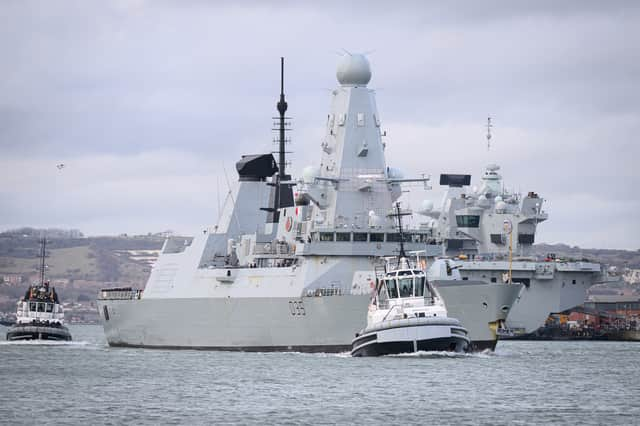

Described as un-crewed drone-compatible vessels, they are expected to be delivered in the early 2030s. They’ll also be supported by different un-crewed platforms, named the Type 91, 92, 93, and 94, as well as the new Type 26 and 31 frigates already under construction. Original plans to produce a Type 83 destroyer, previously earmarked as an evolution of the Type 45, have been shelved.
These platforms are earmarked to be part of the Atlantic Bastion, Atlantic Shield, and Atlantic Strike programmes, all designed to protect the North Atlantic and High North from the threat of Russia.
The MoD said: “Rather than concentrating capability in a small number of large, expensive ships, the Royal Navy’s shift to a hybrid navy will mix crewed and uncrewed capabilities and be more suited to the pace and nature of modern warfare. The funding announced in the DIP allows the National Armaments Director Group to commence the design work that will underpin the fundamental shift in how to deliver Air Defence at and from the sea.
“When in service, these CCVs will work alongside eight Type 26 and five Type 31 crewed frigates, as well as Type 91 uncrewed missile platforms, Type 92 uncrewed underwater sensing platforms, Type 93 Extra-Large Uncrewed Underwater Vehicles and Type 94 uncrewed sensor platforms, representing a once in a generation investment in new maritime capability.”
Further details are due to be outlined in the upcoming Defence Investment Plan (Dip). Delayed since the autumn of last year, it’s expected to be published in advance of the Nato conference in Ankara, Turkey, on July 7.
The aim of the document is to set out the funding parameters for the reforms in the Strategic Defence Review, where 62 of the recommendations were accepted by the government. Its lapsed timeframe and reported content has been controversial, with former defence secretary John Healey and defence minister Al Carns both resigning. They believe it doesn’t set out enough investment into the armed forces to meet the threats of tomorrow.
It’s understood that new defence secretary Dan Jarvis has secured roughly £1bn extra for the plan in negotiations with the Treasury, on top of the £13.5bn already allocated. This falls short of the mooted £28bn recommended by military top brass.
Mr Jarvis said: “Our Royal Navy is a formidable force, operating to protect our nation and our allies in the Atlantic and beyond. These Common Combat Vessels will provide our dedicated sailors with hybrid ships that are designed and built for the increasing threats we face. Developed with exceptional British innovators, the new ships will be British-built, supporting jobs across the nation and giving the Royal Navy a capability built for modern warfare.