
Royal Navy, Army and RAF will "have to dial back operational activity" without more cash, defence chief warns

The defence secretary and another minister resigned after seeing the contents of the Defence Investment Plan, which set out the funding parameters for the reforms
Britain’s armed forces will have to “dial back” training and operations if they do not receive more money, the Chief of the Defence Staff warned as pressure mounted on the Prime Minister to increase defence spending faster.
Air Chief Marshal Sir Richard Knighton told peers he was “concerned” about funding for “day-to-day activity” in the context of rising inflation. Appearing before the Lords International Relations and Defence Committee, Sir Richard said rising costs had put “pressure” on training and operations, pointing to an 88 per cent increase in the cost of aviation fuel over the past year.


He told peers: “We will have to dial back our activities and our exercise and operational activity if the level of resource funding that’s available to us does not increase.”
Sir Richard added that the armed forces would “prioritise” changes “around what the Government cared about most”, but said it would be “disingenuous of me to suggest that there’s going to be no impact”. His comments come amid a row over defence spending that saw defence secretary John Healey and armed forces minister Al Carns resign last week over funding for the Defence Investment Plan (Dip).
Mr Healey criticised a proposal from the Treasury that he said would have increased defence spending to 2.68 per cent of GDP in 2030. With spending set to hit 2.6 per cent of GDP next year, the former defence secretary said the proposal fell “well short” of the funding required for the long-delayed Dip, which will set out spending on new military equipment and infrastructure over the next decade.
Speaking in the Commons on Tuesday for the first time since his resignation, Mr Healey again urged Sir Keir Starmer to increase defence spending, telling MPs: “Our adversaries do not follow timetables set by the Treasury.”
Arguing that he believed his resignation would come to be seen as “necessary in securing the future of our armed forces and our alliances”, he said Britain must not “fall behind” as Nato allies increased spending. And he urged ministers to look beyond reallocating funding from other departments to pay for defence.
He said: “I appreciate how hard this is for Cabinet colleagues and I am very grateful to those who support what is required, but not all needs to be done by cutbacks elsewhere. There are credible ways of meeting the mid-term funding challenges, working multinationally and, as other nations in Europe are doing, that could allow us to protect the ability to deliver our Labour missions across government.”
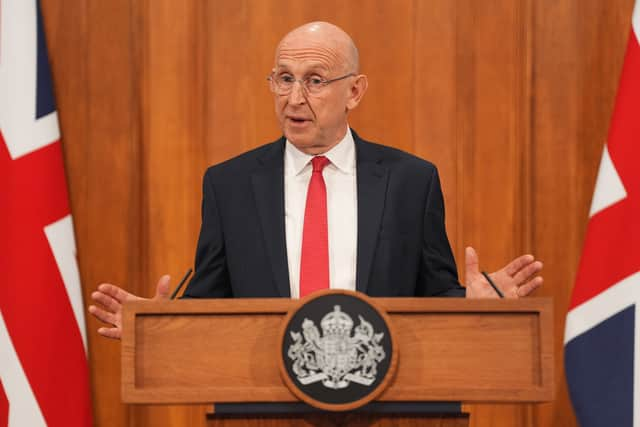
Mr Healey’s resignation speech was followed by an address from Mr Carns, sitting on the same bench as his former boss at the Ministry of Defence. The former Royal Marines officer repeated his own criticisms of the Government’s approach to defence, saying its plans were neither adequately funded nor preparing for the wars Britain is likely to fight.
He said: “The reality is we are spending too much time preparing for last year’s war, not tomorrow’s.” Mr Carns also pointed to the Government’s “failure to address the treatment of our veterans in Northern Ireland”, warning: “The IRA failed to achieve its political ends through the use of terrorist tactics, we must be exceptionally careful that we do not help them achieve those ends through other means.”
Speaking to reporters at the G7 summit in Evian, France, on Tuesday, Sir Keir Starmer defended his record, saying his Government was increasing the defence budget from 2.3 per cent of GDP to 2.6 per cent. The prime minister added that the Dip would give the UK “capability for the future” and he had already reallocated money from other departments to defence.
Sir Keir added: “Obviously the new Defence Secretary is reading in and we’re talking to him about how and what we will spend that money on, in terms of capability, and he’s got his own thoughts now on what the priorities should be, and so that’s the discussion we’re in the middle of at the moment.”