
Retirement dates set for five Royal Navy ships amid 'phasing out' plan to replace them with 'modern' vessels

Replacements will come as part of the hybrid navy model
Out-of-service dates have been set for five Royal Navy ships in a bid to modernise the force.
The retirement timeline has been set for the Hunt-class minehunters. These include HMS Ledbury, HMS Cattistock, HMS Brocklesby, HMS Middleton, and HMS Hurworth.
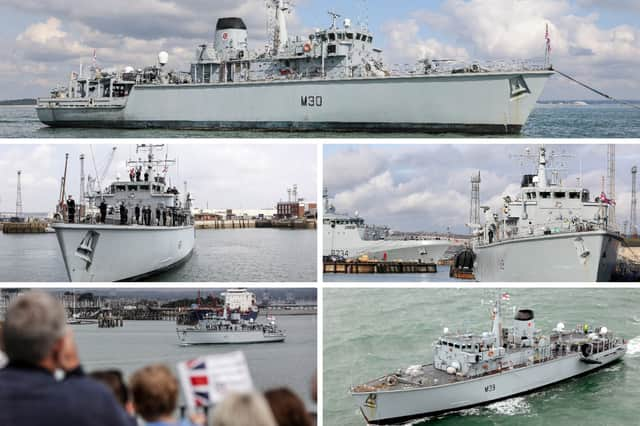

In response to a parliamentary written question from James MacCleary, Liberal Democrats, minister of defence industry and readiness Luke Pollard confirmed the decision.
The Labour MP said: “The Royal Navy is gradually phasing out its traditionally crewed and complex mine countermeasure vessels, as modern, autonomous systems are delivered. The last Hunt Class ship is due to leave service in 2031.”
It has long been known that the Royal Navy is pushing towards a hybrid fleet, where conventional warships are deployed alongside autonomous vessels and un-crewed capabilities. The aim is to create more mass and cover a larger area with different systems, including submersibles and vessels.
The recently published Defence Investment Plan announced aims to build six Common Combat Vessels, Type 91 uncrewed missile platforms, Type 92 uncrewed underwater sensing platforms, Type 93 Extra-Large Uncrewed Underwater Vehicles and Type 94 uncrewed sensor platforms. All these are in the concept phase, with the hope they will be a part of the fleet in the 2030s.
Mine-hunting has been a target for modernisation given the threats that serving personnel face when dealing with underwater explosives. Motherships for drones designed to complete these tasks are being produced.
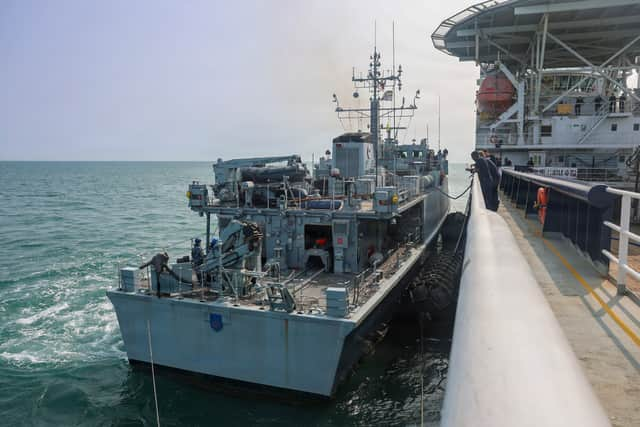
Naval support ship RFA Lyme Bay, bristling with mine-hunting capabilities, is currently deployed in the Middle East amid plans to reopen the Strait of Hormuz. Underwater explosives have been laid by Iran in the strategic waterway, where 20 per cent of the world’s oil flows through. Work is expected to begin once a peace is agreed between Tehran and the US-Israeli coalition.
Another drone mothership, HMS Stirling Castle, was officially commissioned into the fleet in June. She recently joined Ukrainian mine-hunting personnel for weeks of operations along the south coast during Exercise Sea Breeze.
Baroness Davidson of Lundin Link previously said: “Without ships like Stirling Castle to deliver the embarked teams and equipment to the minefield, there is no way to deploy autonomy and un-crewed systems at range. With this ship informing the operation of future Royal Navy mine counter measures support vessels, with new and evolving un-crewed systems, and with highly trained and deeply experienced sailors operating the equipment, the future of mine countermeasures is bright.”