
'Enormously keen' RFA Lyme Bay arrives in Middle East and sails alongside HMS Dragon amid Iran uncertainty

British forces are preparing for a potential multinational mission to keep the Strait of Hormuz open
Proud sailors aboard a drone mine-hunting mothership have arrived in the Middle East amid a potential mission.
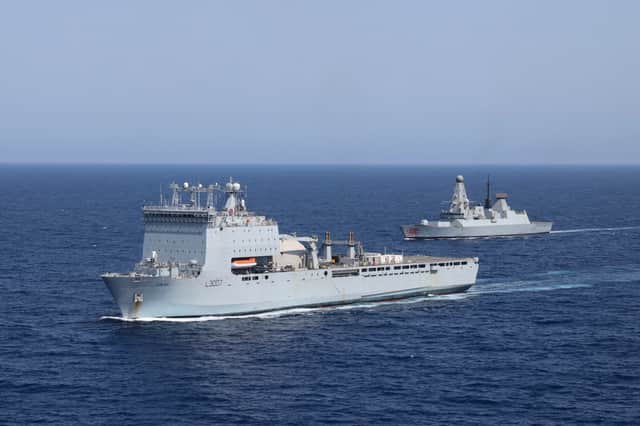
RFA Lyme Bay has linked up with the Portsmouth-based warship HMS Dragon in the region. Bristling with state-of-the-art autonomous vessels and equipment, the Royal Fleet Auxiliary (RFA) dock landing ship passed through the Red Sea amid ongoing uncertainty in Iran.

Mediators in Qatar and Pakistan said “encouraging progress” is being made to reach a final deal between the US and Iran, according to the BBC, with parties agreeing to “a roadmap towards reaching a final deal within 60 days”. The Strait of Hormuz, a busy waterway where 20 per cent of the world’s crude oil flows through, has been disrupted for months - with mines being laid in the region.
With a threat to commercial shipping now and in the future, a multinational agreement was made between multiple Nato nations to keep the Strait of Hormuz open. Leading the effort for the UK is Royal Navy Commander Gemma Britton, Commander of the UK Mine Countermeasures Force.
She said: “A huge number of people from across Defence and industry have worked exceptionally hard over the past few weeks to bring together experts and cutting edge mine detection and clearance technology on to Lyme Bay. We’ve trained hard and are enormously keen to utilise our skills on live operations that have such significance, not just to families and friends at home, but around the globe. This will be a multinational effort; the Royal Navy is ready to deliver.”
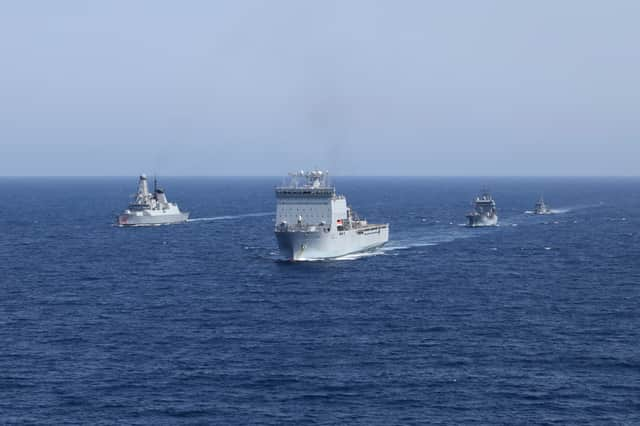
RFA Lyme Bay sailed alongside German command and support ship FGS Mosel and minehunter FGS Fulda. HMS Dragon shepherded her through the Red Sea, with the treat of drone and missile attacks from Iranian-backed Houthi rebels in Yemen still very possible. The 140-strong German force is equipped with autonomous systems, mine clearance divers, and vessel protection teams.
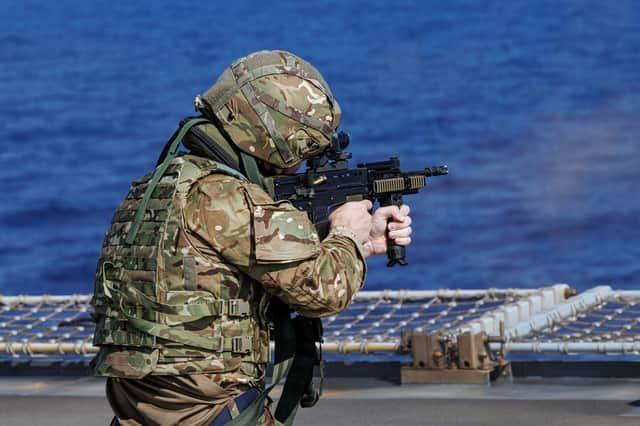
RFA Lyme Bay is crewed by more than 270 personnel. This is a combination of RFA seafarers; more than 100 Royal Navy mine warfare diving, and explosive ordnance disposal experts; medical personnel; British Army soldiers; Royal Marines Commandos who conducted several firing drills en-route to the Middle East, and French sailors.

The mine-hunting force will be tasked to locate and clear explosives. Declaring the waters safe will be fundamental to the Strait of Hormuz being fully reopened. Estimates suggest at around 450 merchant vessels are still bottled up in the Gulf following hostilities which began at the end of February.
Captain Simon Herbert RFA, Lyme Bay’s Commanding Officer, said “Collectively this has been a whole ship effort: RFA, Royal Navy, Royal Marines, British Army, and our international colleagues. I am very proud of the determined contribution of everyone on board in enabling the ship to deploy safely to the Middle East and be ready for the potential mission ahead of us.”
HMS Dragon will continually be tasked with protecting RFA Lyme Bay, particularly from air and missile attacks. She has been operating east of Suez for the past month getting used to the environment, and linking up with the French Carrier Strike Group, headed up by the huge aircraft carrier FS Charles de Gaulle.
Commander Iain Giffin Royal Navy, Dragon’s Commanding Officer, said “Supporting the arrival of RFA Lyme Bay and our German partners into the region is a key step in the multi-national effort to restore Freedom of Navigation in the Strait of Hormuz.
“HMS Dragon is proud to provide Area Air Defence to the task group as they transit through the Red Sea and beyond in order to carry out their vital mine clearance mission. Whether working with the French Carrier Strike Group or escorting UK and allied shipping, Dragon is deployed as part of the UK contribution to promote peace in the region.”