

A revolutionary drone mothership has been commissioned into the Royal Navy fleet during a glorious ceremony.
Sailors and family members officially welcomed HMS Stirling Castle into the fold last week. The traditional event at the Port of Grangemouth in Scotland saw dignitaries celebrate the ship, which has been transformed to carry autonomous vessels and submersibles.
Baroness Davidson of Lundin Link said: “Without ships like Stirling Castle to deliver the embarked teams and equipment to the minefield, there is no way to deploy autonomy and un-crewed systems at range. With this ship informing the operation of future Royal Navy mine counter measures support vessels, with new and evolving un-crewed systems, and with highly trained and deeply experienced sailors operating the equipment, the future of mine countermeasures is bright.
“And it is the sailors that matter most. Their dedication to their duty, their tenacity in difficulty, their endurance and their good humour has shaped the Royal Navy and its tradition of victory for centuries. The sailors of the future will need more technical skills than their forebears, but they will not lack the fighting spirit.”
Members of the ship’s company, family members, affiliated organisations, former colleagues, senior naval officers, civic leaders and VIP guests, were serenaded by the Royal Marines Band during the service. The Reverend Doctor Mark Davidson, Chaplain of the Fleet, presided over the special occasion. The traditional cutting of the commissioning cake was shared between the Commanding Officer’s wife, Helen Harper, and the youngest sailor on board, Able Seaman Brinley Pollard. it symbolised the continuity of generations within the Naval Service.
Commanding Officer of the Portsmouth-based ship, Commander Phil Harper, said: “A ship commissioning is like a christening, and like the best christening events, we are surrounded by the friends and family that give meaning to our service. Our ship sponsor, Baroness Davidson, alongside with the Lord Provost of Stirling and a host of naval and civilian dignitaries are blessing us with their presence, and the families of many of my ship’s company have made long journeys to be with us today. Bless them all, and bless the ship.”
The Portsmouth-based vessel sailed to Gibraltar with bristling with mine-hunting technology. Sailors delivered the cutting-edge vessels and equipment to RFA Lyme Bay, which has since headed to the Mediterranean. She is preparing for a possible mission in the Middle East to reopen the Strait of Hormuz, which has been cut-off by Iran since war broke out with the US-Israeli coalition.
HMS Stirling Castle became a Royal Navy vessel in July last year after a lengthy service in the Royal Fleet Auxiliary. After being converted into a military vessel for drones and autonomous equipment, she spent most of the past 11 months operating as a mothership.
After being acquired for the Royal Fleet Auxiliary in 2023, the ship is now home to 45 sailors and officers. Their job is to help extend the reach and effectiveness of mine-hunting operations, making it safer for sailors tasked with locating and destroy mines.
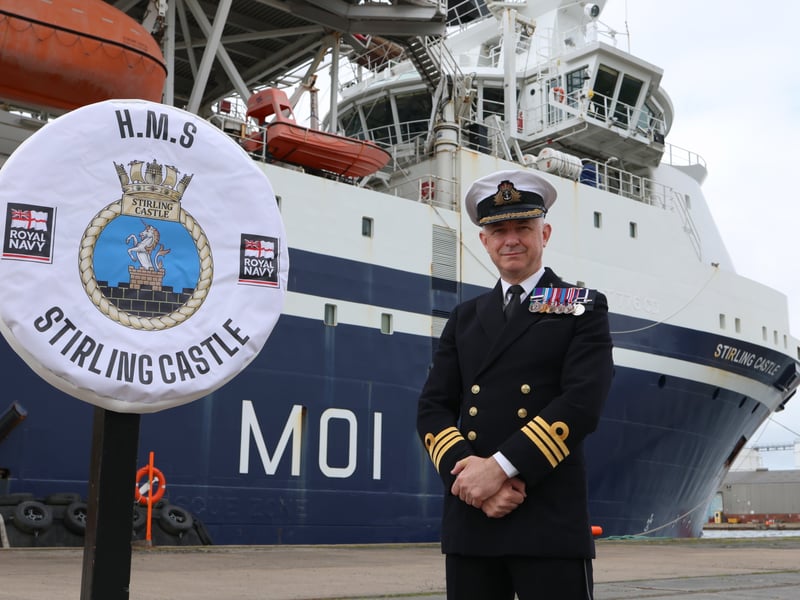
1. HMS Stirling Castle commissioning
HMS Stirling Castle was welcomed into the Royal Navy fleet following a glorious ceremony in Portsmouth. | LPhot Tim Lombard
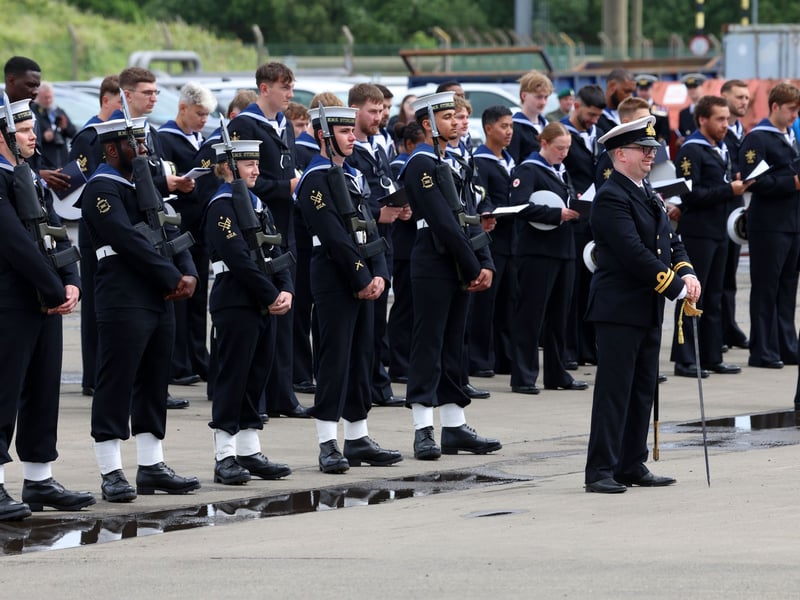
2. HMS Stirling Castle commissioning
Ship's company on parade during the commissioning. | LPhot Tim Lombard
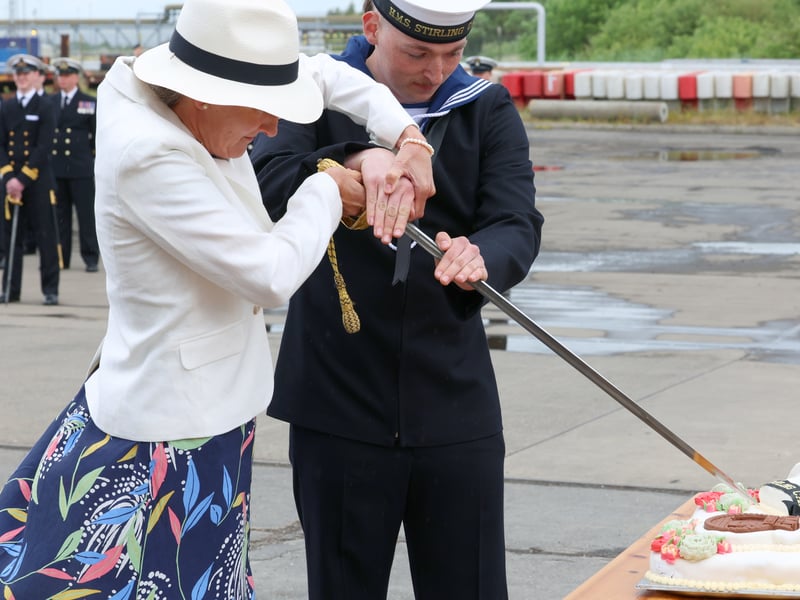
3. HMS Stirling Castle commissioning
Commanding Officer's wife with AB Pollard from the ship's company cutting the cake during the commissioning ceremony. | LPhot Tim Lombard
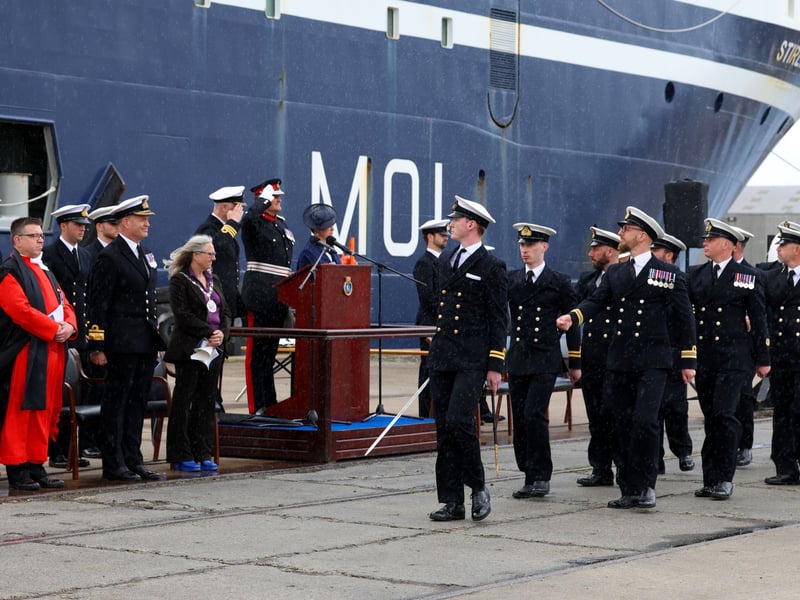
4. HMS Stirling Castle commissioning
Ship's Company marching past the lectern. | LPhot Tim Lombard