
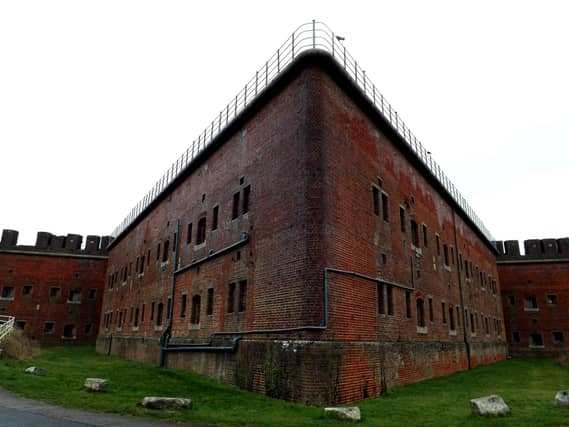


A total of 25 sites have been placed on the “at risk” register, from sites linked to the Royal Navy, old fortifications and places of worship. The public body said the programme highlights the places which are at most in need of action being taken.
“Assessing sites for Heritage at Risk (HAR) helps us understand the overall state of England's historic sites,” Historic England said. “The process identifies sites that are most at risk of being lost as a result of neglect, decay or inappropriate development.
“Every year Historic England updates the Heritage at Risk Register. The end result is a dynamic picture of the sites most at risk and most in need of safeguarding for the future. The important process of checking the condition of our heritage goes back more than three decades to the birth of the London Buildings at Risk survey, which was published from 1991 to 1997.
“The first National Buildings at Risk survey covering the whole of England was published in 1998 and, since then, the programme has been widened to include other types of historic places and sites (heritage assets).”
The programme includes Grade I, II*, II listed places of worship, and Grade II listed buildings in London. Many of them are being redeveloped and transformed, while others are parts of area which are due to have increased investment, such as HMNB Portsmouth.
Pressure has been growing to either restore historical sites to their former glory so they can be preserved, or transformed entirely and be given a new lease of life as something else.
The full “at risk” register can be found on Historic England’s website. Chief executive Duncan Wilson said: “Protecting our heritage is so important. The Heritage at Risk programme shines a light on our historic sites most in need and can help to attract funding and help. After a quarter of a century of the Heritage at Risk Register, we are celebrating how many places have been saved and continue to find new ways to involve local people in caring for and enjoying their heritage.”
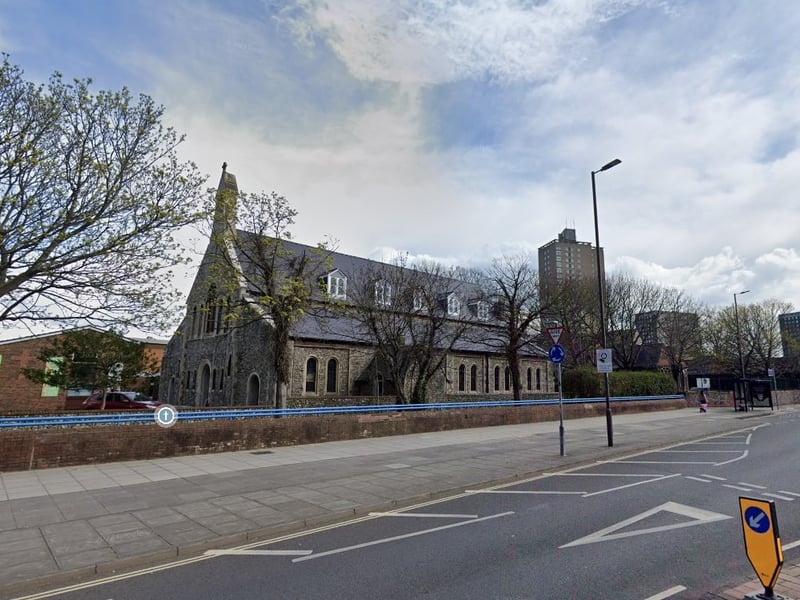
13. Church of St Luke - Southsea - Grade II listed
The Neo-Norman church by Thomas Hellyer of Ryde is dated 1858-61and is built of flint and stone with a Welsh slate roof. It is at risk due to extensive damp problems caused by water ingress resulting mainly from faulty and undersized rainwater goods. Cementitious repointing worsens the damp problems. It's hope that ambitious plans for redevelopment will address outstanding repair work. It has been given a priority C grade and is in "poor condition". | Google Street View
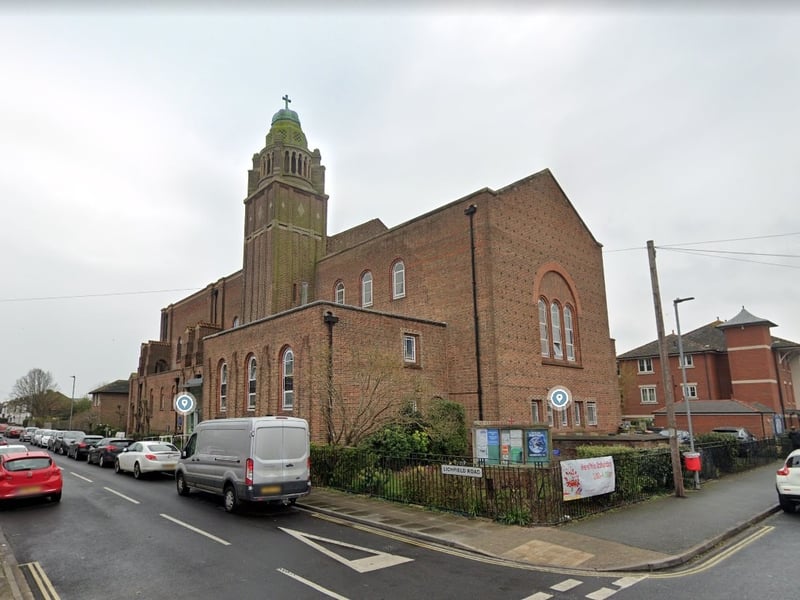
14. Church of St Cuthbert - Copnor - Grade II listed
Built in 1914-15 by E Stanley Hall, the original east end apse was destroyed by bombing, and the present east end wall is a post-war reconstruction. This has been remodelled in the last 10 years to provide community facilities and the present church sits in the western two bays of the former nave of the church only. The roofs over the worship space and the bell tower are in poor condition. A National Lottery Heritage Fund Grants for Places of Worship scheme grant was used to develop the project, but funding for repairs has yet to be found. It has been given a priority D grade. | Google Street View
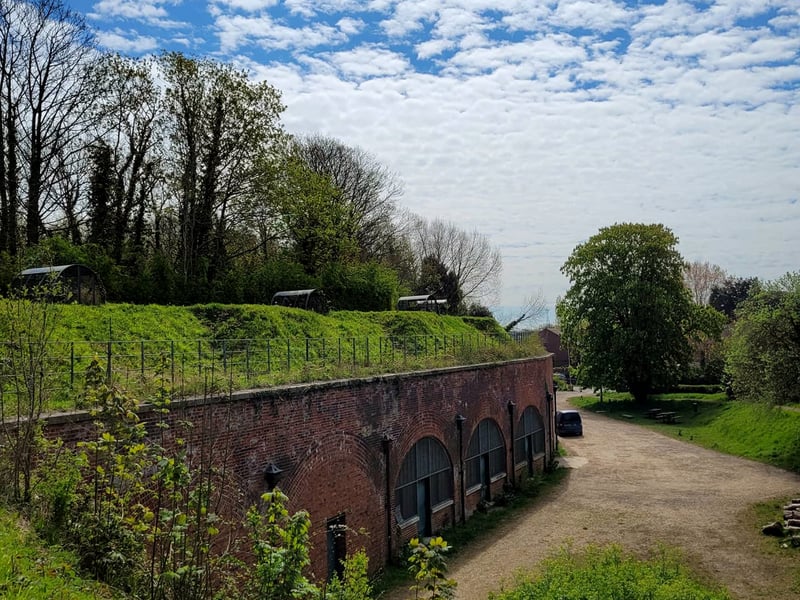
15. Hilsea Lines - Scheduled Monument
The Earthwork defence dating from 1858-1869 features batteries, magazines and barracks. The central section of the site, comprising three quarters of the Centre Bastion, and the west side of East Centre Curtain, where the railway enters Portsea Island (all formerly referred to broadly as Bastion no. 5) are continuing to suffer from heritage crime, a lack of regular maintenance and very limited access to the site. Opportunities to manage the monument, improve access, and reduce anti-social behaviour through the creation of a linear park using levelling up funding are being explored by Portsmouth City Council which last year held a consultation to help it draw up its plans. It has been given a priority B grade, meaning it has an "immediate risk of further rapid deterioration". | Louise Barnett
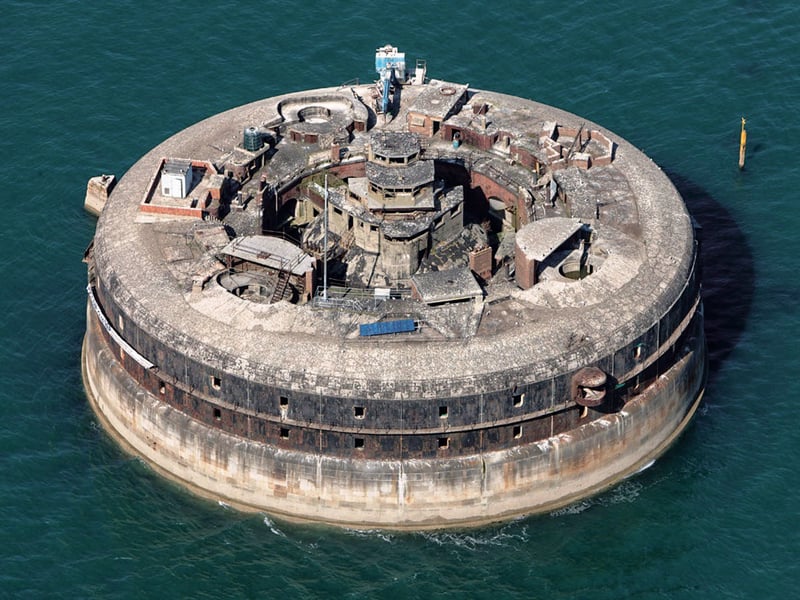
16. Horse Sand Fort - Scheduled Monument
Horse Sand Fort is a circular 19th century Royal Commission sea fort lying in the Solent 3.6km south east of Southsea Castle which was one of a chain of four sea forts in the Solent recommended by the Royal Commission on the Defence of the United Kingdom in 1860 and designed to protect Portsmouth dockyard from seaborne attack. The Fort also was armed during both World Wars. The Fort currently has no sustainable use aside from occasional visitor tours, Historic England has said, and it was sold at auction in 2021. | Courtesy Lambert Smith Hampton