
In Defense Of: Soulfly’s Primitive - another Max Cavalera classic or a compromised, over-collaborated mess?

As a new album drops, has Soulfly’s 2000 album, Primitive, stood the test of time?
- Soulfly’s modern classic, Primitive, turned 25 years old this year, with Max Cavalera still releasing music with his project.
- But over the years, some criticisms of the album have started to become louder, including claims of commercialised production and too many collaborators.
- Benjamin Jackson, Soulfly tattoo and all, defends the 2000s release as Cavalera drops the band’s latest work, Chama, earlier this month.
Ok - I might be biased on this occasion when it comes to defending an album from a band whose logo is the only tattoo I have on my body.
I was 17, overpaid for the inkwork, but proudly had Soulfly on my calf, or as some would mistakenly think it was, the Wu-Tang W. But that was the indelible impression Soulfly’s debut album had on me; discovering the single ‘Bleed’ on a Kerrang! covermount, an awkward adolescent in a small market town who, thankfully, saw a huge number of metal fans exponentially increase with the genre blowing up.
It would be in college where I would bond with one of my fondest acquaintances who caught me one afternoon in the canteen wearing a Soulfly shirt. He himself was adorned in a Brazil football shirt, and as luck would have it, we both attended the same Soulfly show during the Primitive tour cycle in Nottingham. Though we were merely strangers at that point - he probably, in hindsight, gave me a good hiding in the pit.
So when I started reading that Primitive was turning 25 this year, having already penned a nostalgia piece on the heyday of Roadrunner Records, and with Soulfly releasing their 13th studio album earlier this month, Chama, and when commissioned to undertake another “In Defence Of” piece, akin to Fear Factory last time around, of course Max Cavalera and Primitive were going to be who I’d pick.
I have the tattoo, remember?
So what are some of the arguments in recent years against Soulfly’s second album, and what are my rebuttals for the criticisms? This time around, it’s my skin literally on the line.
The case against Soulfly’s Primitive
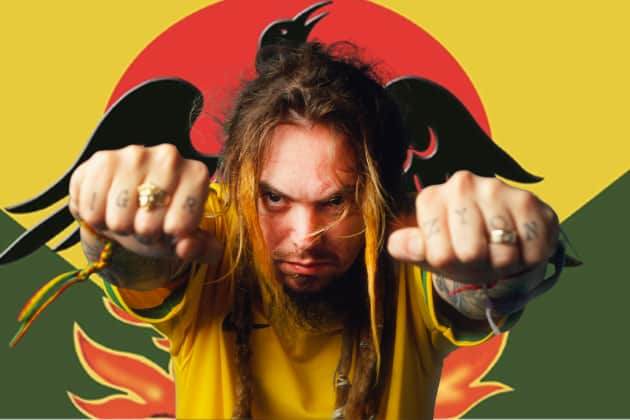

Released in 2000, Soulfly's sophomore album, Primitive, represented a jarring artistic misstep for Max Cavalera. Following the success of the debut, the band shifted away from the visceral, organic tribal chaos that had defined both Roots and the first Soulfly record.
This was achieved through a slicker sound designed for mass consumption, resulting in a project critics condemned for its lack of musical identity.
The first major flaw lies in the album's trend-chasing and over-production. By recruiting producer Toby Wright instead of the raw intensity of Ross Robinson, Primitive adopted a polished, punchy sound tailor-made for radio.
This commercial mandate stripped away the frenetic, authentic energy of the first album, making many tracks sound sadly indistinguishable from the glut of generic Nu-Metal dominating the airwaves at the turn of the millennium. Soulfly risked sounding like the very scene they helped pioneer, rather than standing above it.
Furthermore, the album suffers from a severe case of ‘guest overload.’ The extended list of collaborators—which included A-listers like Corey Taylor (Slipknot), Sean Lennon, and Tom Araya (Slayer)—felt less like a community effort and more like a calculated, commercial gimmick.
The sheer volume of features forces the album to lurch awkwardly across genres, transforming what should have been cohesive songs into novelties that lack internal consistency. This disjointed approach fails to establish a strong, unified musical direction for the band.
Finally, in chasing mainstream rock trends, Max Cavalera is accused of losing the very thing that made his music unique: the tribal and Brazilian rhythmic core. Where percussion and indigenous rhythms once formed the foundational pulse of the songs, on Primitive, they are often relegated to superficial additions, samples, or isolated interludes.
The resulting sound simplifies Max's signature groove, giving the album a slower, less challenging, and often less thrilling "bounce" that failed to live up to the fierce promise of his work in Sepultura.
The case for Soulfly’s Primitive
Ok, let’s break down the argument for Primitive in three parts.
The Collaboration Defence: Community, Not Gimmick
Firstly, let’s just address the whole “over-collaborated” critique that the album somehow has managed to garner years later.
For that, let’s just take a look at Max Cavalera and his previous band, Sepultura, and their place in metal history. They were, and still are, considered not only one of the most important thrash metal bands to emerge from the ‘80s scene, going from ‘third world act’ to huge venue performers, and then, with the release of Roots in 1996, became known as the “Godfathers of Nu-Metal.”
The collaborative spirit existed long before Primitive: the influential track ’Lookaway’ on Roots featured vocals from Mike Patton (Faith No More) and Jonathan Davis (Korn), alongside scratching from DJ Lethal (Limp Bizkit). This community approach continued just two years later on Soulfly’s self-titled debut (1998), which included Chino Moreno (Deftones), Fred Durst (Limp Bizkit), and Benji Webbe (Skindred/Dub War), among others.
While admittedly some might find the inclusion of nine different collaborators, keep in mind that three of those collaborators featured on one track, with Chino Moreno once again providing vocals alongside Will Haven’s Grady Avenell (Pain), Tom Araya joining the band for ‘Terrorist’ and, of course, the bona fide pit-starter ‘Jumpdaf**kup’ with Slipknot’s Corey Taylor.
Each one of those artists did bring something to the special album, but more importantly for newer fans of metal, it did demonstrate just how revered Cavalera is; working with another classic thrash act (Araya), working with two huge names in the nu-metal/alternative metal scene (Moreno, Taylor) and giving another platform for a cult post-hardcore favourite (Avenell). It demonstrated just how influential Cavalera has been on a huge number of metal fans, and at the time when the scene was “popping off,” why not bring in and potentially co-sign on some incredible acts from modern metal’s era?
Plus, if we want to split hairs, the first album had 10 distinct artists collaborate. Primitive has nine. Therefore, the first album should be considered the ‘overblown’ work collaboratively.
You might call it a ‘calculated, commercial gimmick,’ while others would call it a genuine community effort, taking time to work with such an esteemed member of metal history as Cavalera. That ‘lurching awkwardly’ into novelties rather than cohesive songs also seems quite the harsh assessment: throughout Cavalera’s musical works, there has always been an eclecticism in his songwriting.
That could just boil down to the age-old trope of ‘old metalheads not liking new releases.’ It happened with Metallica and a host of other acts that made the jump from rock club cult icons to commercially successful acts. Don’t be afraid that your favourite band has gotten more popular - appreciate how widespread their appeal has become?
The Commercial Shift: Intentional and Justified
Perhaps part of the ‘commercial’ aspect of their sound might stem from Roadrunner Records’ success with other nu-metal acts (a point we have addressed previously), but that would then negate the notion that Roots was one of the first nu-metal albums to be released.
The argument it was “tailor-made for radio” which made it “indistinguishable from the glut of generic Nu-Metal” was an endemic symptom of just how popular the genre became, and as much as you can fault someone for wanting to make money from their art (to paraphrase Lars Ulrich), you have to perhaps look at the calibre of releases Toby Wright worked on previously, which might indicate why he was Cavalera’s choice.
This is a man who was involved in producing, or assistant producing, Metallica’s ... And Justice For All, Slayer’s Divine Intervention and, along with Ross Robinson, Korn’s incredible Follow The Leader in 1998. Maybe some of those other acts recommended Wright to Cavalera, or maybe Ross Robinson didn’t want to work on another nu-metal album. He did consider his work on Glassjaw’s 2000 debut as his “antithesis” of the nu-metal trend.
The Rhythmic Evolution: Core Intact
Ultimately, the most unfair critique of Primitive is the accusation that Max Cavalera abandoned his musical identity, stripping the tribal and Brazilian rhythmic core that defined his sound. In reality, the core simply evolved. Far from being superficial, the indigenous element was structural: the signature berimbau is heard prominently on tracks like the explosive opener ‘Back to the Primitive,’ instantly signalling the spiritual continuation from Roots.
The consistent presence of dedicated percussionists (Larry McDonald and Meia Noite) on virtually every track ensures the rhythmic, non-Western foundation remained central, not just relegated to interludes. Max was simply expanding his palette, as evidenced by the instrumental suite ‘Soulfly II,’ a track entirely devoid of metal guitars that instead showcases complex ambient percussion layered with unexpected instruments like sitar, piano, and synthesiser.
This integration of psychedelic and global elements, facilitated by producer Toby Wright, proves that Cavalera was pushing his unique sound forward, creating a hybrid that was both commercially successful and structurally complex, rather than merely making a “generic” nu-metal record.
Soulfly’s latest album, Chama, is available now through all leading streaming services, or you can pick up a physical copy of the album through HMV in the United Kingdom.