
Metallica vs the World: how one lawsuit divided audiences despite a history of fan-sharing support

What happens when a band almost alienates their fanbase when they change their stance on music sharing? Metallica found out the hard way.
- As Metallica roll back the years with their M72 World Tour, perhaps they could give the years 1999 and 2000 a miss.
- It was during this period that Napster became ‘the’ tool to discover and share new music, but at a cost to musicians rather than fans.
- This is the story of how Metallica, who once were pro-music sharing, nearly alienated their fanbase after finding a demo appearing on the file-sharing platform.
It’s been 25 years since Metallica nearly lost all the goodwill they had built up over the decades over one legal battle – one that helped shape technology as we know it.
I’m talking, of course, about the epic case between Napster, a peer-to-peer file sharing network that was the application du jour for accessing a world of music (albeit illegally), and Metallica, who felt the theft of their work was akin to that of a woodworker having their items stolen from sale.
However, Metallica’s history with fan engagement and sharing made their case slightly more murky, with a history of imploring fans to share their music during their formative years – a stance that would change as they got bigger.
It led to fans disowning the band, calls of them being greedy, and a litany of flash cartoons mocking Lars Ulrich, seen as the face of the lawsuit, and James Hetfield. One of which created the meme 'Napster, Bad' that has followed the band since.
But with Metallica currently on their M72 tour, with the metal giants set to touch down in the United Kingdom for their first tour date in 2026, and the shift in how we listen to music in the 21st century, did fans overreact when being asked to pay for music – even if we’re for the most part now just paying a subscription for that music rather than buying it outright?
This is the feud that almost led to Metallica losing a legion of fans, and why their stance on song sharing from the ‘80s led to a conflict between fans in the ‘00s.
This is when Metallica ‘beefed’ with Napster and what felt like the rest of the world to boot.
Fan-driven support through sharing live sets
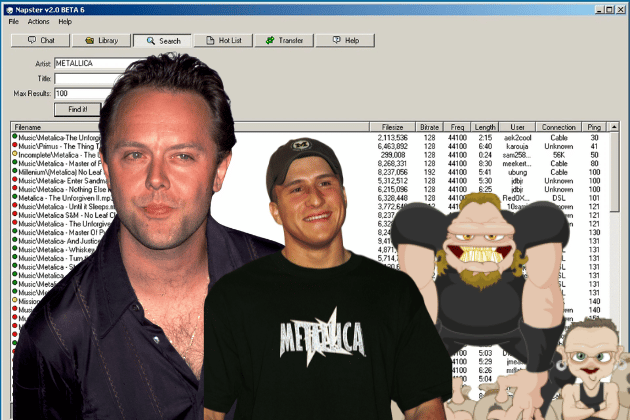

Though recent memory might suggest that Metallica were against the sharing of their music, the band were far more receptive to the notion of their music being passed around like-minded listeners during their formative years in the Bay Area of California in the ‘80s.
Back then, as you can imagine, getting your music to the wider populace involved either constant touring, the dice roll of getting rotation on the radio or potentially having your music video appear on the fledgling MTV (rest in peace, sweet princess).
The thrash metal scene had surpassed its nascent era and was becoming the soundtrack for many metalheads who couldn’t stand the pomp, pageantry, and sleaze of the glam rock scene, ideally looking for musicians who merely wore jeans and a black T-shirt instead of the incredibly elaborate, androgynous looks the glam scene provided.
Amongst those up-and-coming Bay Area Thrash acts would be Metallica, at one stage with Megadeth founder Dave Mustaine (another beef for another time). But as thrash metal was still on the come-up, how could they get their music out to more people?
Bootlegging would be the answer, and it was a solution that Metallica during this period not only relied upon but also implored fans to record their live shows and share them across the United States.
Tape trading, aside from “killing music”, was a means for music fans to discover new music that perhaps wasn’t palatable for radio consumption, and the rise of tape trading circles became very much a forerunner to peer-to-peer sharing years later. Just with more human interaction – a lot more.
Metallica, and in particular Lars, actively encouraged bootleggers to record their shows, going so far as to create a ‘taper section’ at shows, where fans could bring their audio equipment to record with.
The practice, at the time, was seen as an easy way not only to gather new fans, but to accommodate those fans who perhaps started earning a ‘living’ trading these live shows. One of their most lucrative releases, 'No Life ‘til Leather', featuring early versions of the band’s work, would help generate that global fanbase.
It was considered a complete contrast to other bands who actively fought against the bootlegging trade. But as time and, particularly, the way music was consumed in the ‘90s and early ‘00s, that view of unauthorised distribution of the works would change, and one popular P2P client would find itself in the firing line, front and centre.
Napster and P2P networks create ease of access, at a (lack of) cost
Napster was launched in June 1999 by Shawn Fanning and Sean Parker as a simple, community-focused means of sharing MP3 files between music fans in the easiest way possible. Their vision was to create a cataloguing system that would make it easier to see and access someone else's music collection, effectively creating a massive, shared library for music lovers… similar to what iTunes or Spotify would become.
While sharing music wasn’t new, with FTP servers and Internet Relay Chat allowing for file sharing, it was the user experience and interface that saw Napster’s popularity explode in the new millennium. At its peak, the service had approximately 80 million registered users, with 26.4 million of those users actively sharing their music collection.
Some musicians were advocates of Napster, as a means of sharing their music to the further reaches of the globe that they couldn’t possibly tour or that their labels felt was not worth the price of marketing to.
Public Enemy’s Chuck D was one of the most vocal supporters of Napster, treating it not as a threat but as a form of ‘new radio.’ He believed it gave artists the chance to bypass the tried, tested, and somewhat broken road of finding a record label and instead gave that power back to fans, breaking what he felt was the monopoly the industry had on music distribution.
Courtney Love also shared her support of Napster, arguing that the real problem the music industry had faced was not file-sharing, but unfair contracts and exploitative practices by the industry, which at that stage were still taking the largest cut of music royalties.
That power that Chuck D discussed saw an independent band, Dispatch, without any major label support, grow in popularity through file sharing that they would eventually sell out three shows at Madison Square Garden, demonstrating its power as a promotional tool.
But not all musicians were receptive, and one in particular took umbrage over their music appearing on Napster: Lars Ulrich. 18 years after imploring fans to share their 'No Life ‘til Leather' demo tape, Metallica discovered an unreleased demo of 'I Disappear' from the Mission: Impossible 2 soundtrack appeared on Napster in April 2000.
Upon discovering that many more of their songs were being shared, for free, on the service, it prompted Metallica to take a stand against file sharing, much to the chagrin of those older, tape-trading fans and those Napster users who would suddenly find themselves embroiled in legal dramas themselves.
Metallica take Napster to court, and public outrage over their comments
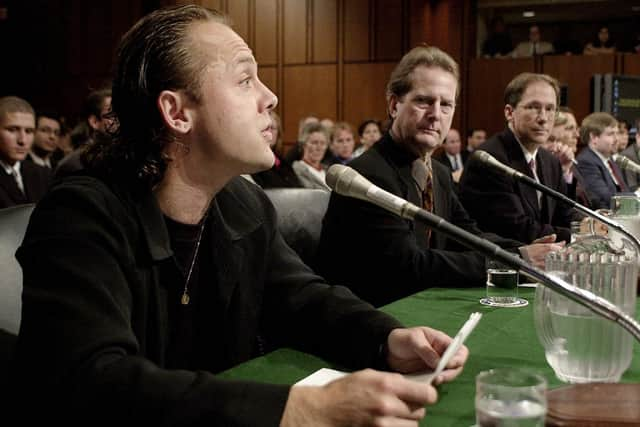
Metallica would file their lawsuit against Napster on April 13 2000, at the District Court for the Northern District of California, with the band (and particularly Lars as the face of the campaign) accusing the company of copyright infringement, racketeering, and unlawful use of digital audio interface devices (CDR drives that could rip music, basically).
Though Metallica were not the only musicians that took exception to Napster (Dr Dre had his lawsuit with the service), they would be the one to draw most of the ire of a generation of fans who felt that to have this technology and unfiltered access to music taken away from them would be a death knell to the music industry – while at the same time, musicians felt their music being given away for free would also be a death knell to the industry.
Lars did have his points; he compared unauthorised music sharing to physical theft, leading to the now-infamous argument made during his testimony before the Senate Judiciary Committee on July 11, 2000.
“Just like a carpenter who crafts a table gets to decide whether to keep it, sell it or give it away, shouldn't we have the same options? My band authored the music, which is Napster’s lifeblood. We should decide what happens to it, not Napster—a company with no rights in our recordings, which never invested a penny in Metallica's music or had anything to do with its creation. The choice has been taken away from us.”
However, that would lead to ridicule from commentators and the internet, including the now-infamous Flash animation proclaiming ‘Napster Bad, Beer Good’ and the trope that these ‘millionaire musicians are being greedy’.
That the band had made millions in the years preceding Napster, with the ‘greedy’ sentiments exacerbated by the user base of Napster (who were young, low-income students) wasn’t the worst crime the band would be accused of committing.
Ulrich personally delivered a list of over 300,000 Napster users who had downloaded Metallica's songs, demanding that their accounts be terminated, while Napster responded by displaying a message to those users that read, "Metallica has banned you," which solidified the public's opinion that the band was suing its own fans.
The lawsuit for older fans also seemed like it was hypocritical; for a band that during their early years were pro-bootlegging amongst a sea of other musicians who felt ‘that’ would kill music, why, suddenly, when they’re rich and famous, is the notion of fan-shared demos and music suddenly a cause célèbre for the band?
The settlement… and the lasting damage done?
After a lengthy legal battle and the goodwill towards Metallica having diminished with some fans, a settlement with Napster was reached by 2001, but not without mortally wounding the service.
Following a preliminary injunction that forced the company to remove all copyrighted material from its service, Napster was unable to function as it once did, and filed for bankruptcy in 2002.
That case, along with those filed by the likes of Dr Dre, also effectively shut down the free peer-to-peer file-sharing services that were popular at the time. But while Metallica may have ‘won’ the lawsuit, it would become somewhat of a Pyrrhic victory for the band and the industry.
The band's public perception suffered immensely as they went from being seen as a grassroots metal band that championed bootlegging to being viewed as greedy millionaires suing their fans. The 'Napster Bad' and 'Lars is greedy' narratives were so powerful that they lingered for years, causing a rift with a portion of their fan base that still exists today.
Lars Ulrich himself later admitted that he underestimated how much Napster meant to people. In an interview with Howard Stern in 2017, he admitted that “We would have educated ourselves better about what the other side was thinking and what the real issues were. We were caught a little bit off guard with that, and then we sort of had to figure out how we were gonna play it. I guess Napster means a lot to a lot of people, and so we were caught a little bit off guard with that.”
The ‘win’ for the music industry was also one that had cause-and-effect: the legal battles highlighted the need for a new business model in the digital age. Though they did attempt to crack down on CD ripping, their methods proved controversial and, in some cases, disastrous.
This was most notably seen with Sony BMG, which used an intrusive copy-protection software called Extended Copy Protection (XCP) on millions of its CDs. The software secretly installed itself on a user’s computer, creating security vulnerabilities and ultimately leading to a major scandal that forced a massive recall and put an end to such aggressive copy-protection measures.
In the years that followed, this pressure catalysed the rise of legal digital platforms like Apple's iTunes and eventually streaming services like Spotify.
These new services provided a legal and convenient way for consumers to access music while also ensuring that artists and labels received compensation, but also have their raft of issues to contend with in the present day.
Were you around when Metallica had their beef with Napster? What was your take at the time, and has your opinion on the matter changed as you’ve grown older? Let us know your thoughts on this public rift by leaving a comment down below.