

Many of these vessels have played vital roles in both world wars and The Falklands War. One of these ships introduced a new standard in firepower and propulsion that redefined naval design globally.
Another, completed after the Second World War, marked the end of Britain’s battleship era. Though never used in combat, it represented the final stage of capital ship development before the rise of missile systems and air power rendered the type obsolete.
Aircraft carriers developed in parallel with these changes. Purpose-built designs introduced in the interwar period supported fixed-wing operations in the Atlantic and Mediterranean during the Second World War. These ships launched air strikes, escorted convoys, and played roles in major engagements. Later examples were converted to operate helicopters and V/STOL jets, extending operational reach in the nuclear age. One carrier served as the Royal Navy’s flagship during a conflict in the South Atlantic, coordinating air operations over 8,000 miles from home.
Cruisers and destroyers carried out a wide range of tasks. Some were involved in early engagements of the Second World War, including a well-known South Atlantic battle that resulted in the scuttling of a German commerce raider. Others operated in the Arctic and Far East, escorting convoys and engaging enemy forces under frequent attack. One destroyer gained recognition for rescuing British prisoners held aboard a German supply ship in Norwegian waters.
Many of these ships were lost in action or scrapped in the post-war years. A few were preserved as museum vessels, offering a public record of Britain’s naval heritage.
Together, these warships reflect the evolution of British maritime strategy over the century — from imperial patrols and fleet actions to Cold War deterrence and limited regional conflicts. Their construction, deployment and service history chart the decline of battleship dominance, the rise of naval aviation, and the continuing demand for flexible surface combatants in a changing geopolitical landscape.
We asked ChatGPT for the most powerful Royal Navy warships of the 21st century, and this is what it came up with.
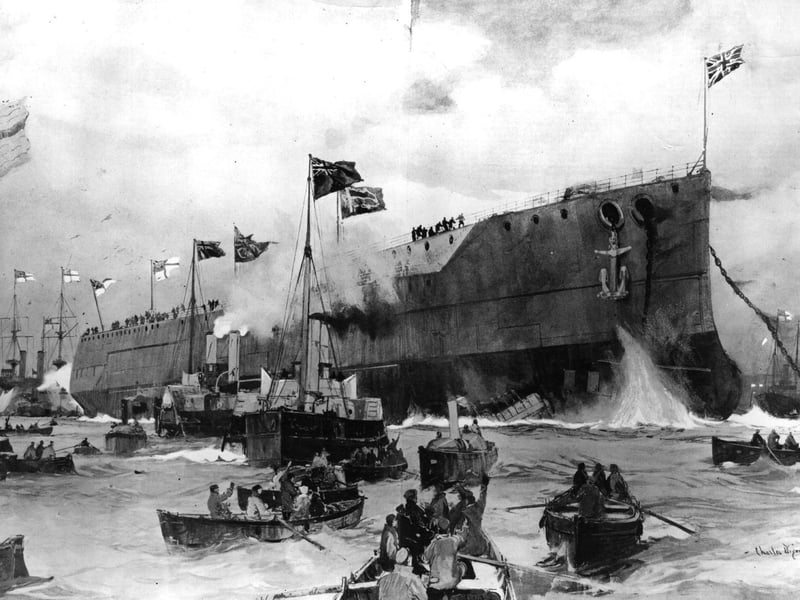
1. HMS Dreadnought
Launched in 1906, HMS Dreadnought revolutionised naval warfare with her turbine engines and all-big-gun armament. She rendered all previous battleships obsolete overnight and triggered a global naval arms race. Though she missed the Battle of Jutland, her influence was profound, giving her name to a whole class of battleships. Symbolic of British industrial and naval power, she served mainly as a training and patrol vessel during the First World War before being scrapped in 1923. | Hulton Archive/Getty Images
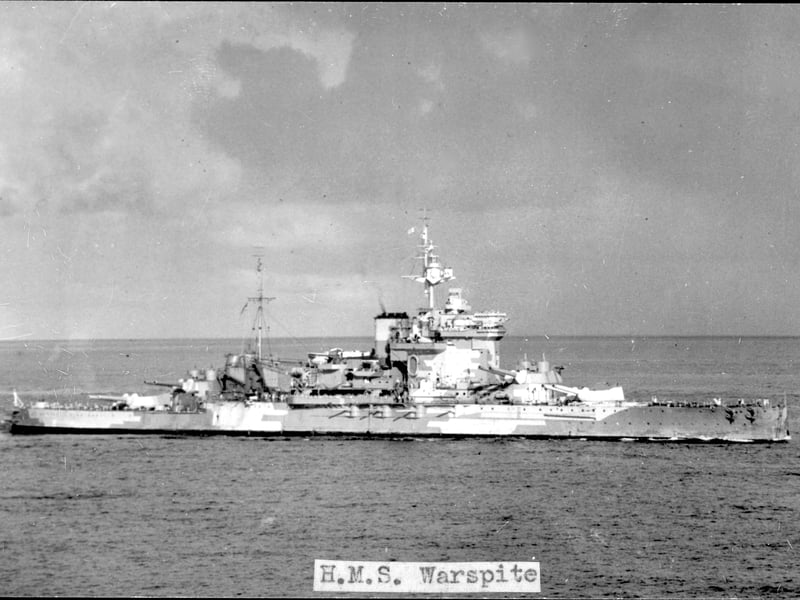
2. HMS Warspite
Commissioned during WWI, HMS Warspite was a Queen Elizabeth-class battleship famed for her resilience and firepower. She fought at Jutland in 1916 and played a key role in WWII, from Narvik and the Mediterranean to Normandy. Despite frequent damage, she kept returning to service, earning more battle honours than any other Royal Navy ship. Decommissioned in 1945, her planned preservation failed, and she was partially scrapped after breaking free during tow in 1947. | Arkivi/Getty Images
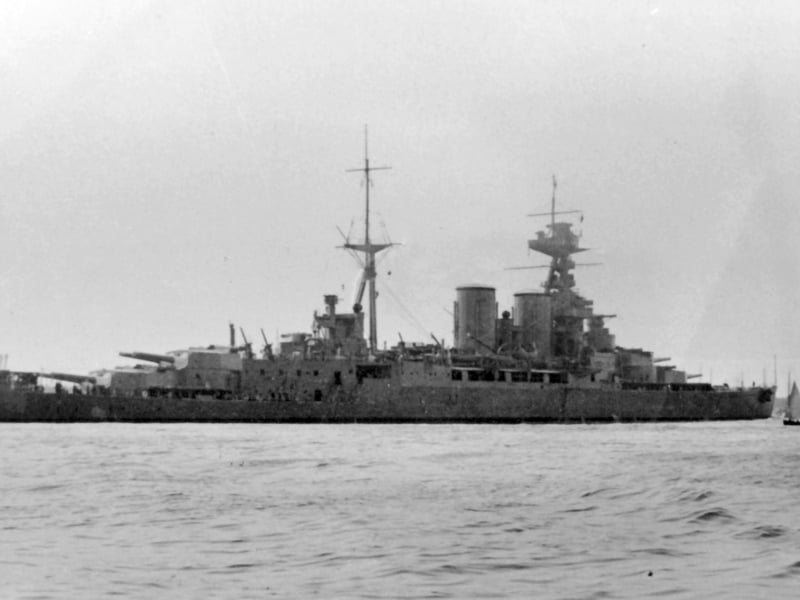
3. HMS Hood
The largest warship in the world at her launch, HMS Hood was a powerful battlecruiser and a flagship of British naval prestige in the interwar years. Fast and heavily armed, she lacked adequate deck armour—a flaw that proved fatal in 1941. During the Battle of the Denmark Strait, she was struck by Bismarck and exploded with the loss of 1,415 crew, a national tragedy that deeply shocked Britain and spurred the relentless hunt for her killer. | Barry Cox collection/The News Archive
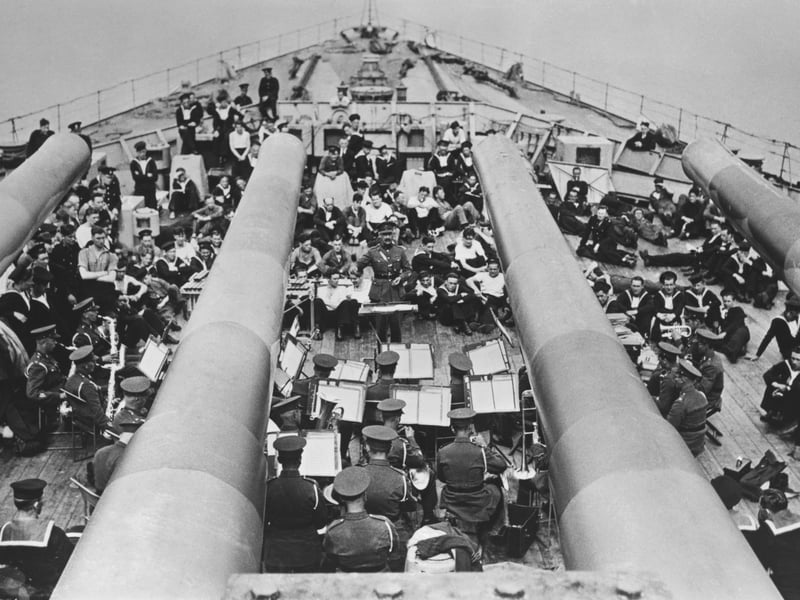
4. HMS Prince of Wales - King George V-class battleship
A King George V-class battleship, Prince of Wales had a brief but eventful service. She fought Bismarck in May 1941, landing crucial hits that helped cripple the German ship. Just months later, she sailed to the Far East as part of Force Z but was sunk by Japanese aircraft near Malaya in December. Her loss, alongside Repulse, marked the first time capital ships were sunk by air power alone while under way and alerted Britain to Japan’s growing threat. | Central Press/Hulton Archive/Getty Images