
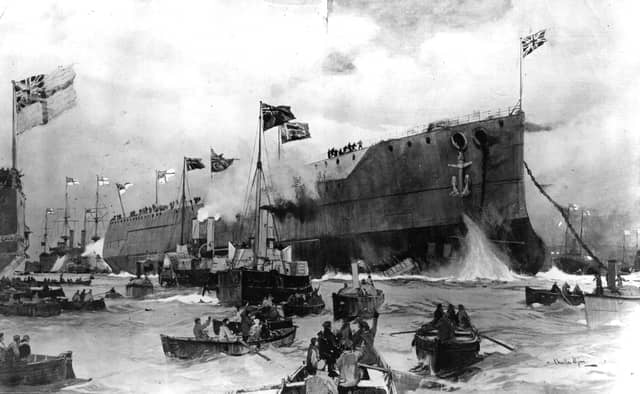


Many of these vessels have played vital roles in both world wars and The Falklands War. One of these ships introduced a new standard in firepower and propulsion that redefined naval design globally.
Another, completed after the Second World War, marked the end of Britain’s battleship era. Though never used in combat, it represented the final stage of capital ship development before the rise of missile systems and air power rendered the type obsolete.
Aircraft carriers developed in parallel with these changes. Purpose-built designs introduced in the interwar period supported fixed-wing operations in the Atlantic and Mediterranean during the Second World War. These ships launched air strikes, escorted convoys, and played roles in major engagements. Later examples were converted to operate helicopters and V/STOL jets, extending operational reach in the nuclear age. One carrier served as the Royal Navy’s flagship during a conflict in the South Atlantic, coordinating air operations over 8,000 miles from home.
Cruisers and destroyers carried out a wide range of tasks. Some were involved in early engagements of the Second World War, including a well-known South Atlantic battle that resulted in the scuttling of a German commerce raider. Others operated in the Arctic and Far East, escorting convoys and engaging enemy forces under frequent attack. One destroyer gained recognition for rescuing British prisoners held aboard a German supply ship in Norwegian waters.
Many of these ships were lost in action or scrapped in the post-war years. A few were preserved as museum vessels, offering a public record of Britain’s naval heritage.
Together, these warships reflect the evolution of British maritime strategy over the century — from imperial patrols and fleet actions to Cold War deterrence and limited regional conflicts. Their construction, deployment and service history chart the decline of battleship dominance, the rise of naval aviation, and the continuing demand for flexible surface combatants in a changing geopolitical landscape.
We asked ChatGPT for the most powerful Royal Navy warships of the 21st century, and this is what it came up with.
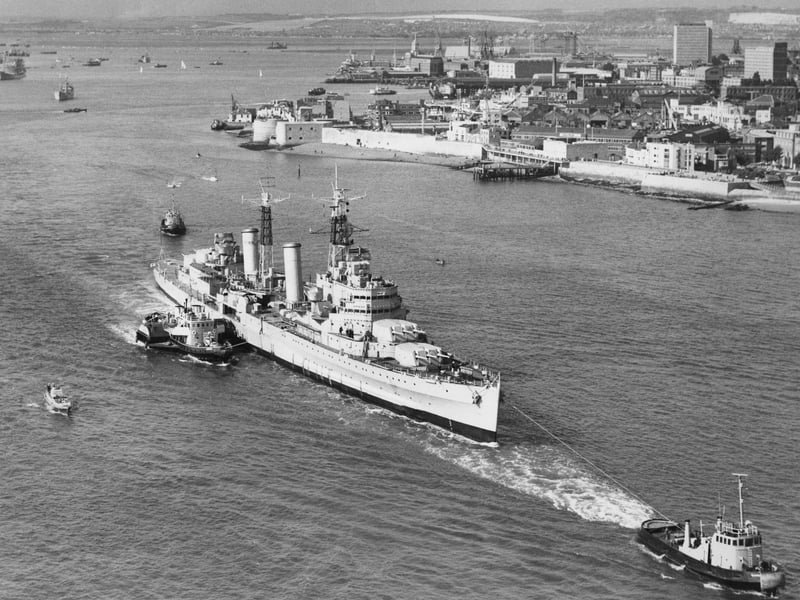
9. HMS Belfast
A Town-class light cruiser, Belfast was launched shortly before WWII. Severely damaged by a mine in 1939, she returned to service in 1942 and participated in Arctic convoys, the Battle of North Cape, and the Normandy landings. Post-war, she supported UN forces in the Korean War before being decommissioned. Preserved as a museum ship since 1971, she lies moored on the River Thames in London, offering visitors a detailed glimpse into mid-20th-century naval warfare. Pictured: HMS Belfast on her last voyage from Portsmouth Dockyard to her new berth in London as a floating museum. | Central Press/Hulton Archive/Getty Images)
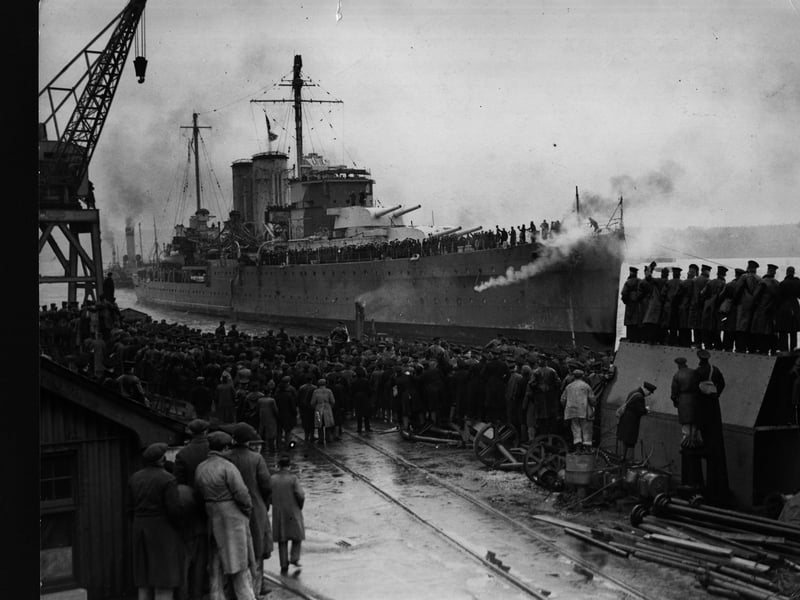
10. HMS Exeter
Best known for her role in the Battle of the River Plate (1939), HMS Exeter helped force the German cruiser Admiral Graf Spee to scuttle. Heavily damaged during the battle, she returned to Britain for repairs and was later deployed to the Far East. In 1942, during the Second Battle of the Java Sea, she was overwhelmed by Japanese forces and sunk. Her wartime service and sacrifice made her one of the Royal Navy’s most respected cruisers of the era. | Hulton Archive/Getty Images
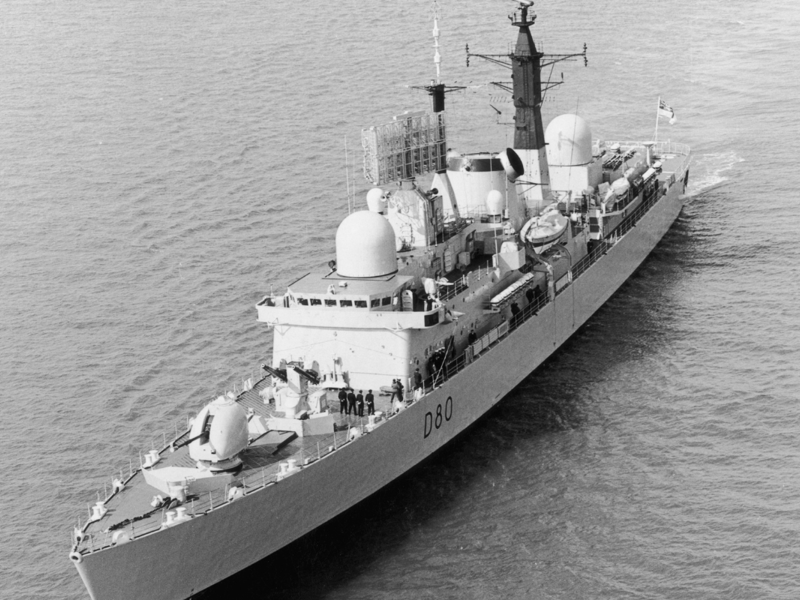
11. HMS Sheffield
Commissioned in 1975, Sheffield was a Type 42 guided missile destroyer designed to defend fleets with Sea Dart missiles. During the Falklands War in 1982, she was deployed as part of the British task force. On 4 May, she was struck by an Argentine Exocet missile, causing severe fires. Despite rescue efforts, she sank six days later. Her loss marked the first British warship sunk in combat since WWII and highlighted the changing nature of modern naval warfare. | Keystone/Getty Images