
"Always an exciting species to spot": Huge rare moth spotted at Portchester primary school
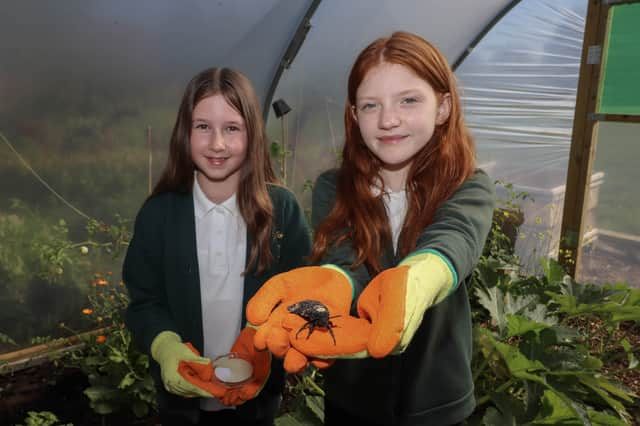
A rare African death's-head hawkmoth was spotted at Wicor Primary School in Portchester, Hampshire, in a compost bin where potatoes were being composted by Year R children.
A large rare moth was seen at a Portchester primary school this week, fascinating the pupils and teachers alike.
The African death's-head hawkmoth was found in a compost bin in Wicor Primary School’s garden in Portchester.
The large yellow moth was probably attracted to the bin due to some potatoes, grown by Year R children, that had been put inside to compost.
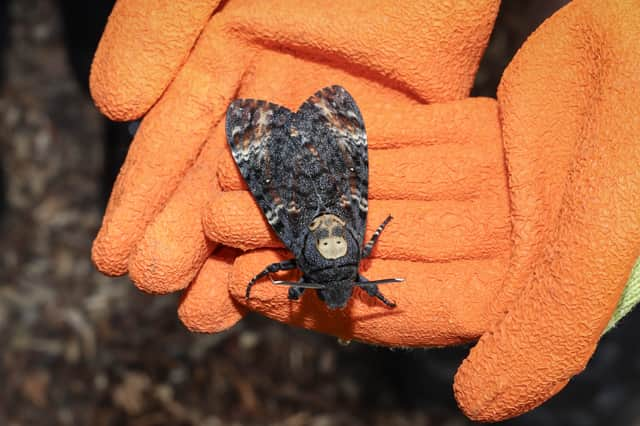

Louise Moreton, the school horticulturalist at Wicor Primary School, said: “I took a barrow full of weeds to the compost bin and took a huge scoop of compost. I heard a really high pitched noise, and I thought it might be a mouse.
When I realised what it was, I was very excited to see something so unusual.”
“My first reaction was to run inside in my welly boots to find the headteacher,” said Louise.
“We decided the best thing was to enable as many children to see it as possible. It was great for the year one children who are stuffing moths and butterflies, they could ask as many questions as they wanted.
“The children couldn't believe what they were seeing!”
The species might be familiar to some, as it has featured in multiple Hollywood films including The Silence of the Lambs and the 1958 version of Dracula.
Professor Richard Fox, our Head of Science at Butterfly Conservation said: “The Death’s-head Hawk-moth is always an exciting species to spot in the UK.
“It’s one of the largest moths that can be found here – the caterpillar being similar size to an adult human’s finger and the wingspan of the moth reaching nearly 14cm!
“As an uncommon visitor from warmer parts of Europe, it’s not your everyday back garden moth, but it can breed here during the summer, with caterpillars usually found on potato plants, although these caterpillars cannot survive our winters.
“As well as its impressive size and striking markings which look like a skull, the moth can also make a loud squeak.”