
Stag beetles in Portsmouth and Hampshire: Residents are wanted to help count insects for survey

Hampshire residents are being asked to look out for stag beetles for a survey - after 2,500 were spotted in the county last year
People are being urged to look out for stag beetles enjoying the sunny weather – and to send in video or audio clips of the striking insects in flight.
The “great stag hunt”, a citizen science survey run by wildlife charity People’s Trust for Endangered Species (PTES), is back for its 29th year, with conservationists saying findings from the project are vital for helping the beetles.
European stag beetles – one of the UK’s biggest insects – are native to Britain, where they are found in urban and suburban parks, woodland edges and the wider countryside, and their distribution has changed little over the past century.
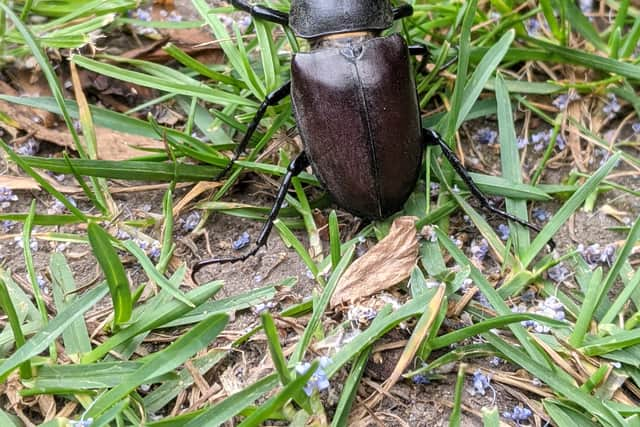

But experts said the long running great stag hunt survey has found sites where the beetle has been found are becoming scarcer in some areas, and numbers may also be declining.
The team behind the survey hope that in future it might be possible to monitor stag beetles acoustically by using software to recognise their “thrumming” in flight – but they need significant amounts of video and audio data first to explore if that is a possibility.
For the first time, PTES is asking people to contribute audio and video files of stag beetles in flight that they manage to record, as part of the great stag hunt.
The charity also said every sighting people submit is valuable.
Nida Al-Fulaij, chief executive at PTES, said data gathered from the citizen science survey is “essential” for tracking progress towards the Government’s legally binding targets to reverse declines in nature.
“Understanding trends in invertebrate populations is challenging but, with the public’s help, we can learn more about the smaller creatures who share our world and target conservation efforts effectively.”
Last year, volunteers submitted more than 12,000 records of stag beetles, including more than 2,500 in Hampshire, more than 1,600 in Surrey, and 1,000 in Greater London.
The beetles are mostly found in southern England, except on the chalky North and South Downs, but there are hotspots in the Severn Valley and coastal areas in the South West, the conservationists said.
They can be spotted basking on sunlit walls and warm tarmac, while the large white grubs of the insect’s larval stage are found underground among the roots of old tree stumps.
The males are recognisable from their antler-like jaws and can be seen on warm, still evenings flying in search of the slightly-smaller females who lack the antlers.
David Wembridge, conservation research and strategy officer at PTES, who runs the great stag hunt said: “The extraordinary adult beetles that you might see in the summer are only half the story.
“The larvae, which develop into big, white grubs with orange heads, feed on rotting wood in the soil, often at the base of an old tree stump or fence post. They’ll grow, hidden away, for three to five years before emerging as adults in late May.
“It’s the loss of these deadwood habitats that we think might be impacting stag beetle numbers, and why it’s so important to retain or create these sorts of habitat in your garden.”
Gardeners can help stag beetles by leaving old tree stumps and deadwood in place, cover water butts and ensure escape routes from ponds, minimise the use of weed matting so the creatures can easily emerge from the soil, and carefully moving any beetles found on roads or tarmac to nearby greenery.
To take part in the survey and find out more, visit stagbeetles.ptes.org.