
‘Road system’ for bees will boost populations across the South Downs National Park

A bee corridor has been set up to help the struggling insects flourish in a national park
A “road system” made up of 100 hectares of wildflower meadows has been created in the South Downs National Park to help boost bee populations.
The land, the size of 4,000 tennis courts, has been set aside to create the “bee lines” in farms, road verges, school fields, cemeteries and football and golf clubs to help provide new habitat to support struggling bee populations in Hampshire and Sussex.
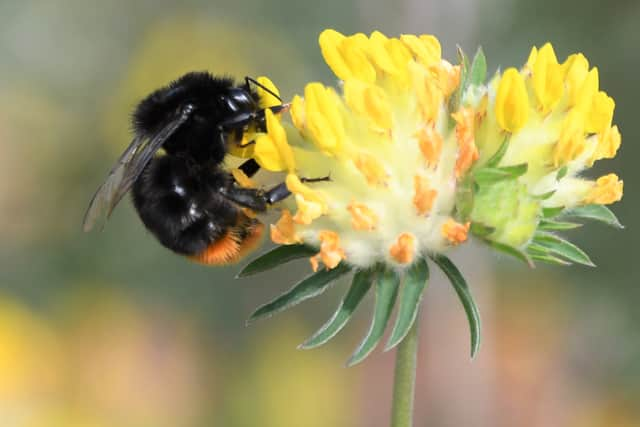

A spokesman for the national park, which is marking World Bee Day on May 20, said there are 270 species of wild bees in the UK but 13 species have been lost with another 35 at risk of extinction.
He said: “The ‘bee lines’ effectively create a ‘road system’ for pollinating insects, allowing them to move through the landscape more easily. To date, the South Downs Trust, the official charity for the National Park, has funded 37 projects and 106 hectares of habitat has been transformed into wildflower oases. A further eight projects, yet to be confirmed, across Hampshire and Sussex will benefit from more funding later this year.”
Jan Knowlson, biodiversity officer for the national park, said: “It’s fantastic to see this network of wildflower corridors really becoming established and there are early signs that bees and butterflies are returning, but there’s still so much more that needs to be done to help pollinators.
“These insects have been on a steep decline across the UK for several decades and are now under threat from climate change and habitat loss, so it’s really important we create more spaces for pollinators to thrive.
“One out of every three mouthfuls of our food depends on pollinators such as bees.”
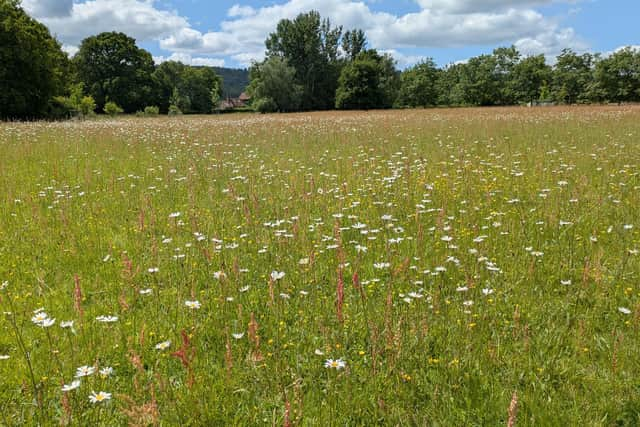
She added: “People can also do their bit to help on a smaller scale by simply creating wilder areas of their gardens and planting some wildflower seeds. Working together we can turn this around and our countryside and towns can once again be buzzing with bees.”
Sarah Womersley, a volunteer who helps maintain a site at Blacknest Fields, in Binsted, Hampshire, said: “We’re seeing a much more diverse range of flora in the meadows and that in turn is helping our pollinators.
“We’ve seen over 30 species of butterflies on the field, more than 30 species of bees and wasps and over 190 different species of moths. Seeing what Blacknest Fields has become over the past five years has been wonderful.”
Ian Forrest, a landowner who received a grant from the scheme for a 1.5-hectare field called Tangletrees, near Graffham, West Sussex, said: “It’s encouraging to see oxeye daisies and other species starting to thrive in the new meadow.
“Creating habitat takes time, but this grant has given us the chance to make a real start for pollinators and biodiversity.”