
Repairs progress at former brass foundry in Portsmouth Historic Dockyard
Historic naval base building faces ongoing decay amid plans for long-term conservation
A former foundry that helped Portsmouth’s dockyard adapt to steam-powered technology is undergoing repairs.
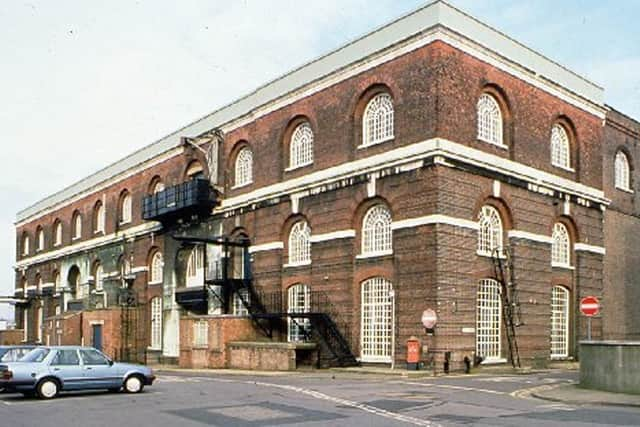

Repair works to a former brass foundry in Portsmouth Historic Dockyard are progressing, with the Ministry of Defence seeking amendments to previously approved plans.
The latest proposals concern Store 34, the former Brass Foundry on Victoria Road, within HM Naval Base Portsmouth’s conservation area.
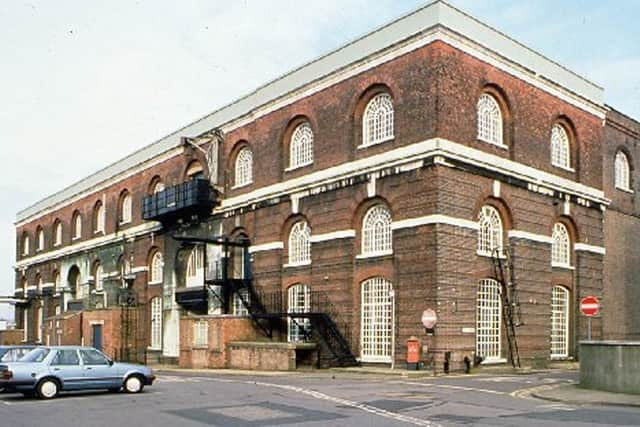
Built in 1848 to designs by Captain H James of the Royal Engineers, the building was originally used as an iron and brass foundry, playing a key role in the dockyard’s expansion to support emerging steam-powered technologies.
According to a heritage statement submitted with the application, Historic England identified the building “as an important component” of the dockyard’s expansion during the 1840s.
The foundry initially handled both iron and brass casting, before becoming dedicated to brass following the construction of a separate iron foundry elsewhere in the dockyard. A substantial extension was added to the west in 1925 to accommodate a new steel foundry.
The building, which is owned by the Ministry of Defence (MoD), is now used primarily for naval base storage.
Planning applications for repair works were approved in 2018 and amended in 2021. The works included structural repairs, masonry reconstruction, steelwork remediation and other reinstatement measures intended to secure the building’s long-term conservation.
A heritage statement prepared by Significa Heritage Consulting Limited on behalf of Easton Bevins supports the latest amendments.
The revisions have been prompted by the discontinuation of the originally approved bricks, material availability and practical construction considerations.
Historic England has assigned the building a priority C grade on its Heritage at Risk Register, indicating it is suffering from “slow decay”.
A 2017 report by Dr Ann Coats, titled ‘Heritage at Risk’ said the former foundry remained unused and was at risk from water ingress.
Pattern-making had moved to the building’s upper floor by 1930, while the last smelting reportedly took place in 1983, with machinery removed the following year.
A 1997 survey also found water penetrating the building’s western elevation.