
Royal Navy: Ex-First Sea Lord pushes for new multi role strike ships to be made faster amid "difficult” period

A former First Sea Lord has pushed the government to build a new set of ships at a faster rate.
Admiral Lord West of Spithead has asked the government whether it plans to bring forward the date for when new multi role strike ships will be part of the Royal Navy. The vessels, which were previously described to have “offensive and defensive” capabilities, are due to replace HMS Albion and HMS Bulwark.
There is a push to build various new warships and introduce new technology, but there is a concern that older military assets will reach the end of their lifespan before that. Lord West asked the government in a parliamentary written question what steps are being taken to increase the build rate of the five remaining multi-role strike ships.
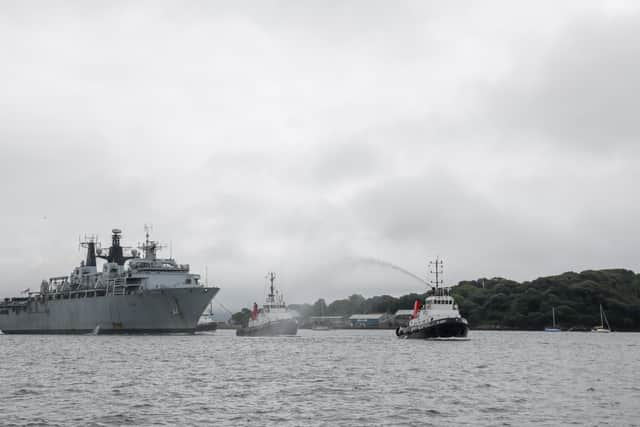

Lord Vernon Coaker, Labour peer for defence, said: “The Multi-Role Strike Ship (MRSS) programme is progressing through the Concept Phase and remains on target for the first of class to be delivered in the early 2030s. The Royal Navy and Defence Equipment and Support are conducting detailed work on key user requirements, conceptual designs, affordability, and exportability assessments.
“Alongside other shipbuilding programmes, they are maintaining engagement with all leading UK shipbuilding entities and the National Shipbuilding Office (NSO) on the best commercial approach to deliver for the Navy and the Nation.”
The government are trying to sell HMS Albion and Bulwark after they were retired in November last year, with an agreement currently being formulated with Brazil. Military officials are keen for the MRSS programme to produce vessels with advanced technology, more than just modern versions of the former Landing Platform Docks.
Captain Derek Powles, the Royal Navy’s MRSS Programme Director, previously said the project’s assessment period will be a challenge as the space, weight, power, and costs of the ships need to be analysed. With older vessels slowly ending their service life, there is a push to produce replacements at a faster rate - particularly in the UK to boost the economy.

The government signalled that it would prioritise small to medium sized enterprises for defence contracts, in a bid to maintain high-skilled jobs. Even with this pledge, there have been some snags with regards to shipbuilding. Port Glasgow, operated by the Ferguson Marine - owned by the Scottish government - will produce three sections for a Type 26 frigate. Previously, it would have been left with a lack of jobs after the ferry Glen Rosa was built.
Portsmouth used to be a hub for shipbuilding, but many of those skills have since been centralised in Scotland and other areas. Former Chief of Defence Staff, Admiral Sir Tony Radakin, previously said in a defence select committee meeting that the Royal Navy is facing a “difficult transition”.
“The Navy is halfway through its recapitalisation programme, and that feels quite tough,” he said. “You have frigates that are really old and coming to the end of their life. They’re due to be replaced. The replacements aren’t quite ready, and so you’re in a difficult transition. The good news is there are 21 or 22 ships and submarines either in build or on order. That is going in the right direction.”