
"We’ll reimagine the Royal Navy": First Sea Lord pledges to cut "ageing" ships for "world-leading" vessels

Cutting-edge Royal Navy warships will replace their ageing counterparts at pace in a “bold vision”.
First Sea Lord Sir Gwyn Jenkins promises for a “strategic transformation” to take place in the force - allowing the UK to project its power around the world. His goal is for the fleet to be bolstered with fresh vessels at a time when their older counterparts are ageing rapidly.
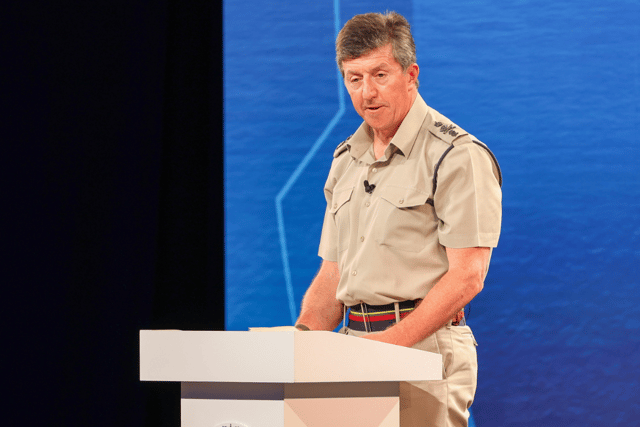

During a speech made at the DSEI 2025 conference in London, he said: “Our operational schedule is as relentless as ever, with global deployments from the High North to the Indo-Pacific, securing trade routes and supporting allies. Many of our ships, like the Type 23 Frigates, are ageing, extended to twice their planned service life.
“And we work hard to recruit and retain the talent we need, and I am proud to serve alongside our outstanding people, but we need to continually find ways of doing better, and adapt faster.”
“It’s needed now”
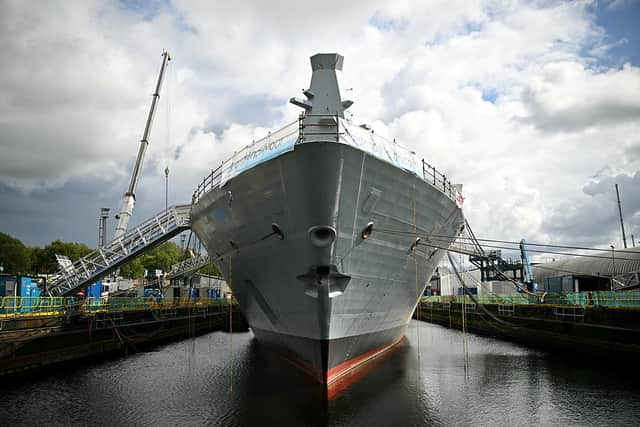
The First Sea Lord said he wants un-crewed vessels sailing alongside Royal Navy warships within the next two years. Set out in the Strategic Defence Review, advanced anti-submarine Type 26 frigates are set to be bolstered by autonomous surface vessels.
Sir Gwyn said despite the challenges, the role of the Royal Navy remains the same - keep sea lanes open, protect the nation from seaborne attacks, and promote and defend national interests around the world. “We need to do things differently, to grow and diversify the fleet,” he added.
“Together we will reimagine the Royal Navy as a new hybrid Navy. We will move to a dispersed but digitally connected fleet of crewed, un-crewed, and autonomous platforms that will redefine maritime military power. We have a bold vision, which will place our country in the vanguard of autonomous warships and maritime warfare – under, on, above and from the sea.”
When will Type 26 frigates enter the water? By 2027
The First Sea Lord said this is not an aim to be realised in the distant future, “it’s needed now”. He added the philosophy going forward will be for “un-crewed wherever possible; crewed only where necessary”.
“A blend of crewed and un-crewed host platforms will be networked together, but capable of independent operations, creating a system of systems that will enable us to find, track and if required act against our opponents, adding both mass and lethality to our already capable Submarines, Ships and aircraft in the North Atlantic,” he said. “We will have our first Bastion sensors in the water next year.”
“For the surface, imagine in the near future, a Type 26 Frigate goes into the North Atlantic. It is the most advanced Anti-Submarine Frigate in the world, a truly world leading ship capability with a highly trained and most effective crew.
“But it is not alone. It is sailing in company with two un-crewed escorts, who use AI to work in tandem with the warship. Together, they provide a three ship task group in their own right. The escorts will protect the parent ship, adding to its sensors, weapons and decoy capabilities.
“Because they have no crew, the escorts are not complex vessels, they are easy to produce at scale, even easier to configure to specific mission requirements as the task demands. If this sounds fanciful, it is not. It is my aim to have the first of our un-crewed escort ships sailing alongside our Royal Navy warships within the next two years. We will then begin scaling across the Navy.”