
“More needs to be done” Residents question whether enough is being done to tackle crime in Portsmouth
From shoplifting and street violence to antisocial behaviour and knife crime, Portsmouth residents are raising concerns about safety, with many questioning whether reporting incidents makes any difference.
Portsmouth is a city recognised for its maritime history, vibrant nightlife and busy shopping streets.
However, behind its attractions, crime and antisocial behaviour continue to affect the everyday lives of residents, workers and visitors.
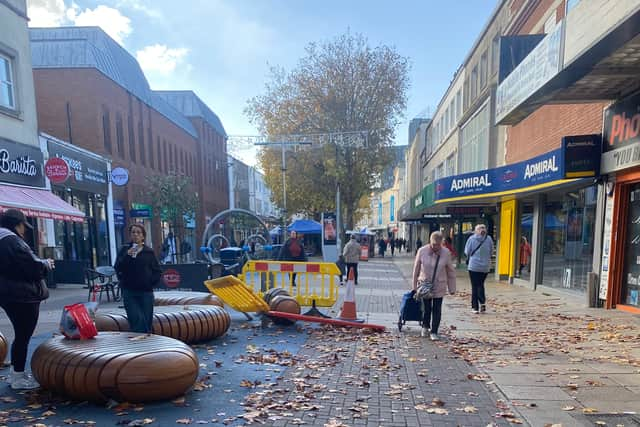

From shoplifting in the city centre to disturbances in residential neighbourhoods, public safety remains a significant concern. While police statistics provide an indication of offending across the city, recent research suggests that residents' experiences and perceptions reveal another side to the problem.
A community safety survey discussed by Portsmouth City Council's Health and Wellbeing Board found that 77 per cent of residents had witnessed or experienced antisocial behaviour during the previous year. This was the highest proportion recorded since 2014
But despite this many residents believe reporting antisocial behaviour is pointless, raising questions about confidence in the authorities responsible for tackling the issue.
Antisocial behaviour problem
Antisocial behaviour can take many forms, from excessive noise and vandalism to drug-related activity, street drinking and intimidating groups gathering in public spaces.
According to the council's latest community safety survey, approximately a third of Portsmouth residents consider antisocial behaviour a significant local issue.
Drug use and supply, e-scooters, traffic-related problems, street noise and people gathering in public spaces were among the most commonly identified concerns.
The survey also found that most types of reported antisocial behaviour had increased since 2024, with drug-related incidents and traffic issues showing particularly noticeable rises.
However, the findings revealed a major problem with reporting. Only a quarter of antisocial behaviour incidents were reported to the authorities.
Reasons included apathy, residents becoming accustomed to the behaviour and a lack of confidence that anything would be done.
Caroline Bell, corporate projects manager, described the community safety survey as one of the council's most important sources of local insight. She acknowledged that many residents felt reporting antisocial behaviour was pointless, highlighting the importance of listening to communities and rebuilding public confidence.
Yet if residents do not believe their complaints will lead to action this raises a question of how will authorities understand the scale of the problem and be able to effectively tackle it?
For some residents, antisocial behaviour may have become such a regular occurrence that it is simply accepted as part of everyday life. David Rogers, 52, of Buckland, said: “We see groups of people being intimidating in the street, drinking and being a nuisance and not much ever seems to get done to stop it. There needs to be a visible presence from authorities and a deterrence.”

A city centre under pressure
Portsmouth city centre remains an important focus when discussing crime and public safety.
Areas such as Commercial Road attract shoppers, workers, students and visitors every day. However, concerns about antisocial behaviour and personal safety have affected how some people experience these public spaces.
The community safety survey found that more than half of residents avoided places where they felt unsafe. Commercial Road was the most frequently mentioned location, followed by Somerstown and Buckland.
Residents identified drug and alcohol use, antisocial behaviour, groups gathering and the visible presence of rough sleeping among their reasons for avoiding certain areas.
These findings demonstrate how antisocial behaviour can affect more than the immediate people involved. It can influence whether residents feel comfortable visiting local businesses, using public facilities or walking through their neighbourhoods.
Shoplifting is another challenge for the city. Police.uk figures recorded 3,072 shoplifting offences in Portsmouth during the 12 months to August 2026.
For retailers, theft can result in financial losses, increased security costs and additional pressure on staff. For shoppers, visible crime and disruptive behaviour can contribute to a perception that the city centre is becoming less welcoming.
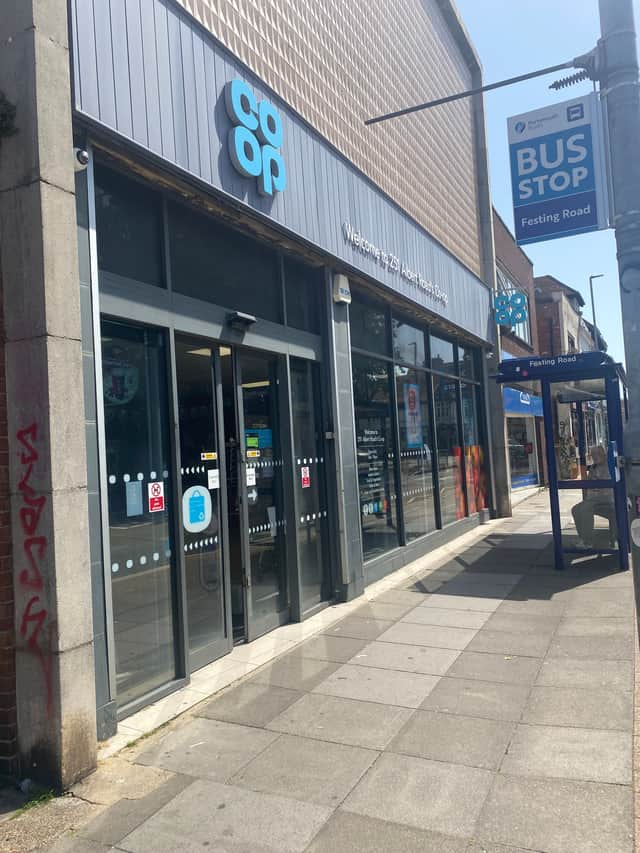
Such is the “brazen” regularity of shoplifting at Co-op in Albert Road, a resident known as Jeannie, who did not want her surname published, took it upon herself to make a stand after witnessing several incidents where she has been left fearing for her own safety.
The local has caught thieves red-handed taking items - and has even photographed some. But despite her efforts she has been left frustrated at the lack of action.
She said: “During the incident, I felt intimidated by those involved and was forced to leave the area and alter my usual route home in order to avoid further confrontation.
“After leaving the shop, the individual involved met with two accomplices who were waiting in the garden seating area outside the new Premier store on Albert Road. In my experience, this area has become a focal point for anti-social behaviour.
“I have personally felt intimidated on several occasions and now regularly cross the road to avoid walking past this location, particularly in the evenings.”
Meanwhile a case reported by The News this week highlighted the difficulties shops have with thieves. Damien Mitchell, 35, of Orchard Road, Southsea, caused terror in Tesco Express on Palmerston Road on July 24 when he was caught stealing items before turning violent when confronted by staff. It was only thanks to a group of men in the shop that matters did not escalate.
Judge Daniel Sawyer told Portsmouth Crown Court: “You were seen stealing and were asked to leave. You tried to antagonise staff when you picked up a bottle of prosecco and held it up like a weapon and threatened the woman.
“A group of young men stepped in to help her. They should be commended for stopping you and protecting her from you. They took the bottle off you and you left.”
Mitchell, who pleaded guilty to theft from a shop, threatening behaviour and assault, was jailed for 21 months.
Portsmouth City Councillors and residents recently shared their experiences of anti-social behaviour in Albert Road, Palmerston Road and Waverley Gardens during a council meeting where members discussed a motion to address anti-social behaviour (ASB) and crime in the city.
Three local residents spoke on the motion, including Chris Adeniran, the son of Charles Dickens ward councillor Yinka Adeniran. He said that ASB has become “so frequent” it’s started to become “normalised”, whether its “minis motorised bikes” or the “strong smell of drug use” or “loud threatening disagreements”.
He recalled an incident in which a man physically assaulted him on Commercial Road in the city centre, leaving him with a broken nose and cracked teeth.
Shortly afterwards, his car window was smashed and around £4,000 of items were stolen. Both incidents were reported to the police but were “concluded quickly, almost giving the impression there was little point in reporting them at all”.
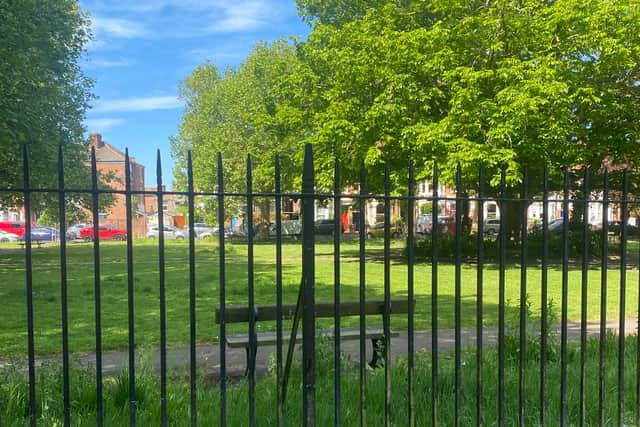
Another resident, Jim Kynvin, spoke of his experience living close to Waverley Gardens in Southsea, which sees regular ASB during the warmer months. He argued it is caused by a high density of supported housing for active or recovering addicts in the area and that without fundamental change, the issue will persist.
Violence and knife crime
Violent crime remains another significant concern across Portsmouth.
Police.uk recorded 10,440 violence and sexual offences in the city between September 2025 and August 2026, making it the largest recorded crime category during that period.
The community safety survey also found that around a third of residents had been victims of crime in the previous year. Threats, intimidation, verbal abuse and hate crime were identified as factors contributing to concerns.
Knife crime is another issue affecting public confidence. The survey found that more than half of residents now viewed knife crime as a problem, despite police and hospital data showing no increase in knife offences or related admissions.
Alex Rennie, deputy police and crime commissioner for Hampshire and the Isle of Wight, described Portsmouth and Southampton as regional “hotspots” for knife crime. However, he explained that there were no particular areas of Portsmouth that could be singled out.
He also highlighted a reduction in knife crime across Hampshire and the Isle of Wight, alongside initiatives including knife amnesty bins, metal detectors in nightlife areas and targeted stop-and-search activity.
When a teenager was stabbed in a car park off London Road by Cliffdale Gardens below Portsdown Hill locals said it is “just what happens today”.
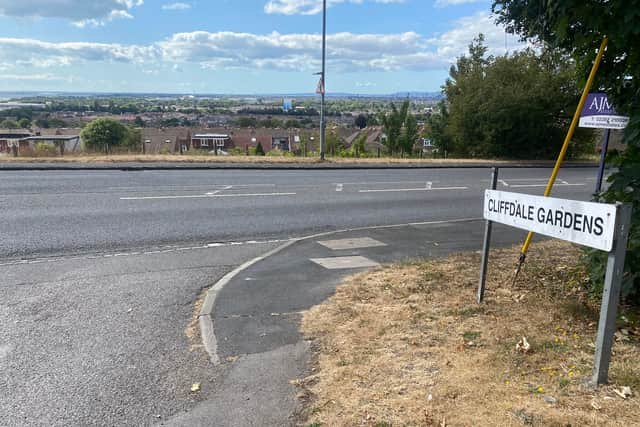
One local said: “These sort of attacks are a worry but unfortunately it’s part of life today. You see it on the news all the time.”
Southsea resident Lesley Preacher, 66, said: “You hear about it all the time. It seems so common these days compared to before. You have to be on your guard more. We don’t live in a perfect world but taking strong action against these crimes would help.”
Rebuilding confidence in the community
The reality that only a quarter of antisocial behaviour incidents were reported presents a challenge for authorities. Without these authorities will have problems identifying patterns, understanding issues and deciding where resources are needed.
However, encouraging residents to report incidents is only part of the solution. Authorities must also demonstrate that complaints are being acknowledged and acted upon.
Portsmouth remains a city with a strong community identity and a rich history. Yet the latest survey findings show that concerns about antisocial behaviour are affecting residents' confidence in public spaces.
The challenge is not simply to reduce recorded crime, but to ensure people feel safe enough to enjoy their own neighbourhoods.
Ultimately, a safer Portsmouth will depend on more than statistics. It will depend on whether residents believe their voices matter and whether reporting a problem leads to meaningful action.
Residents can report antisocial behaviour through Portsmouth City Council's online reporting portal or by calling its City Helpdesk on 023 9283 4092. Non-emergency crimes can be reported to Hampshire and Isle of Wight Constabulary through 101, while emergencies should be reported through 999.