
Pass rate for Royal Navy fitness test falls amid structural changes

Changes were made to the fitness test, backed by the Institute of Naval Medicine
The pass rate for the Royal Navy fitness test has fallen sharply in recent years.
Data revealed in a Freedom of Information Request by The House shown a sharp decline between 2014 and 2024. Between 2014 and 2015, 96.6 per cent of men and women in the fleet passed their test at the first attempt.
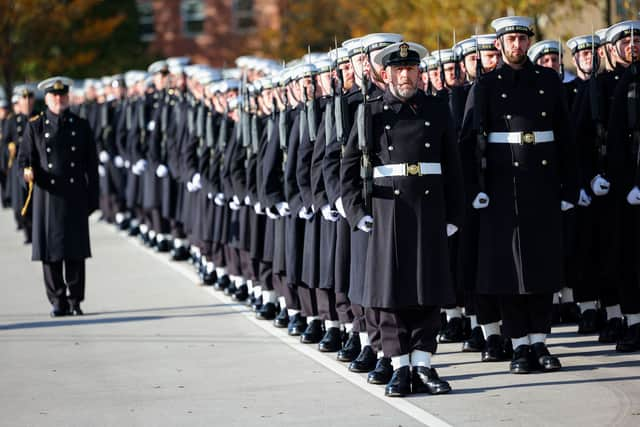

This has fallen by nearly 20 per cent over the past decade, with 77 per cent of prospective candidates achieving success at the first time of asking in 2024. The number of Royal Navy personnel who failed their fitness tests at the first time of asking but passed within a year rose from 1,198 to 1,219 in that timespan.
The same Ministry of Defence (MoD) statistics showed people on the first attempt, but passed more than a year later, increased from six people in 2014 to 86 in 2014.
The Physical Employment Standard (RNPES) replaced the previous Royal Navy Fitness Test in 2024, aiming to create a fair challenge which prepared prospective personnel for the rigours of military service. The Standard was informed by scientific research from the Institute of Naval Medicine and is designed to ensure personnel are physically prepared for the most demanding tasks required during front‑line service at sea.
A Royal Navy spokesperson said: “Ensuring our personnel are fit to fight remains one of our highest priorities, and standards have always been maintained. We continuously analyse results and their application to relevant scenarios and have recently introduced a new test focused on operational ship-based tasks, ensuring our personnel are best prepared to handle on-board emergencies.”
The new assessment consists of seven gym‑based exercises, completed within 15 minutes, each directly reflecting real‑world operational activities such as moving equipment and responding to emergencies on board ships and submarines. All regulars, reserves and Royal Fleet Reservists on full‑commitment service, have to undertake it.
The government is targeting certain policies to make joining the military more attractive. An inflation pay rise of 3.6 per cent was agreed for 2026/2027 - the third success wage bump since 2024 which equates to an accumulative increase of 14.1 per cent.
The Ministry of Defence (MoD) has also bought back 36,000 military family homes from Annington and have pledged to redevelop them. Minister for veterans and people, Calvin Bailey, said Labour will continue to focus on pay, accommodation, family support and welfare for the armed forces.
He added: “Latest personnel figures show early signs that these measures are starting to make a real difference in positively affecting recruitment and retention with the total UK Armed Forces increasing over the past year. More people are now joining than leaving, meaning numbers are now increasing for the first time in several years, while in the Royal Navy and Royal Marines, fewer personnel are choosing to leave. Together, this points to clear progress in strengthening both recruitment and retention across the Armed Forces.”