
'Unprofessional' Russia aircraft flies 'unnecessarily close' to HMS Prince of Wales dropping sonobuoys

The aircraft “repeatedly approached” the Royal Navy flagship
A Russian aircraft “repeatedly” approached the Royal Navy flagship while on deployment and got “unnecessarily close” to her.
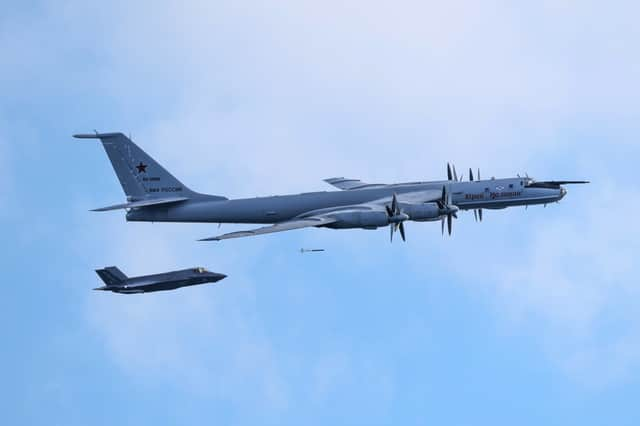
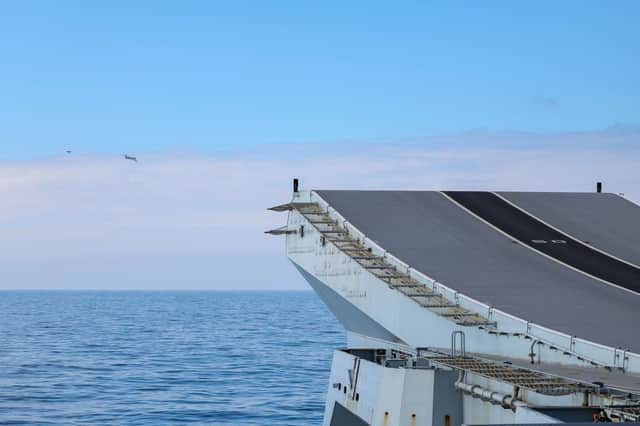
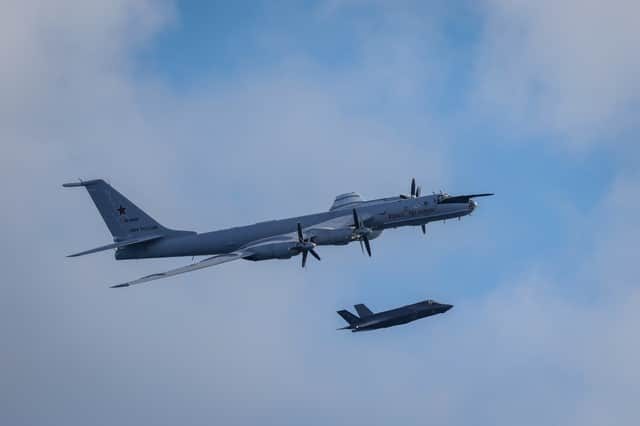
British fighter jets intercepted a Russian maritime patrol aircraft that flew near HMS Prince of Wales and the UK Carrier Strike Group (UKCSG) while they were operating in the Norwegian Sea.
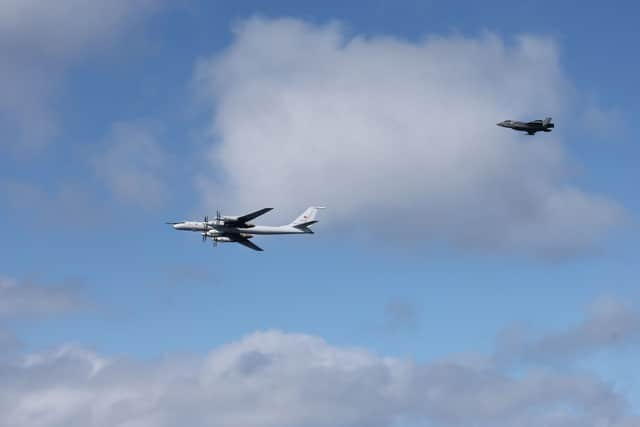

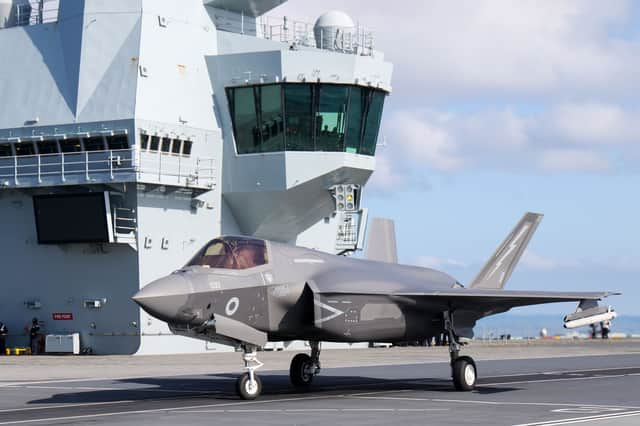
The Ministry of Defence said the Moscow ‘Bear-F’ plane acted in an “unsafe and unprofessional” manner. A spokesperson said: “While operating in the Norwegian Sea on Operation Firecrest, the UK’s Carrier Strike Group was repeatedly approached by a Russian ‘Bear-F’ maritime patrol aircraft.
“The Bear-F passed at low altitude and unnecessarily close to HMS Prince of Wales and dropped a large number of sonobuoys in close proximity to the carrier. This activity was unsafe and unprofessional. The Russian aircraft was intercepted and escorted by two UK F-35 jets from HMS Prince of Wales until it left the area.”
The incident took place in the Arctic last week. Sonobuoys are sonar devices which are used detect, locate, and track submarines and other vessels. A hydrophone sensor drops into the water and relays acoustic signals back to an aircraft for analysis.
HMS Prince of Wales is in the midst of Operation Firecrest, working alongside Nato allies to conduct various drills in the North Atlantic and High North. This is in response to growing Russian activity in the region, which has involved an increased submersible presence and threatening actions against UK undersea infrastructure.
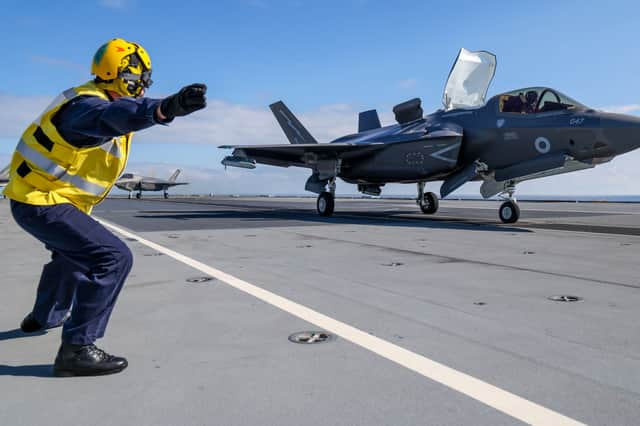
Defence secretary Dan Jarvis visited UK forces aboard the 65,000 carrier while she was deployed off Iceland under Nato command. F-35 fighter jets were conducting Nato air defence operations from the deck for the first time. The MoD said the visit comes as “elite British troops are taking command of the Alliance’s high readiness special operations force for the first time” to “help protect Nato allies against increasing Russian threats”.
Mr Jarvis told Channel 4 News: “We should be clear-eyed about the fact that the threat from Russia exists in every domain, under the water, on the water, on the land, in the sky, in space and in cyberspace as well.”
The new defence secretary, who replaced John Healey after he resigned over the Defence Investment Plan (Dip), also took questions on defence spending. US president Donald Trump once again criticised European nations over a lack of urgency.
Mr Jarvis said “some of what the Americans have said in recent times is absolutely right” and “Europe does need to step up”. He added: “We must honour the commitments that we’ve made to our Nato allies. That’s why we will be spending 3.5 per cent of GDP on defence by 2035.”
Mr Jarvis said likely next prime minister Andy Burnham “understands the importance of defending our nation” and will make sure “we’ve got the resources we need to keep the country safe”. He was accompanied by Icelandic foreign minister Thorgerdur Katrin Gunnarsdottir on the visit. The MoD said Iceland provides “vital support to allied forces operating from its territory, with this close cooperation boosting security in the North Atlantic”.
More than 1,500 British personnel are working aboard HMS Prince of Wales, who is accompanied by Type 45 destroyer HMS Duncan and RFA Tidespring. The UK’s Special Operations Forces assumed leadership of the Special Operations Component Command within Nato’s Allied Reaction Force (ARF) on July 1.
The MoD said the force is the “spearhead of the ARF, able to deploy anywhere in the world within days”. The UK has also assumed command of the maritime component of the ARF with Rear Admiral Mark Anderson and his battle staff taking up the post.
Mr Jarvis said: “We live in an increasingly dangerous and uncertain time, and it’s deployments like this, supported by allies and partners including Iceland, that improve our deterrence and defence as part of Nato. We are investing £298bn over the next four years to strengthen readiness and ensure our people have the kit and technology they need.”
Ms Gunnarsdottir added: “The visit of the UK Carrier Strike Group is a clear demonstration of Nato’s enhanced presence in this strategically important region, and one that Iceland is proud to support and contribute to. Nato continues to strengthen its deterrence and defence, demonstrating allied unity and resolve in the challenging environment of the North Atlantic and the Arctic.”