
"Uplift" in Royal Navy, Army and RAF spending outpaces social care amid "defence industrial superpower" plans

Financial boosts to defence spending are outpacing the government’s contributions to health and social care.
Chancellor Rachel Reeves is continuing to push plans of the UK becoming a “defence industrial superpower”, with continued investments in the Royal Navy, Army and RAF.
Announcing the Spending Review in parliament yesterday (June 11), Ms Reeves echoed the words of her prime minister Sir Keir Starmer - stating the world has entered a “new era for defence and security” due to rising global tensions. Billions of pounds of investment in armed forces accommodation, new munitions factories, new attack submarines, drones, aircraft carrier and warship upgrades, and other areas, were outlined in the recently published Strategic Defence Review (SDR).


These investments were set under plans to increase defence spending to 2.5 per cent of GDP by 2027, and an “ambition” of three per cent in the next parliament. A slight improvement on the initial figure was set out by Ms Reeves.
She told The House of Commons: “A new era in the threats we face demands a new era for defence and security. That’s why we took the decision to prioritise our defence spending by reducing Overseas Development Aid so that defence spending will now rise to 2.6 per cent of GDP by April 2027 including the contribution of our intelligence agencies.
“That uplift provides funding for the Defence Secretary, with a £11bn increase in defence spending and a £600m uplift for our security and intelligence agencies. That investment will deliver not only security, but also renewal in Aldermaston and Lincoln; Portsmouth and Filton; On the Clyde and in Rosyth. Investment in Scotland. Jobs in Scotland. Defence for the United Kingdom, opposed by the Scottish National Party delivered by Labour.”
Challenges for defence spending
The investment in Portsmouth refers to the project to regenerate the Royal Navy base with new jetties, berths, and other improvements. Part of the government’s focus is to try and stimulate growth through military spending by creating jobs.
Despite the aims, many challenges lie in the shadows. Figures released by the Treasury to accompany the Spending Review that average annual real-terms growth for defence between the 2023-24 and 2028-29 financial year is 3.6 per cent. This figure outstrips the average departmental spending rise of 2.3 per cent, including Health and Social Care at 2.8 per cent.
Pressures from other departments will weight on the government as it continues its armed forces push. Cries have also been heard that these plans don’t go far enough. Nato is calling on all its members to meet a 3.5 per cent commitment for core defence spending, with 1.5 per cent further spent on defence-related areas.
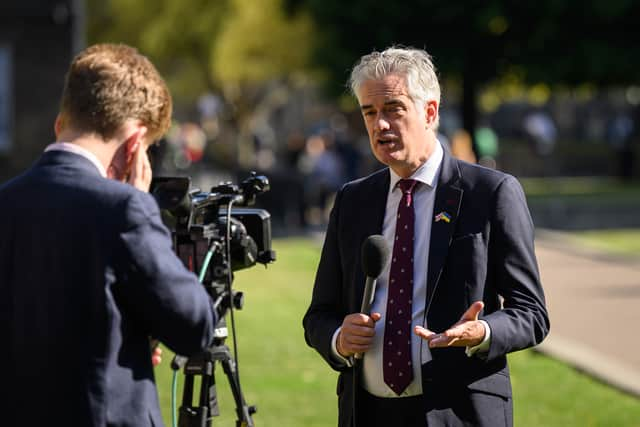
Mark Rutte, the alliance’s secretary-general, has said he sees no “discrepancy” between the UK’s current commitments and the target he has set out. In parliament, shadow defence secretary James Cartlidge attached Labour’s plans.
He said: “It became clear today Labour has no plan to increase defence spending beyond 2.5 per cent. In fact, due to their smoke and mirrors they may not even spend the 2.5 per cent they promised. This comes at the worst possible time. With our enemies rearming, now is not the time for dither and delay. Rachel Reeves should put party politics aside and back our calls to get to three per cent in this Parliament.”