
"New Defence Era", "Damp Squib", "Shocking": Royal Navy, Army and RAF reforms scrutinised amid controversy

Major defence reforms have been scrutinised in parliament for the first time amid a controversy that’s overshadowed it.
Defence secretary John Healey made a statement in parliament this afternoon (June 2) outlining the Strategic Defence Review (SDR) - stating the country is in a new era for defence amid an array of threats Britain faces. Prime minister Sir Keir Starmer announced the plans earlier this morning, with the aim of pushing the UK into “war-fighting readiness”. Mr Healey said all 62 of the SDR’s recommendations will be implemented and are costed.
“The threats we face are more serious and less predictable than at any time since The Cold War,” he told the House of Commons. “We face war in Europe, growing Russian aggression, new nuclear risks and daily cyber attacks at home. Our adversaries are working more in alliance with one another while technology is changing how war is fought. We’re in an era which demands a new era for defence. We are dedicated to defence.
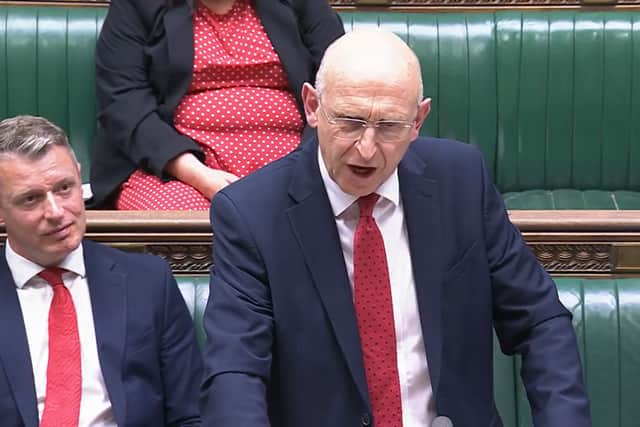

“We need stronger deterrence to avoid the huge human and economic costs that wars create. We prevent wars by being strong enough to fight and win them. That is what has made Nato the strongest defence alliance over the last 75 years.”
Promises of expanding Royal Navy, Army and RAF
Before the full report was published, details of major policies were released to the public. This included aims to build 12 new nuclear attack submarines, six new munitions factories alongside the procurement of thousands of long-range weapons and the investment of billions of pounds into military housing to name a few.
Mr Healey outlined plans to further bolster the Royal Navy. He said: “We will establish a new hybrid Navy by building dreadnought, AUKUS submarines, cutting-edge warships and new autonomous vessels. Our carriers will carry the first hybrid air-wings in Europe.”
The defence secretary said the next generation of RAF will be developed: F-35s, upgraded typhoons and autonomous fighters to defend our skies and be able to strike anywhere in the world - while expanding Army capabilities to make the force ten-times more lethal. He promised the Army will have at least 76,000 full-time soldier within the next parliament.
Further emphasis will be placed on autonomous systems, with spending on such capabilities doubling this parliament. Mr Healey added the number of cadets will increase by 30 per cent, a voluntary gap year scheme will be introduced to school and college leavers, and a strategic defence reserve will be developed by 2030.
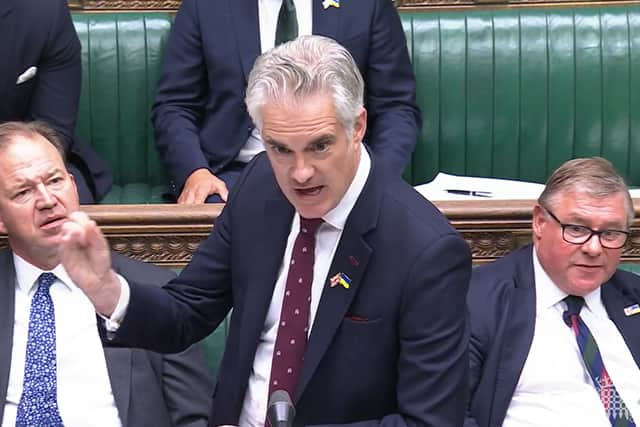
“This SDR is the first defence review in a generation for growth and transformation in UK defence,” the Labour politician said. “It will end 14 years of hollowing out in our armed forces.”
Controversy and opposition
Opposition MPs were aghast after hearing the SDR was handed to national journalists and senior officials at British defence companies before it could be scrutinised in parliament. The News did not receive advanced coverage. Politicians also criticised Starmer’s media statement being made before the SDR was read to parliament.
Speaker Sir Lindsay Hoyle took exception to details being briefed over the weekend and the prime minister’s announcement several hours before the document was published to parliament, against the ministerial code. “It is the Government’s code, not the House, but I regard this particularly a blatant breach,” he said.
Shadow defence secretary James Cartlidge, Conservative, was furious with the SDR’s publication. “Some of the biggest defence companies in this land were given copies at 8am this morning,” he said. “They’ve had hours to read it. I haven’t read it at all. This is meant to be a democracy. How can we hold them to account?”
Mr Cartlidge attacked the finances behind the review. “An SDR without the funding is an empty wish list. The ships and submarines it talks of are a fantasy fleet. The prime minister was unable to give a date by when 3 per cent will be reached. The treasury has not approved a plan to pay for it. The secretary of state and I have both been treasury ministers. He knows how this works.
“For the treasury to approve a plan, it would have to feature billions of pounds of cuts to existing MoD programmes. This SDR has dodged the big decisions on existing capabilities. After so much hype, the SDR is a damp squib. It’s overdue, underfunded and totally underwhelming. Our armed forces deserve better than this.”
Mr Healey said 2.5 per cent spending of GDP on defence was built into the terms of reference, with the ambition of three per cent being delivered in the next parliament.
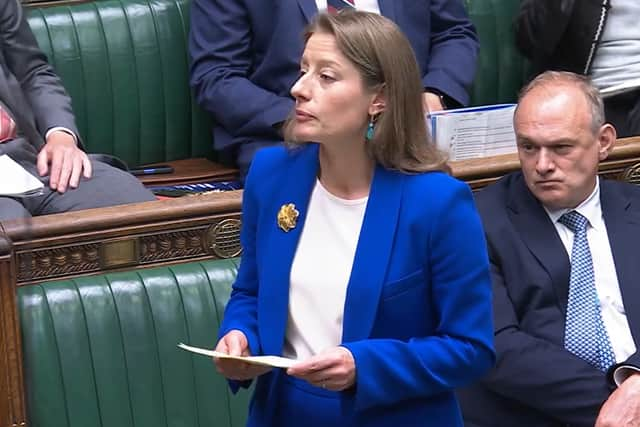
Liberal Democrat MP Helen Maguire called for cross-party on talks on how the government can reach three per cent, for military houses to be brought under the Decent Home Standard, and for more to be done to restore the plummeting number of soldiers in the Army. She said: “Not since The Cold War have we faced such a myriad of threats to our defence. Barbaric Russian imperialism under Putin threatening Ukraine’s freedom.
“A Trumpian white house defined by indifference and even antagonism to the defence of Europe, and the rising threat posed by China, Iran and North Korea. These threats pose a once in a generation risk to our country’s defence. Meeting generational risk will require making generational commitments.
“It’s staggering that we still do not have a clear answer to the vital question, where is the money coming from to fund these ambitions? It’s a shocking list without the money to pay for it. The government has flip-flopped on whether we can expect defence spending to rise to 3 per cent of GDP, the figure of which the proposals of the SDR are premised. This puts the cart before the carat before the horse for funding the nation’s defence sends entirely the wrong message to Putin and our other adversaries.”