
'Unmistakable message' sent as RFA strikes bolstered with more officers set to walk out in bitter pay row

Strikes within the Royal Fleet Auxiliary have been bolstered with more officers taking industrial action.
The Nautilus International union confirmed today that its members voted to walk out amid an ongoing dispute over pay and conditions. Members of the National Union of Rail, Maritime and Transport Workers (RMT) union voted overwhelmingly to strike earlier this week, amid claims that the Royal Fleet Auxiliary (RFA) failed to show that it met minimum wage thresholds.
Director of organising for Nautilus, Martyn Gray, said: “This was a huge ballot and a big success for RFA members. We balloted significantly more officers than ever before, and more people returned their ballot papers than in the last dispute. That level of engagement speaks volumes about the strength of feeling over pay and conditions across the RFA.”
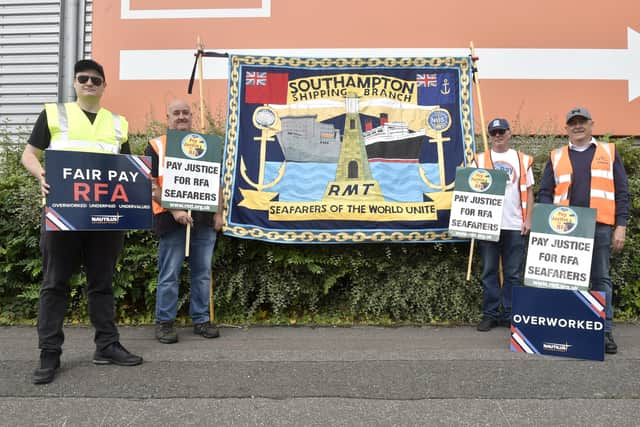

The union’s ballot achieved a 56 per cent turnout, with 88 per cent voting in favour of industrial action. A total of 95 per cent agreed to take action short of a strike. This was one of the largest ballots the organisation ever conducted, with a 32 per cent increase in members participating than in 2024, with 17 per cent more officers being involved. Many of the seafarers carried out their votes while at sea and on active deployment. Naval support staff often aid the Royal Navy on various operations, and will work alongside HMS Prince of Wales during Operation Firecest in the Arctic.
Members rejected a 4.5 per cent pay offer in January, which was described as being “wholly inadequate” while failing to address real terms pay erosion, recruitment and retention pressures, and other factors impacting staff such as restrictive maternity policies. Nautilus International said it remained open to meaningful discussions to secure a fair and sustainable offer for RFA seafarers.
Mr Gray added: “When nearly nine in 10 members voting are prepared to take strike action, and 95 per cent are willing to take action short of strike, it sends an unmistakable message. RFA officers have been patient and constructive, but they are also clear that the current pay arrangements are no longer sustainable.”
Industrial action previously took place in Portsmouth on multiple occasions in 2024. Sailors spoke of rampant staff shortages, outdated equipment, broken ships, and employees being “harassed” into returning to work early to fill in gaps on operations.
A pay settlement was agreed in January 2025, with Labour MP Luke Pollard stating this would restore faith within the force. Unions have said the promised reforms of better pay and conditions have failed to materialise.
RMT general secretary Eddie Dempsey previously said: “Years of real terms falling behind in pay have left RFA seafarers worse off, and management still cannot show if all of our members are even being paid at least the minimum wage for the hours they are required to work,” he added.
“The absence of a transparent system for calculating pay, combined with excessive working hours, has created an unsustainable situation. RFA members are proud seafarers and this latest slap in the face will only add to a deepening crisis, it is time for the RFA and the Ministry of Defence to get around the table with this union.”