
Royal Navy top brass promises ‘there will not be a gap’ for Type 45 destroyers and new ships will be ready

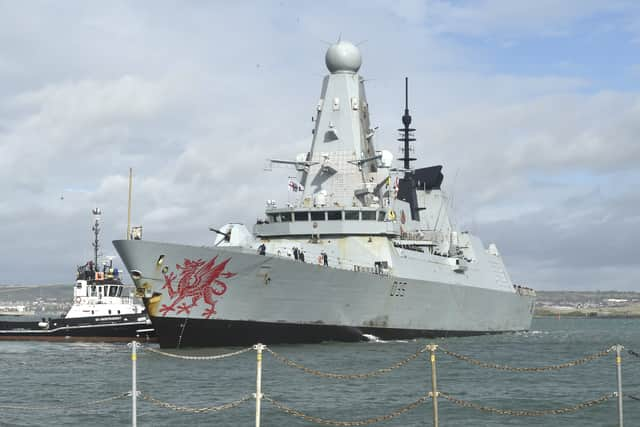
With the retirement date set for the Daring-class destroyers, new warships are being sought to take their place
New and improved ships will be ready to replace the current crop of Royal Navy destroyers, the Second Sea Lord has said.
Second Sea Lord Vice Admiral Paul Beattie is adamant that the fleet will be reinforced with new vessels by the time the Type 45s are decommissioned. The force is currently struggling with a shrinking number of frigates, numbering at just five while the majority of the 13 replacements won’t be ready until the 2030s.
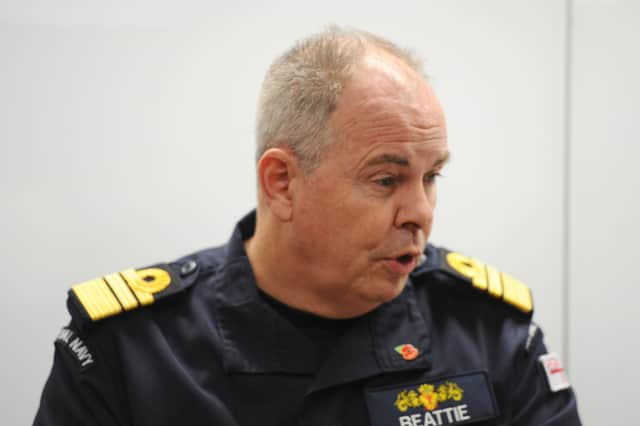

He told reporters at HMNB Portsmouth on November 5: “There will not be a gap. The Type 45s are there and start going out of service in 2035, nine years away. In this world of autonomy, nine years is actually a long time.
“There are plenty of providers out there that tell me they can produce the capability we need in two or three years. We just need to work out exactly what it is we need, and what those capabilities are.”
The Defence Investment Plan (Dip) announced replacements for the six Daring-class warships. Previous plans to produce a Type 83 destroyer were axed, after the programme was deemed ‘unaffordable and not what the modern threat demands’. Air Marshal Time Jones, Deputy Chief of Defence Staff, previously confirmed that Type 45 retirement dates will not be extended.
The Royal Navy is currently pushing towards a hybrid force, where conventional crewed ships will be supplement by autonomous vessels, submersibles and drones. A step towards this was achieved when the 1st Autonomous Squadron was commissioned into service.
Under the £15bn Dip, six new Common Combat Vessels (CCVs) were announced as a drone hub command platform for un-crewed capabilities. This is alongside Type 91 uncrewed missile platforms, Type 92 uncrewed underwater sensing platforms, Type 93 Extra-Large Uncrewed Underwater Vehicles and Type 94 uncrewed sensor platforms.
The CCVs are in the concept phase, with the new crewed and crewless ships set to be available in the 2030s. Vice Adm Peattie is fully behind the hybrid model and believes it will not overshadow upcoming crewed warships, such as the Type 26 City-class frigates.
He said: “It’s about providing mass, lethality and additional capability to those programmes. I still want the Type 26 frigate. It’s going to be the best ASW frigate in the world. It’s just very expensive and takes a long time to build.
“If we can deploy HMS Glasgow with USVs, fantastic, because if we try to adapt the platform to have that additional capability, it would be expensive and take years. This is a far quicker and far more effective method of doing it.”
The naval leader believes the hybrid model is essential for tackling threats from nations like Russia. “We’re comfortable in our plan of what things will look like in the North Atlantic,” he added.
“It was obvious to me that if we didn’t adapt, the risk would be significant. When you look at how you defend against the scale of autonomy, that’s quite a challenge in all domains.
“I think we’re ahead and world leading in this, but it won’t be long before others catch up. You need to drive that forward.”