
New Common Combat Vessels for Royal Navy stuck in 'initial stages of design' and not expected for years - when

An original programme to build new destroyers was scrapped, with these new systems due to replace the current crop of Type 45s
Six new modern warships are years away from being part of the Royal Navy fleet.
The Common Combat Vessels (CCVs), originally announced in the Defence Investment Plan (Dip), are not expected to be part of the force until the mid-2030s. With new hybrid capabilities hoped to be commissioned at the beginning of the decade, the designs for the CCVs have barely got off the ground.
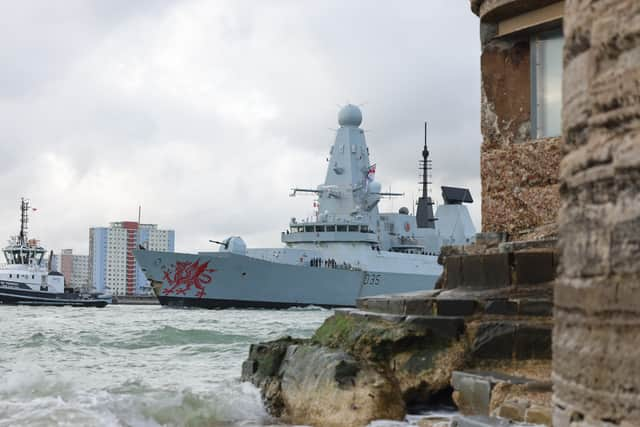

This is despite being billed to replace the current crop of Type 45 destroyers, and described as a “central brain” for other vessels. Conservative MP for Huntingdon, Ben Obese-Jecty, asked the government when the CCVs are expected to enter service.
Minister for defence readiness and industry, Luke Pollard, said: “The Hybrid Navy Integrated Air and Missile Defence capability will replace the current fleet of six Type 45 destroyers.
“While the Common Combat Vessel (CCV) remains in the initial stages of design, the Royal Navy’s aspiration is to sequence the arrival of the CCV and wider Hybrid Navy Integrated Air and Missile Defence capability with the out of service dates of the Type 45s in the mid-2030s onwards.”
Original plans to produce the new class of guide-missile warship, the Type 83 destroyer, were scrapped. Drawings and designed will be commissioned by the navy for drone-compatible vessels. Details including size, shape, equipment, and cost, are currently unknown. The Ministry of Defence (MoD) said the CCVs will “act as a control hub for uncrewed systems – extending the Navy’s reach, resilience and firepower without a proportional increase in crew or cost”.
Additional announcements were made for Type 91 uncrewed missile platforms, Type 92 uncrewed underwater sensing platforms, Type 93 Extra-Large Uncrewed Underwater Vehicles and Type 94 uncrewed sensor platforms. The MoD previously said these new ships will suit the pace and nature of modern warfare, with a move away from “a small number of large and expensive ships.
The Dip outlined £1.3bn worth of funding for these new ships. It added that by 2030, the government aims to have brought the first large autonomous vessels of the Hybrid Navy into service, including a prototype uncrewed missile platform and extra-large uncrewed underwater vessels (XLUUVs).
“From the early 2030s we will bring a new Hybrid Navy Maritime Air Defence system into service,” the report said. “It will comprise uncrewed missile (Type 91) and sensor (Type 94) platforms that will be distributed throughout our Maritime Task Groups, with a new Common Combat Vessel as the central brain, connecting and controlling the uncrewed elements. This system will eventually replace our Type 45 Destroyers, which are due to retire from 2035.”