
'Remarkable' renovation work taking shape at Fort Purbrook and Widley but others in Portsmouth at risk of ruin
.jpg?width=96&crop=1:1,smart)
Some of the city’s historic jewels will stand for generations to come, but others are deteriorating at an alarming rate
Painstaking efforts to restore treasured military heritage sites in the Portsmouth area are starting to take shape - but it’s still a race to save certain monuments being left to rot.
The city and surrounding towns host a rich tapestry of historic military fortifications, from Medieval towers to Victorian coastal forts. You can barely walk down a street without noticing a monument with decades of stories to tell.
Dedicated conservationists and eager volunteers have been at the forefront of protecting such sites. Many are being transformed after previously being abandoned. Fort Purbrook and Widley, two Palmerston forts dating back to 1800s, are some of them.
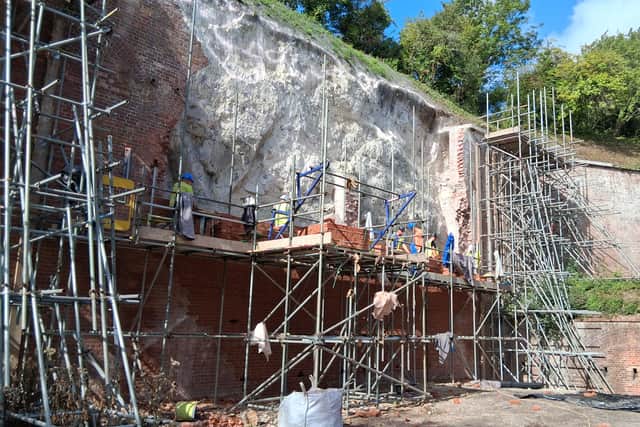

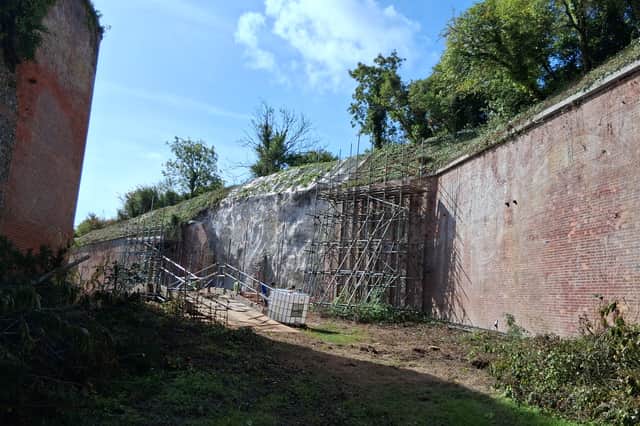
Fort Purbrook and Widley
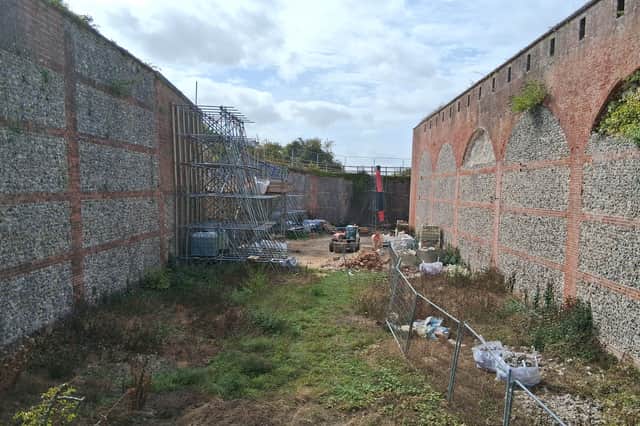
After securing funding from the Department for Environment, Food and Rural Affairs (Defra) through the Countryside Stewardship scheme, the £2.1m project - headed up by the Peter Ashley Activity Centres Trust - got underway in May.
The trust continues hosting various events at both forts, including outdoor and adventurous activities, residential experiences, and equestrian activities. CEO Darren Bridgeman said: “We are extremely positive about the investment being made in the forts.
“They are substantial historic structures and caring for them is inevitably a long-term undertaking, so seeing significant conservation work taking place is hugely encouraging. A great deal has already been achieved across both sites, with work focused on protecting and conserving the historic fabric and addressing areas that require particular attention.”
The project focuses on repairing and preserving the historic ramparts of both Grade II* listed forts. Extensive jobs such as clearing dense vegetation need finishing, with both sites becoming heavily overgrown. Compacted roots and plants are deeply embedded into the mortar joints on the scarp and counterscarp walls. These need to be cleared and some of the brickwork will need to be repaired.
Two points of collapse at Fort Purbrook need to be restored, alongside another at Fort Widley. The project will also see the restoration of chalk grassland from damaging scrub, creating nature-rich areas for the public to enjoy.
Other complications will crop up as the project progresses. “With sites of this age, scale and complexity, conservation is never really a single project with a defined end point,” Mr Bridgeman added.
“It is about making steady progress, prioritising the areas of greatest need and ensuring that the work undertaken today supports the long-term future of the forts. Fort Purbrook and Fort Widley are significant parts of Portsmouth’s heritage, but we also want them to be much more than historic structures that people simply look at.
“Their real value comes from continuing to use them, opening them up to people and creating opportunities for future generations to experience and enjoy them. We are incredibly fortunate to operate from two such extraordinary sites and take our responsibility for their stewardship very seriously. Continued investment in their conservation, alongside their active use by young people and the community, gives us a real opportunity to ensure they remain an important part of Portsmouth’s story for many years to come.”
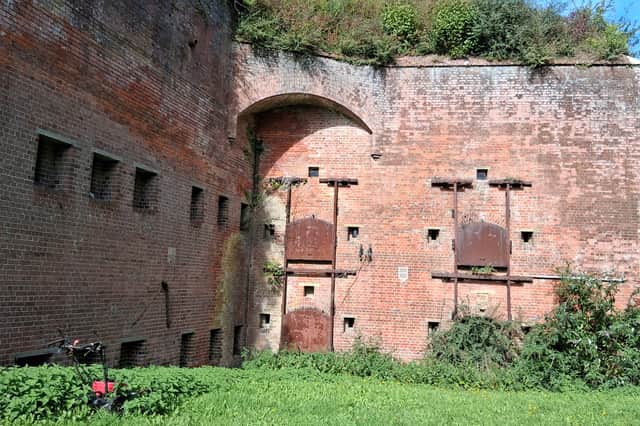
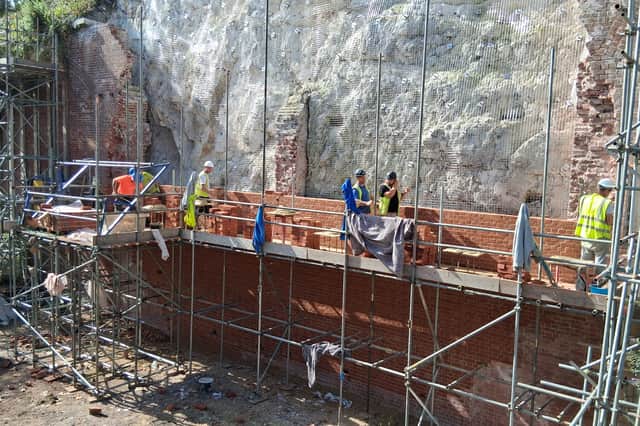
Success stories and miserable tales
Both scheduled monuments are listed on Historic England’s Heritage At Risk Register. Sites listed are considered as having the greatest risk of being lost as a result of neglect, decay or inappropriate development.
The fortifications were ordered by Lord Palmerston to be built to repel a French land-invasion while protecting Portsmouth and the Royal Navy. They’re nicknamed Palmerston’s Follies, as the initial sites had their main armament facing inland and they were considered impractical. Today, they’re in various states of condition.
Fort Brockhurst in Gunners Way is thriving after being established as a place for community events following its restoration. It has hosted heritage open days and various high profile engagements.
Others have been given a new lease of life altogether. Fort Gilkicker in Stokes Bay, previously abandoned and left to rot, is being remodelled into 22 homes utilising the Casemates.
For Lewis Sharp, secretary of the Palmerston Forts Society, any project that keeps them alive - as a heritage site or otherwise - is positive. He added that today’s conservation efforts at Fort Purbrook and Widley are better than previous efforts in the 1920s.
“We’ve very supportive of anyone who provides them with a sustainable future,” he said. “Some are in poor condition, others are not as bad. Fort Brockhurst is excellent and shows what can be done. We’re interested in their preservation, and we support anyone occupying a fort for the public good if they’re willing to look after them.”
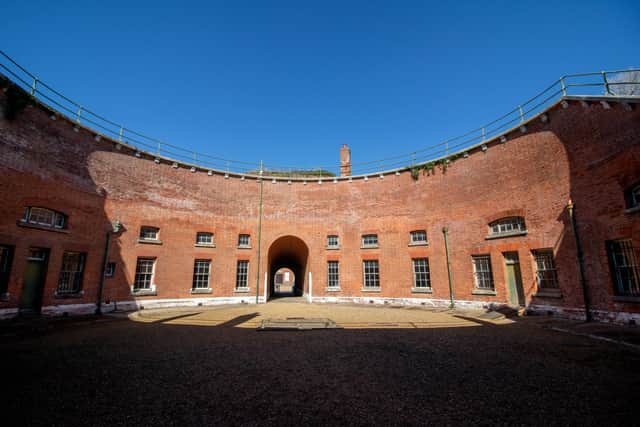
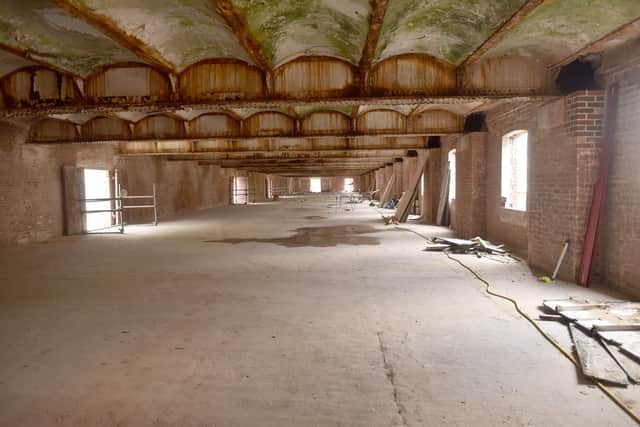
Many of the landmarks have fallen into disrepair. Fort Elson and Gomer have deteriorated significantly with no sign of them being restored. Fort Rowner, on the grounds of HMS Sultan in Military Road, was described as “crumbling into the ground” at a Culture, Media and Sport committee meeting in January 2026.
There are currently no plans to dispose of the site. Major General Andy Sturrock, Director of Strategy and Plans at the MoD’s Defence Infrastructure Organisation (DIO), previously said budgets don’t stretch far enough to look after all of the heritage landmarks.
“There’s a little group who would love to take on Fort Rowner,” Mr Sharp said. “You’d have to extend the perimeter fence to make it outside the boundary, but that would cost a staggering amount of money.
“We’ve written to the MoD to get access to do some documentation for Fort Elson. We got somewhere after Caroline Dinenage asked about it. We know they do regular maintenance inside the base.”
He added: “We’re taking a long term view of things. The situation is much better than it ever was. They would have liked to demolish it in the past, but now the attitude is more positive.”
Work to restore troublesome sites
Gosport MP Dame Caroline Dinenage said there’s exciting developments going on around the town at Royal Clarence Yard and the Royal Navy Rum Store. She has been left frustrated by “potential investment being turned away due to excessive bureaucracy from the DIO”.
“Releasing historic buildings from defence estate is a win-win - our heritage is given long term protection and the local economy is given a serious boost,” she added. “The Parliamentary Committee I Chair held an inquiry recently to ask whether the DIO, that manages these buildings, is operating a policy of managed decline.
“We found that without a more coherent and proactive approach, increasing numbers of historic buildings will fall into disuse or managed decline, representing a loss not only to the historic environment but to local economic growth and regeneration."
A Ministry of Defence spokesperson said: “We regularly assess the defence estate to ensure it meets operational needs and provides value for money to taxpayers. Historic features across the defence estate are regularly inspected and maintained, while ensuring buildings remain safe, functional and fit for purpose.”


A Historic England spokesperson said the organisation works with government departments and others to dispose of heritage sites and deliver the best possible outcome, particularly the MoD with its Portsmouth dockyard sites.
The recently published Protecting Built Heritage report advised that government departments produce and publish asset-level heritage management plans for all listed buildings within their estate. Officials will have to assess their condition, set out maintenance schedules, and outline plans for reuse or disposal. These need to be regularly updated, and subject to external scrutiny.
“The coastal fortifications of the Portsmouth area hold immense heritage significance as one of the greatest concentrations of historic military architecture in Europe,” they added. “Spanning nearly two millennia of defensive engineering, these structures demonstrate the evolution of artillery warfare.
“We do sometimes facilitate the sales of assets. For significant or complex heritage sites, we advise on what is likely to be feasible to help provide potential developers with a realistic understanding of what might be achieved, limiting financial risk and further deterioration of the heritage asset.
“The MoD manages a huge challenge with a very large number of heritage assets. The full maintenance backlog for the Ministry of Defence is unknown, but the National Audit Office puts what is known at £15bn.
“Portsmouth has an extensive military historic environment, the conservation of which is a substantial challenge, but also a remarkable resource and opportunity.”