
"Superpower" remains untapped as many "wonderful" Gosport Royal Navy and military fortifications "left to rot"

“Managed decline” is causing many “wonderful” military heritage sites in Gosport to be left in limbo while “rotting in front of our eyes”.
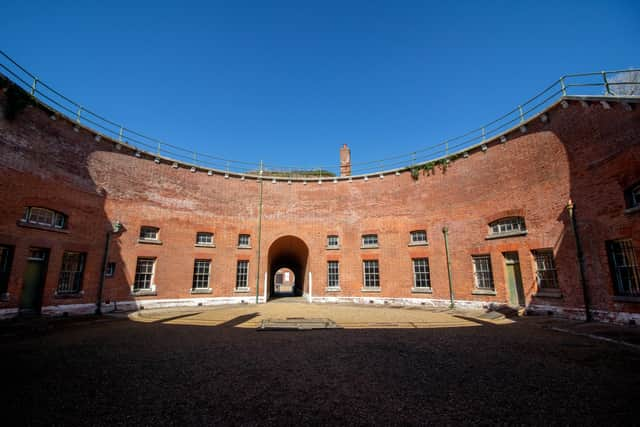
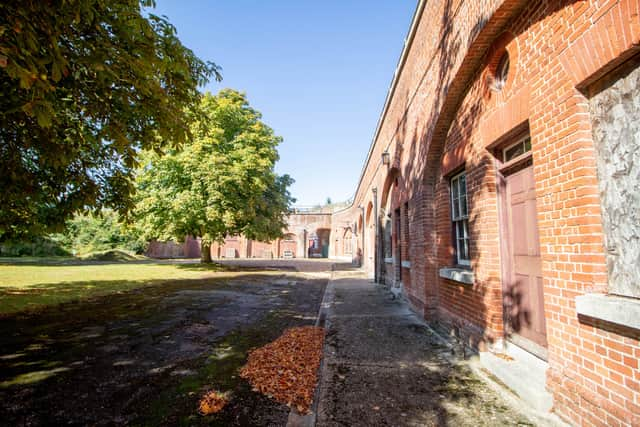
Politicians and conservationists are seeking to find solutions to the number of forts and monuments degrading without a future use. Some locations, such as Fort Brockhurst, have been given a new lease of life, but others - Fort Blockhouse and Fort Elson - are deteriorating rapidly.
Many are on Ministry of Defence (MoD) land and have been cited for disposal. The Culture, Media and Sport Committee has launched an inquiry to analyse the problem and submit recommendations on how heritage can be better protected.


Speaking to The News at Fort Brockhurst today (September 5), committee chair Dame Caroline Dinenage, said: “We’re hoping for a more positive future for these wonderful military assets. I wanted to start the inquiry as it was born out of my frustrations at watching credible military history rotting in front of our eyes.
“The MoD has a policy of managed decline for a lot of their heritage assets. They’re allowed to rot away without them being brought back into use. That feels like a missed opportunity. If they’re not using them, they should dispose of them, and allow someone that's passionate about these buildings to restore them.”
“A mixed picture”
Conservationists and academics gathered for the Fortifications At Risk conference, organised by the Fortress Study Group. They highlighted concerns and brought forward successful examples of rejuvenated military sites that future generations can enjoy.
Group chair David Clarke said the state of Gosport military forts isn’t a desperate one, but requires people with imaginative new ideas to step in and transform them. These Palmerston fortifications, built in the Victorian era, were constructed to defence against a French land invasion - with many given various of uses over the years.

“It’s a mixed picture,” he added. “There are some very good examples, but there are more challenging ones. Compared to the 1960s and 70s, we’re in a much better place. In that era, the Stokes Bay lines were filled in and Fort Gomer was demolished. Nobody is talking about that sort of thing now.”
The 62-year-old added that many locations, including Fort Gilkicker and the Stokes Bay Diving Museum, have been transformed thanks to great investment. He praised Fort Brockhurst, an English Heritage site that’s now a pillar of the community, run by volunteers and able to host various events. Mr Clarke hopes that MoD-owned fortifications can be improved and not lost to time.
“The MoD are as good of a custodian as they’re able to be,” he added. “It’s not their core remit to look after heritage. There is an opportunity to work with them to find ways they can sustain their sites, and where they’re looking to relinquish them, find a new use for them.
“The opportunity for these sites going forward is to be part of the community. Inevitably, it becomes harder for developers to come in the longer they’re left. If you neglected your house, then it would deteriorate and you’d have to spend money restoring it. Whoever cares for a particular site needs to implement modest intervention in good time, to save from long term deterioration. With many sites, that isn’t the priority.”
Mr Clarke said there are only so many fortification enthusiasts in the world, so he believes a variety of uses for the forts should be considered. “I’d love to see them all restored as military history sites, but that’s just not practical and not a sustainable future,” he added.
“You need a mixture. Perhaps one site focusing on history, and others on commercial and community uses, while respecting the heritage and not sweeping it away.”
This could be Gosport’s “superpower”
Dr Celia Clark, a Portsmouth-based conservationist who specialises in the regeneration of former military sites, said she has been left frustrated by the lack of communication from the MoD’s Defence Infrastructure Organisation (DIO).
The chair of the Hampshire Building Preservation Trust said the organisation was looking to conserve the Submarine Training Escape Tower in Gosport, but were unable to receive guidance. “We never get to talk to the officials and it’s pretty impossible to get hold of them,” she added.

“If the MoD are serious about disposing of their surplus sites, they need to be in dialogue with local planners, developers, and conservationists. Those are the people who know the most about the history of those sites. I understand their priority is defending the nation, but the situation is complicated and we need to talk to each other.”
The Protecting Built Heritage inquiry remains ongoing. Ms Dinenage said positive glimmers of light can pave the way for sites to become community hubs and boost the economy, though “red tape” remains a stumbling block.
The Gosport Conservative MP added: “Gosport’s heritage and history is our superpower. We’ve got a lot of local people who are really passionate and proud of our military history. We need to be maximising its potential, and that’s patchy at the moment. We’ve seen some remarkable organisations breathing new life into some of our historic buildings.
Visit our newsletter page today and sign up for a great range of free emails featuring the city’s biggest news and sport headlines

“We take its history for granted as we have so much of it, but international tourists visiting the town would be blown away. I don’t think we capitalise on it enough. Fort Brockhurst is a sleeping giant, absolutely stunning and vast. There’s a huge appetite among local organisations to make use of the sites. It’s about bringing everyone together to make it happen
“We’ve had disused forts which were sitting there rotting at the taxpayers expense, losing their historical significance to the area. No one took a blind bit of notice to that, but as soon as a developer comes in and wants to bring them back to their glory, organisations and government bodies are stepping and saying ‘you can’t do that because of planning, heritage, or environment concerns’. It’s ridiculous. These were organisations that were happy to see these sites crumble into the ground.”
The MoD is due to submit a recapitalisation plan to the government by February 2026, as stated in the Strategic Defence Review’s approved recommendations. The report said the plan should “identify opportunities for drawing in private-sector expertise and capital as quickly as possible”, and “mechanisms for realising this potential as a matter of urgency”.
It added: “Under the Recapitalisation Plan, the MOD must assess how best to generate income and maximise the value of its assets, adjusting the Defence Estate Optimisation programme accordingly. Where alternative use or disposal is the right option, the Defence Infrastructure Organisation must have a strategy for the risk-adjusted maximisation of proceeds, engaging actively with the private sector.”