
Fort Gilkicker project 'holds key' to converting historic military sites saving government 'embarrassment'

Transforming abandoned military heritage sites into housing developments can save ”red-faced embarrassment” and meet the governments housing targets.
Dame Caroline Dinenage, Conservative MP for Gosport, called for the endless hurdles that developers face when converting heritage sites to be removed - especially if they’re left abandoned and unloved for years. Speaking to the Culture, Media and Sport Committee, she cited Fort Gilkicker as an example of where work is finally being done after years of it “rotting into the ground.”
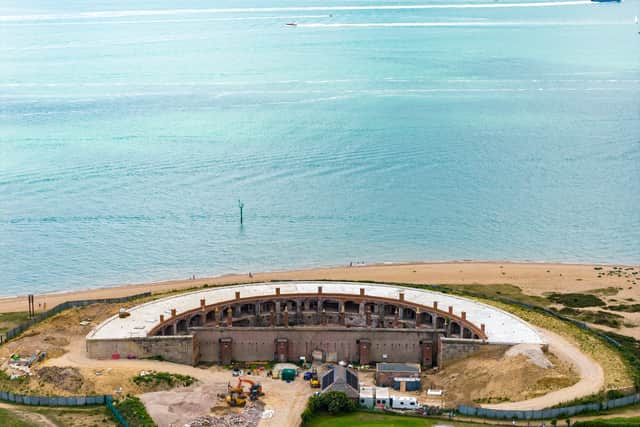

The Victorian fort off Stokes Bay, built in 1871 to protect the Royal Navy from a potential French land invasion, is being remodelled into 22 homes. A locally rooted team is working hard to breath new life into the massive masonry and vaulted casemates, but it took several years to get to this stage. Dame Caroline believes its an example of what can happen with other sites.
“Fort Gilkicker has had successive owners because it’s a complex historic and former military site,” Dame Caroline said. “It was rotting into the ground. Kids were clambering all over it at risk of life and limb. Someone comes along and buys it with the view of turning it into a housing development and restoring it to its former glory. At that point, so many layers of bureaucracy get thrown on top of them.
“Whether it’s Natural England making them try and find newts and rehouse them, or the local authority putting in more bars they have to jump over, it becomes financially so punitive that it’s almost impossible to deliver it in a way that’s going to have any benefit for investors. They’re doing it out of the goodness of their heart rather than any commercial advantage. When is that going to change?”

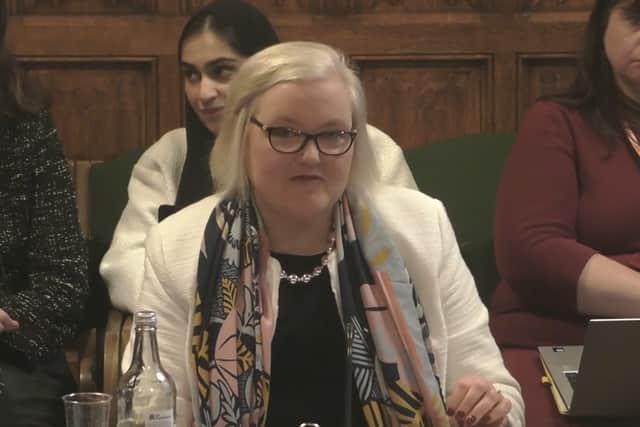
Baroness Fiona Twycross, minister for museums, heritage and gambling, said changes to the national planning policy framework are currently in consultation. “It needs to shift to remove some of the barriers,” she added. “The conversations I’ve been having is about making sure it’s no longer seen as a disadvantage to be trying to reuse a heritage site.
“It actually should be seen as an advantage and something they can embrace as we’re making it more straight forward. The hoops they have to jump through currently are clearly a disincentive.”
Many of the Palmerston forts are facing varied futures. Fort Rowner appears is unlikely to be restored, currently situated on the grounds of HMS Sultan and “crumbling into the ground”. Passionate volunteers and conservationists are continuing to work at pace to restore Fort Widley, with vital bridge repairs being made during steps to take the site off of Historic England’s heritage at risk register.
Ms Dinenage is calling for measures to make it easier for developers to restore abandoned military sites, especially if they can be used for housing. She said there’s a possibility of creating 670,000 new homes across the UK.
“The government is staring down the barrel of red-faced embarrassment that they’re not going to deliver on the housing numbers they promised, 1.5m new houses, we’re nowhere near that,” she added. “You’ve got the secret. You’re holding the key to the door to unlock the government’s huge embarrassment in this. Why aren’t you waving a flag and rallying people behind this?”
Baroness Twycross said: “I’m confident we’re going to make changes to make this much easier. I appreciate that it would be popular to say we’re just going to tear up the red tape, but we need to get this right. This is about reusing our heritage buildings in an appropriate way.
“We need to go through the consultation first. I appreciate it would be very popular to say we’re chucking it all down the drain, but we want these properties to be developed in a way which is sympathetic to their heritage and are good places for people to live. We’re confident that with the changes which will come through the consultation that we can make a really valuable contribution to that goal of housing targets.”
Fazima Osborn, deputy director of heritage for the Department for Culture, Media and Sport, added: “As soon as the new framework is published, that should start to influence decision making. That’ll encourage the local planning authority to make different decisions. Historic England has good pre-application services, who can help developers with designs and practical applications for what might be needed for the site. That allows speed and de-risking of the projects.”