
Caring Hampshire vet nurse wins prestigious equine welfare award
A Hampshire veterinary nurse has been recognised for her commitment to improving the wellbeing of horses.
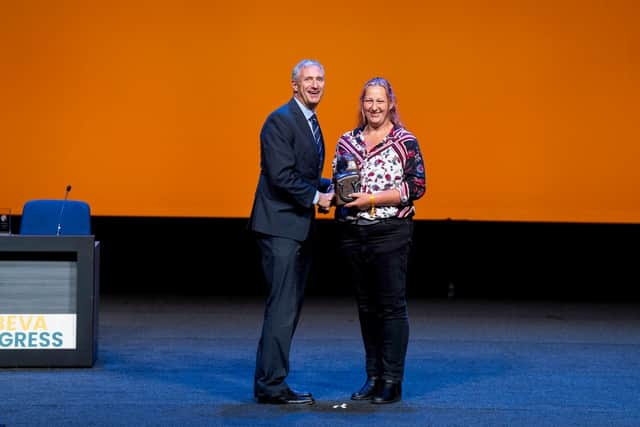

Phillippa Pritchard, who is an equine veterinary nurse and clinical supervisor at Liphook Equine Hospital, was presented with the British Equestrian Veterinary Association (BEVA) Equine Welfare Award at the annual BEVA Congress in Birmingham.
She was chosen to receive the award because of her compassionate approach to caring for hospitalised patients and introducing ways to reduce their fear, stress and anxiety.
Phillippa has worked at Liphook Equine Hospital for 22 years and is part of the team that cares for in-patients. She also goes out to see clients and work with horses who feel anxious in certain situations and help them overcome their worries.
Through her role as a clinical coach at the hospital, Phillippa supports and mentors colleagues and trainee veterinary nurses and teaches at VetPartners’ Nursing School, which is based at the equine hospital. She has also led initiatives to champion the role of equine veterinary nurses and help them enjoy fulfilling and rewarding careers.
Celebrating its 50th anniversary this year, Liphook Equine Hospital is one of the largest equine veterinary hospitals in the UK. It delivers the highest levels of round-the-clock care to patients that are referred from veterinary practices around the country, and has a team of mobile vets that visit horses across Hampshire and the South East. The hospital also has a state-of-the-art specialist equine diagnostic laboratory that analyses samples and interprets results for vets across the UK.
Phillippa, who was presented with her trophy by Chris Burghes, chief executive of equine welfare charity Blue Cross, said she is hugely proud to have won the award.
Phillippa said: “It is so nice for myself, and the whole team at Liphook, to receive recognition for the efforts we make to put our patients’ welfare at the heart of everything we do.
“When sick or injured horses come to a veterinary hospital, we will focus on their physical health but being in a new environment can be a a scary and worrying time for them so it’s important that we consider their emotional wellbeing as well. Through looking at each horses as an individual and making small changes where necessary, we can create a calm and positive experience for them, and keeping them happy and relaxed has the added benefit of supporting and aiding their recovery.”
At BEVA Congress, which was attended by around 2,000 veterinary professionals, Phillippa also gave a presentation to delegates on enriching the environment of hospitalised patients. She shared some of the initiatives Liphook has introduced, including placing mirrors opposite isolated patients so they don’t feel alone, installing low stable doors so small ponies can see out and using different ways to give horses their food, to replicate natural foraging behaviour.
Phillippa added: “I want to help horses behave as naturally as possible and demonstrate normal equine behaviour, even though they are in a hospital environment. There are so many things you can do that are very easy and don’t take a lot of time, such as putting a radio on or placing some of their feed in a rubber Kong toy or a treat ball so they have to use their brain to get it out and it keeps them occupied and prolongs their eating time. It’s really rewarding when you see the difference it can make to horses.”