
Portsmouth 100: The history of Canoe Lake - how it went from The Great Morass to a beloved part of the city
In the first of a regular series looking at Portsmouth’s colourful past, historian Leo John Davies reveals the background of Canoe Lake
“You’re not proper Pompey unless you’ve fallen in the lake, right?” Terence Carvalho, Portsmouth Ambassador, speaking to LJD Histories.
Well, if you had lived in Southsea two hundred years ago, or Croxton Town, as it was then known, you would have hoped never to set foot in the wasteland that would one day become Canoe Lake.
City Records from 1884 paint a bleak picture, describing it as: “A dismal-looking depression, strewn with rusty tins, mouldy rubbish and other abominations.”

This part of Portsea Island was known as the Great Morass. A desolate stretch of marshland, damp, unhealthy, and deeply unpopular. In short, it was a place no one wanted and no-one enjoyed, apart from flies and vermin, that is.
Yet by the nineteenth century, Portsmouth was changing rapidly. Its population grew as dockyard work expanded, maritime employment flourished, and the Royal Navy continued to draw people from across country and class. With more people came pressure and with pressure came investment.
Throughout the early 1800s, new suburbs began to creep outward, absorbing nearby areas such as Fratton, which survives today as a recognisable part of the city. By the mid-century, Clarence Esplanade and Pier had been constructed, and Portsmouth gained its first public park, hospital, library, and horse-drawn tram system in the decades that followed.
This wave of development only attracted more residents and visitors. Portsmouth was becoming the place to be.
Croxton Town was rebranded as Southsea, borrowing its name from the nearby Tudor castle overlooking the Solent. This area was fast becoming a fashionable seaside resort.
But there was a problem. Before postcards could be sent across the country inviting tourists to sunny Southsea, the city would have to confront the unsightly, unhealthy reality of the Great Morass.
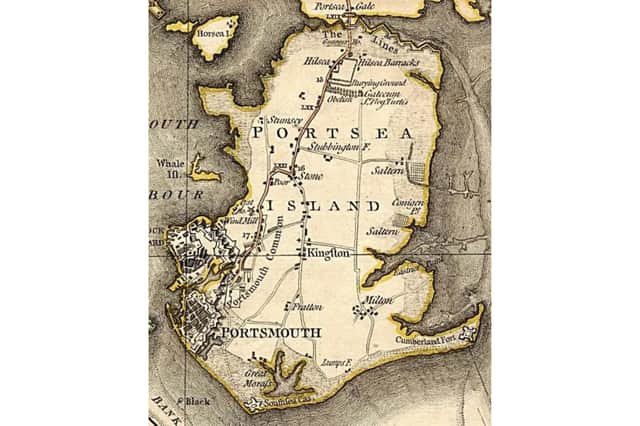
What followed was a mass programme of public investment. The Great Morass was drained, cleared, and levelled, transformed through one of Portsmouth’s earliest experiments in shared leisure for the community.
And it proved to be one of its most successful. Where there had once been wasteland, a new landscape emerged.
In 1886, the Mayor officially opened Canoe Lake, a shiny, state-of-the-art public park with a large body of water at its heart. This was not merely an engineering achievement, but a celebration of the community.
It was a place designed for friends, families, and neighbours across Southsea to gather, relax, and enjoy their surroundings.
In order to retain some of its marshy roots, the lake was filled with seawater. It remains so to this day, regularly topped up when gates connecting to Southsea beach are opened at high tide.
This connection to the sea ensured that Canoe Lake became a place of enjoyment not only for people, but for wildlife too. Small fish and crabs arrive with the tide, making it a much-loved spot for generations of children armed with buckets, string, and bait.
As one local resident recalled in 2015: “I spent many years bringing my children with a bucket, a line and some bacon to fish for crabs and they loved it. We always put them back as they were small and the fun was the fishing.”
Unlike private gardens or exclusive resorts, Canoe Lake was open, public, and social. It offered simple pleasures, boating on the water, walking across the green, crabbing at the lake’s edge, and in doing so created an accessible space that brought strangers together and helped shape a shared sense of community.

“It’s a great place to bring community together and also diverse communities together too. So often during the summer months, we see barbecues galore in Canoe Lake with different cultures taking advantage of the vast amount of green space in Southsea.” - Terence Carvalho, Portsmouth Ambassador, speaking to LJD Histories.
Generations of families have found a refuge from city life in Canoe Lake, built amongst Southsea’s bustling streets and right across from the popular promenade. Bird watchers, bat spotters, kids crabbing, and residents taking a deep breath in as they stroll around the lakeside.
Canoe Lake may be an artificial landscape, but its sense of community, and its living relationship with nature, remains deeply real to this day.
Yet it is not only a space for leisure. Canoe Lake is also a place of learning.
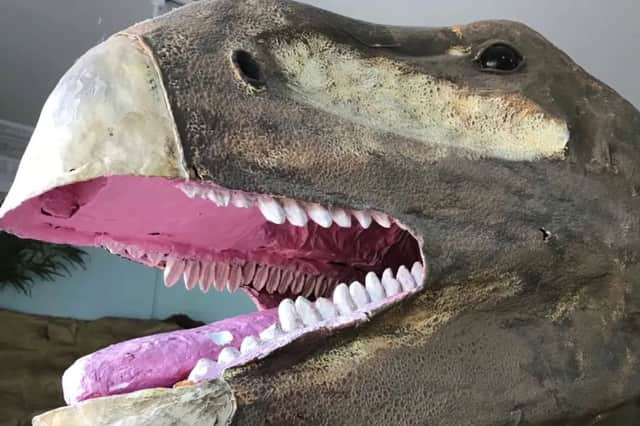
Standing beside the lake is Cumberland House, home to Portsmouth’s Natural History Museum, where visitors can explore the city’s urban wildlife through exhibits, a butterfly house, and even its own dinosaur sculpture.
Together, the lake and museum offer residents and visitors alike the chance to momentarily turn away from concrete and traffic, and reconnect with the natural world woven through the city itself.
The park is, in many ways, a scrapbook of love letters to the city’s episodic past.
Canoe Lake, and the surrounding area, features a number of historically significant landmarks that push visitors to reflect on how we, in our own time, are not the first to enjoy these spaces, and we won’t be the last.
From Edwardian landscaping, a military fort, and a post-war model village, Canoe Lake continues to resonate with people of all ages and backgrounds because it offers so many different ways to engage with the past.
This is a place with rich history, but it is not frozen in time.
“I believe locals also enjoy Canoe Lake because of nostalgia - taking their kids, grandkids to places where they’d spend so much time themselves.” Terence Carvalho, Portsmouth Ambassador, speaking to LJD Histories.
I have my own memories of Canoe Lake. Family mini-golf, swinging down zip-lines, and tiring my legs out from ferociously peddling in the swan boats. These are all warm, fond memories.
However, I do not attribute these feelings to 19th century opportunistic investors and ambitious city officials. When I reflect on these times, I’m grateful for the friends and family I made them with. This, I believe, shows that Canoe Lake achieved exactly what it set out to do.
Canoe Lake is not a monument, nor is it a landscape of legacy. It is a place of personal enjoyment. A space for happy families, laughing children, and sizzling barbecues.
It is proof that community places don’t always need to be spectacular to be special. Sometimes, they just need to be shared, loved, and allowed to evolve.
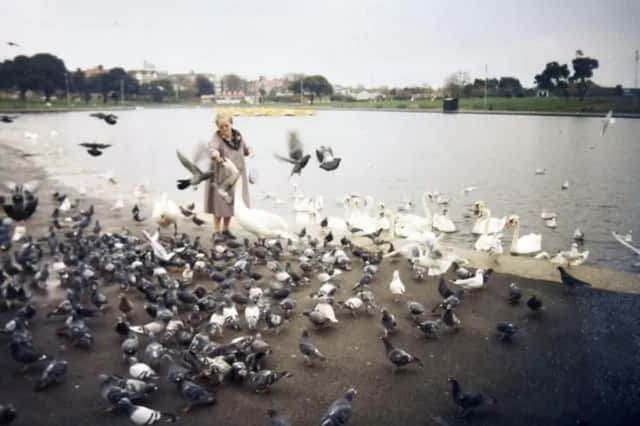
![A family playing with the pigeons (Credit: The News,
Archive).]](https://www.portsmouth.co.uk/jpim-static/image/2026/05/15/11/12/Canoe-Lake.jpeg?trim=0,0,0,0&crop=&width=640&quality=65)
What are the Portsmouth100 celebrations?
This year marks the centenary of Portsmouth being granted city status. As part of the Portsmouth100 celebrations, I will be publishing a blog each month exploring different chapters of the city’s long and layered history. This is a year-long collaboration with Portsmouth Ambassador Terence Carvalho, who will offer reflections and personal connections throughout every edition.
Please leave a like or comment to support this ongoing series!
Check out my next Portsmouth100 blog: Out of the Ashes: How Portsmouth’s Guildhall Couldn’t Be Destroyed.
Who is Leo John Davies?
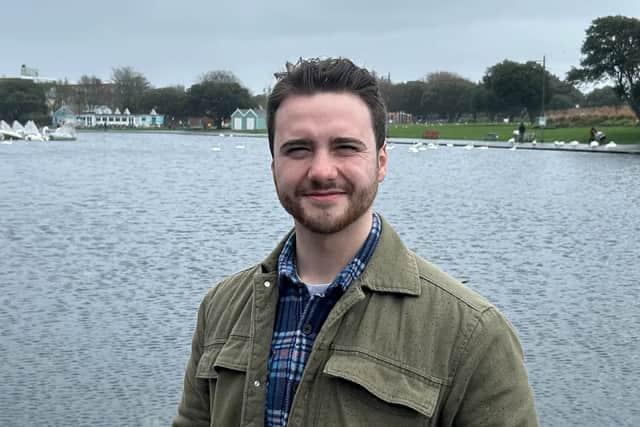
I am a public historian and digital storyteller born in Portsmouth and passionate about connecting communities with their local past.
Through my work with organisations including the National Trust, Egham Museum, and Twickenham Museum, as well as through my platform LJD Histories, I explore new ways of sharing history through education, community engagement, and digital media.
My work aims to make history accessible, engaging, and resonant for new audiences.