
5 things you miss about the 60s and 70s that we'll never get back

They are remembered fondly by many, but a comeback seems unlikely
- Trends tend to come back into fashion every few decades
- But there are some things it’s hard to see ever making a comeback
- These are a few things many people miss from the 60s and 70s that have had their time

Fashion is cyclical, and what was trendy once will almost certainly have its day again, as anyone who thought we’d left perms, platform shoes and bell-bottom trousers behind appreciates.
Even what seemed like obsolete technology has made a comeback, whether that’s driven by style, nostalgia or environmental awareness, with vinyl records, analogue cameras and SodaStream being just a few examples.
But there are some things from the past that it’s hard to see ever making a comeback.
Below are just a few things people miss about the 60s and 70s that we’ve almost certainly left behind for good.
And, no, we’re not including our youth, as we’ve just traded that in for experience.
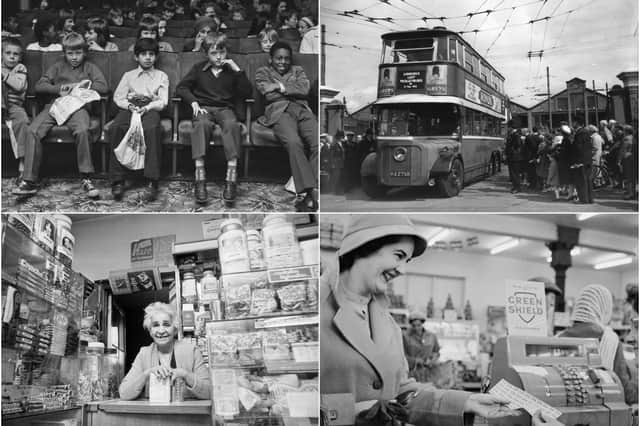
Intermissions at the cinema

Theatregoers are used to intervals, giving audiences a chance to refresh themselves and use the toilets.
But intermissions used to be commonplace at the cinema, too.
What began as a necessity, allowing the reels to be changed, continued as a way to sell more sweets and drinks, driving up profits.
Today, intermissions are rare, with cinema bosses keen to cram in as many films as possible, and moviegoers not wanting any interruptions.
Some people do miss the old intermissions, however, which they found a welcome break, especially during longer films.
Penny sweets

Filling up a paper bag with your favourite penny sweets is a treasured memory for many children of the 60s and 70s.
The shelves were stacked with a tempting array of bottles, filled with favourites including Black Jacks, Fruit Salads, aniseed balls, and rhubarb and custards.
Sadly, inflation means the idea of a penny sweet is a thing of the past, as you get little for less than 10p.
While there are still some traditional shops selling chocolates and candies by the kilo, most sweets come pre-bagged.
Green Shield stamps
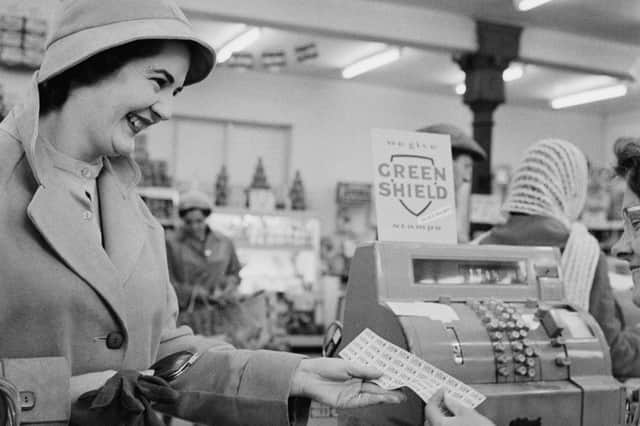
This was the precursor to loyalty cards, rewarding regular customers with stamps that could be exchanged for all manner of goods, from playing cards to cars.
The scheme was introduced in 1958 and was hugely popular in the 60s and 70s, with some people holding Green Shield parties, at which friends and family would gather to stick the stamps into books, ready to exchange for gifts.
Many people were even given completed books as a wedding present.
But their demise began in 1977, when Tesco pulled out of the scheme. The catalogue stores were rebranded as Argos, and Green Shield stamps were eventually scrapped for good in 1991.
While it’s impossible to rule out a nostalgia-fuelled return completely, the fact that loyalty cards allow supermarkets to mine so much data about our shopping habits makes a comeback extremely unlikely.
Trolleybuses

Trolleybuses used to be a common sight on Britain’s streets.
But, like trams, they fell victim to the rapid growth in car ownership.
The UK’s last trolleybus system, in Bradford, stopped running in 1972.
While trams have made a comeback in several areas around the country, trolleybuses, which were powered by overhead cables but did not require tracks, have yet to do so.
Some might question why, since there are more electric buses on our roads, which, unlike trolleybuses, have to stop to charge their batteries.
But it seems trams are preferred since, among other reasons, they have a greater capacity and provide a smoother ride.
Many people have fond memories of riding on trolleybuses, though they recall how the drivers and conductors would often struggle to put the collector arms back onto the overhead wires using the long pole stored on the side of the bus.
Red phone boxes

The traditional red phone box is one of the most iconic British designs, but it is one that has faded from everyday life.
The number of phone boxes in the UK peaked at around 100,000 in the 90s before being sent into freefall by the growing ubiquity of mobile phones.
It would probably surprise people to know that, as of 2023, there were still around 20,000 working payphones across the UK, though only about 3,000 of those were housed in the classic red kiosks.
Many traditional red phone boxes have been preserved, however, and today house everything from community libraries to life-saving defibrillators.
While payphones are seen as a necessity in some remote communities, for now at least, modern technology means they are unlikely to be making a resurgence.
How well do you remember the 70s? Here are 14 things you’ll probably remember doing if you grew up back then.