
More than 200 bus stop shelters around the city are being refurbished in a boost for green transport
More than 200 bus stop shelters around the city are being refurbished in a bid to improve bus travel and make it more accessible.
Portsmouth City Council has carried out a major audit of more than 570 bus stops, supported by a survey with residents and accessibility groups, which helped identify the changes most needed to make stops easier and safer to use. As a result, it said, many now have clearer signs, better lighting and more seating, in line with national accessibility guidelines.
Of the 336 bus stops with shelters, 251 are being refurbished to create more modern, accessible spaces, with 27 being upgraded to new super shelters offering brighter, more open designs, better visibility and more seating.
A further 51 shelters are being fully replaced, and seven stops that previously had no shelter will benefit from new, accessible designs as part of the city’s £53m Bus Service Improvement Plan (BSIP) to promote bus travel.
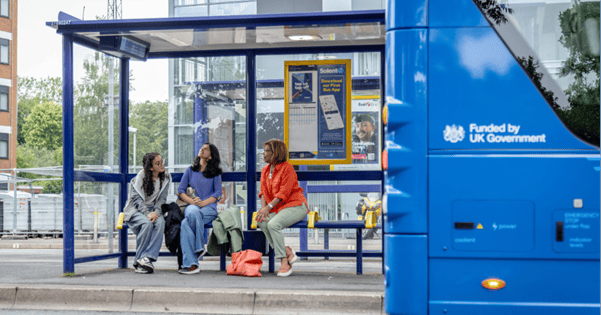

The council said passengers with sight or hearing impairments will benefit from new real-time information screens now being rolled out across the city and that by the end of the programme, 529 bus stops, 90 per cent of stops in the city, will have up to date displays, including pushbutton audio to read out arrival times.
QR codes are also now in place at every stop, giving instant updates on a mobile phone.
Accessibility on board buses has also improved, with new audio and visual next stop announcements to help passengers who are blind, deaf or unfamiliar with the route.
To support people using wheelchairs, walking frames or prams, many bus stops across the city have been upgraded to make access easier and safer with new dropped kerb crossing points to help people reach stops more easily installed in some locations.
Footways have been extended or widened to provide more space for wheelchairs and pushchairs, and to help passengers move safely around bus shelters and in some areas, obstructions on the pavement have also been relocated, and kerbs have been extended to help buses line up better with raised kerbs for smoother, faster boarding.
The council is also supporting inclusive travel through the Easy Travel Access Fund, which has provided £300,000 to over 55 community groups, schools and charities. This funding helps people facing social or economic challenges to use public transport through initiatives like travel training and free ticket schemes.
Partnership work with local groups and charities, including Open Sight, Sparks and Dynamite, has brought in vital insights through workshops and feedback sessions to improve accessibility on Portsmouth’s buses.
The council is also developing a new travel safe programme, shaped by research with local women and girls, disabled passengers and community groups. This work is helping us plan future improvements such as clearer reporting routes, safety awareness campaigns and travel safety officers. This complements the work the Council is already doing in improving CCTV coverage and installing smart lighting at key bus stops.
Cllr Peter Candlish, Cabinet Member for Transport, said: “Our goal is simple, a bus network that works for everyone. Whether you use a wheelchair, have a visual or hearing impairment, travel with children, or face other barriers, you should be able to get around Portsmouth easily and with confidence.
We know more improvements are needed, and we are committed to delivering them. But the progress so far shows we are taking big steps towards a more inclusive and accessible bus network for our city.”
Residents can find out more about Portsmouth’s accessible bus improvements at https://travel.portsmouth.gov.uk/bsip/