
Portsmouth athlete would not let a rare genetic disorder stop her playing basketball - and now she's won gold
Jade Atkin and her England squad clinched gold in women's 3x3 wheelchair basketball at the Commonwealth Games after a triumphant win over Scotland
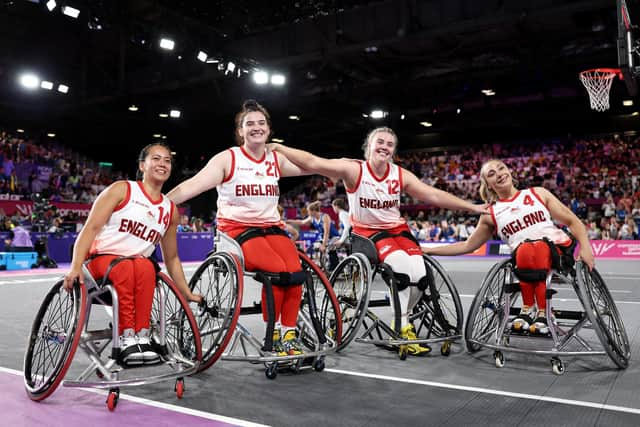
Years of commitment, thousands of pounds and countless miles of travelling up and down the country have paid off for the Atkin family, as their daughter Jade brought home the gold in women’s 3x3 wheelchair basketball for England at the Commonwealth Games.
Jade Atkin’s England squad beat Scotland in the finals of the games and she has said she is “absolutely ecstatic” with what the team achieved.
“From the moment we arrived, I had complete belief in the team,” she said. “We came into the Commonwealth Games with one goal: to win gold and we expected nothing less.”
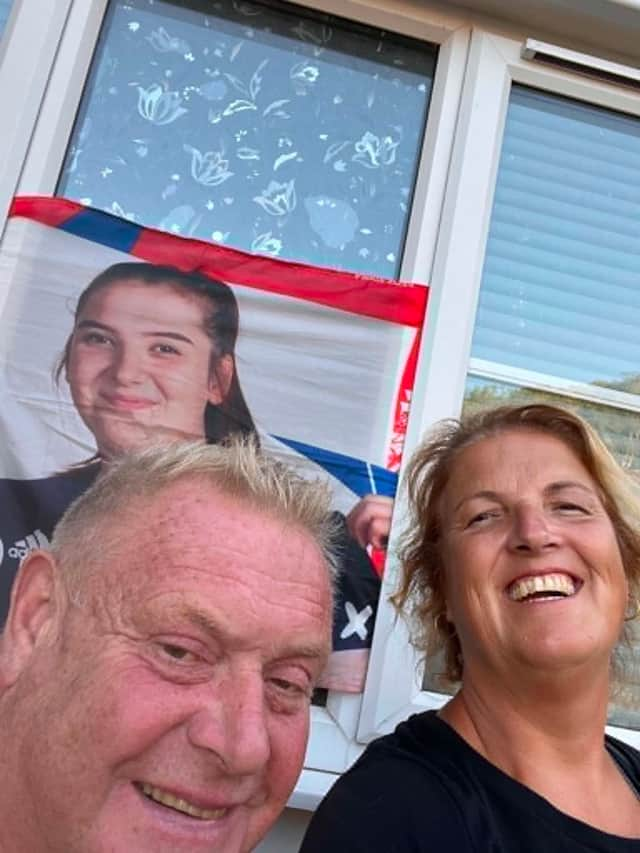

Kelly Atkin and her husband Paul watched the game, held in Glasgow, from their home in Wymering, and said that it was clear “they played their socks off”.
Kelly said: “She said to me ‘Mum, it's so far, I don’t want you to drive’ and then we were so close to the final, and I knew she was going to get into the final so I thought ‘shall I just go?’
“But I knew if she didn’t win I would’ve jinxed it so I decided we didn’t want to mess with anything!
“Watching those four girls together, they had chemistry, it was amazing, When she won I felt like a numb feeling, I just couldn’t believe it”
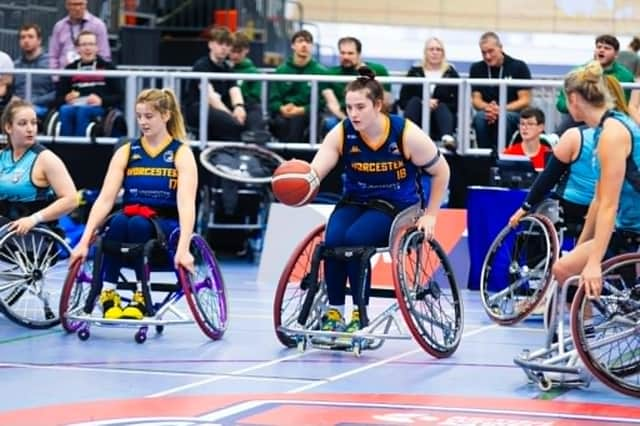
Jade began playing wheelchair basketball at an after-school club after her sister, Adele, was diagnosed with Hereditary spastic paraplegia (HSP).
They still play alongside each other on the Worcester Wolves women’s team, who are currently second in the women’s wheelchair basketball UK rankings.
“We started Adele in an afterschool session of basketball at Portchester School and Jade went along with her to support her,” said Paul.
At that time, Jade was “still on both her feet,” he said, but she and her other sister, Tanya, were later diagnosed with HSP too and both lost their mobility within a few years, leaving the three sisters as wheelchair users.
“They are born with it. It’s in our genetics but we didn’t know,” said Kelly. “They all developed perfectly, like any other child, but then it’s a foot drop that starts.”
HSP causes weaknesses in the lower limbs, leaving it difficult to walk. “It’s basically a case of muscle and the lower limb wasting away,” said Mrs Atkin.
“Adele got it first, so we spent four years not knowing what the problem was,” said Paul. “She developed a very severe limp, she couldn't keep her balance.”
Kelly added: “We thought we got away with it with Jade but then a teacher at her school said every time she does PE she was running into walls. We then went to the doctors with her. That was our hardest part, that’s when we all fell apart.”
“It was devastating, it was some black, dark times we’ve been through,” said Paul.
All three sisters were “always sporty” and were into swimming before they suffered mobility issues. Jade was playing able-bodied basketball before any neurological symptoms started to show, but she was not going to let her diagnosis stop her from playing the sports she loves.
Encouraged by their parents, Adele and Jade continued playing wheelchair basketball at Portchester School and soon graduated to the club level. Jade also moved to America to play with the University of Illinois' wheelchair basketball team, and has previously represented England at the Commonwealth Games in 2022 and Team GB in the 2024 Paris Paralympics.
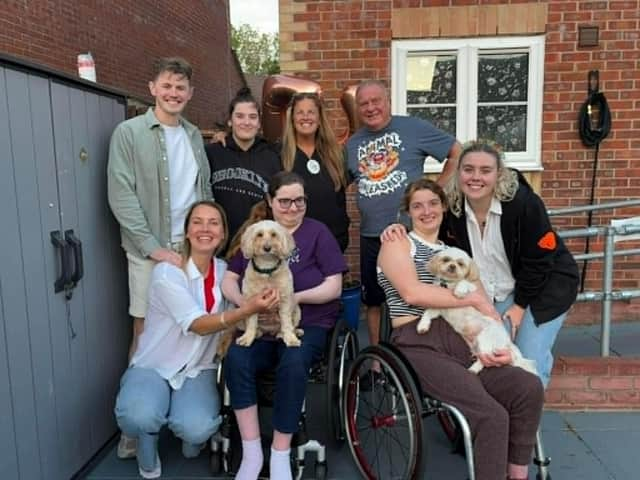
“We wanted them to live, wanted them to know that you could still live,” said Kelly. “You don’t know what you can do when you come from one ability to another ability.”
With very little funding available to disability sports, and few opportunities in the south east, Paul and Kelly committed to giving their daughters the chance to pursue their sports.
“We wanted to give them the opportunity to see how far they could go,” said Paul. “It was a big financial strain on us because we had to fund everything.”
The family had assistance from the National Lottery, but that was only available to them once Jade had been selected to join a national development programme to compete for a chance to represent England.
Athletes’ wheelchairs cost thousands of pounds, and opportunities are dotted around the UK. “The commitment is phenomenal - I used to drive to Sheffield weekly,” said Kelly.
“You have to be classed as ‘talented’ to get help and there’s a lot of talent being wasted before that point,” she said.
WheelPower, the main organisation for wheelchair basketball in the UK, says there are currently more than 17,000 players of the game across the country, but only a select few of those will receive funding to play the sport to a higher level.
“I just wish there was better funding to get people into sport because there's loads of people out there with real talent,” Paul said.
“There shouldn’t be such a difference between able-bodied and disabled sports,” said Kelly.