

The National Infrastructure & Service Transformation Authority Annual Report 24-25, published this year, highlighted the situation of many military projects. Each programme is given a Green, Amber, or Red grading.
Each colour determines - as of the time when the grades were finalised - if the scheme is likely to be completed on time and to its allocated financial budget. Some programmes are classed as exempt for national security reasons.
Green means the project is likely to be completed on time and to budget. The Amber Category means that successful delivery is feasible, but significant issues exist which require managed attention and action. Problems are considered resolvable if they are addressed promptly.
The Red Category means that a programme has major issues over schedule, budgets, and quality - usually meaning that a scheme’s successful delivery needs re-scoping.
Responding to several projects being given Amber or Red grades, defence minister Luke Pollard said in a parliamentary written question: “Delivery Confidence Assessments reflect that moment in time and will change throughout a programme's lifecycle.
“An assessment of Red does not mean that the programme is undeliverable, but that there are management interventions required as a priority in order to increase the likelihood of being able to deliver to approved time, performance and cost. The National Armaments Director holds all the levers of procurement, enabling the necessary interventions to be applied in support of programmes assessed as Red.”
Out of a total of 45 MoD projects spread across the Royal Navy, Army, and RAF, three were categorised as three Green, 27 Amber, and 10 Red. This list includes the 17 programmes which bring new capabilities to the Royal Navy, or projects which affect capabilities such as the F-35 fighter jets.
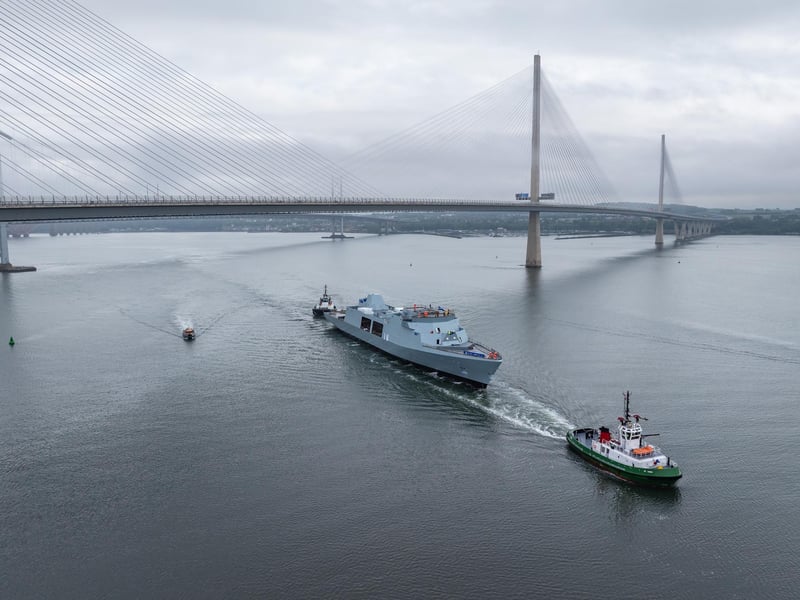
1. Type 31 frigates - Red
The Type 31 general purpose frigate programme is designed to deliver a general-purpose frigate capability and act as the pathfinder programme for the Government's National Shipbuilding Strategy. Type 31 will be at the heart of the Royal Navy’s surface fleet, deterring aggression and maintaining the security of the UK’s interests. They will work alongside our Allies to deliver a credible UK-warship presence across the globe. Flexible and adaptable by design, Type 31 frigates will undertake missions such as interception and disruption of those using the sea for unlawful purposes, collecting intelligence, conducting defence engagement and assisting those in need. It has been given an end date of 2030. | Peter Devlin/Babcock International
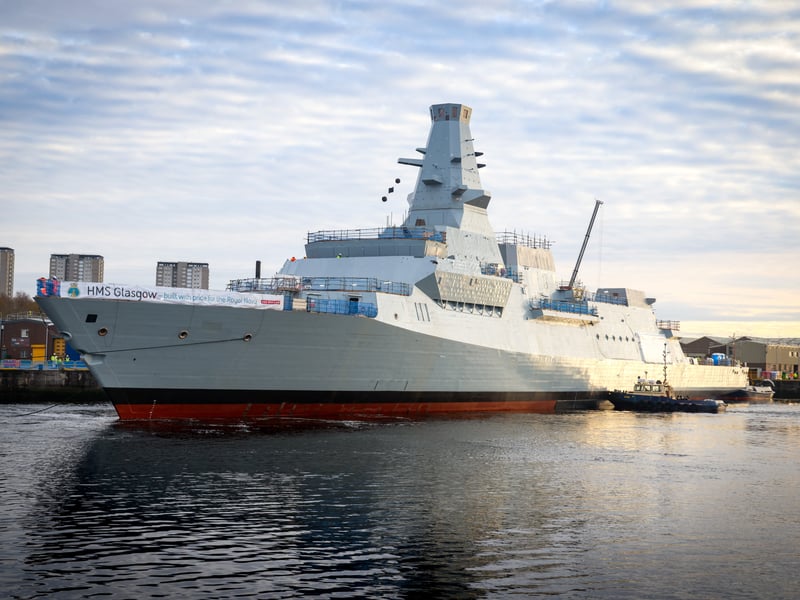
2. Type 26 frigate programme - Amber
The Type 26 Global Combat Ship Programme will procure frigates and associated support. The ships will deliver an interoperable, survivable, available and adaptable capability that is operable globally within the maritime battle space, to contribute to sea control for the Joint Force and contribute to maritime force projection and Joint Force command and control, with the flexibility to operate across and within the range and scale of Contingent and non-Contingent operations. This eight ship programme will deliver Anti-Submarine Warfare capability to protect strategic assets, sustain national shipbuilding capability and increase the resilience of the Naval Service. It is projected to be completed by the end of 2035. | Royal Navy
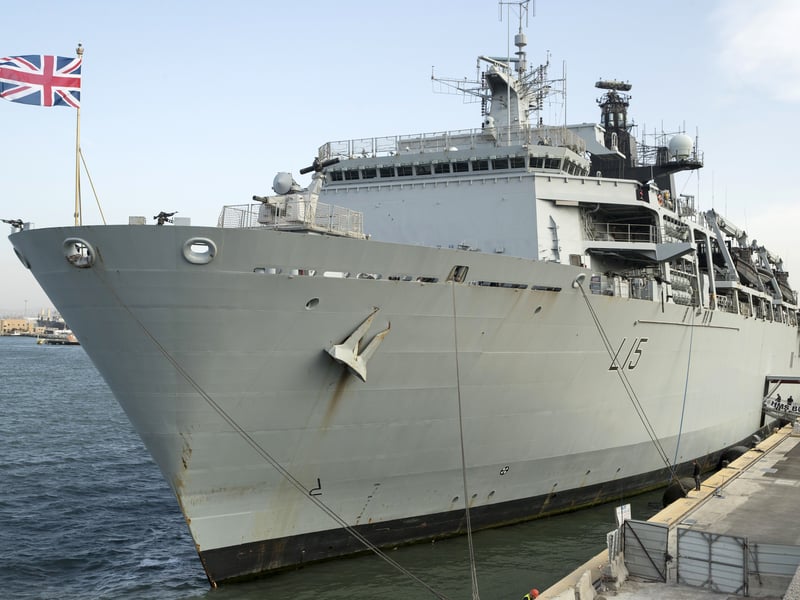
3. Multi-Role Strike Ship - Amber
The Multi-Role Strike Ship (MRSS) programme will replace the current ageing mixed fleet of amphibious vessels in the early 2030s, as well as potentially performing additional roles currently conducted by other warships and auxiliaries. These vessels will enable the projection of littoral strike capability worldwide and ensure that a modernised amphibious capability is available to the Commando Force. It has been earmarked as replacements of HMS Bulwark, Albion, and other Royal Fleet Auxiliary ships. It has been given an end date of 2040. | JACK GUEZ/AFP via Getty Images
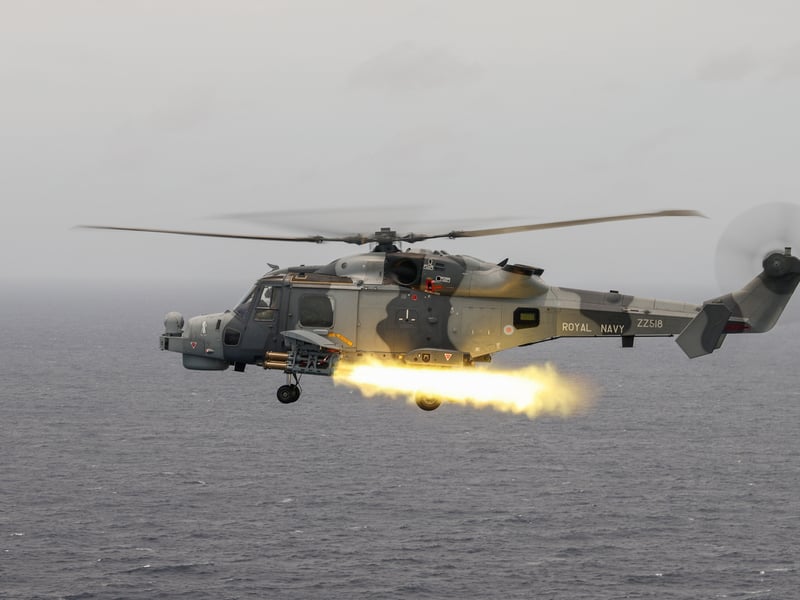
4. Martlet missile - Green
The Future Anti-Surface Guided Weapon is required to enable Wildcat helicopters to deliver kinetic effect against and defeat difficult targets in the complex littoral and maritime environments; that lie outside the capabilities of other anti-ship weapon systems. The missiles can accelerate one and a half times the speed of sound, and will be used against drones and other aircraft. It has an end date of December 19, 2025. | UK MOD Crown copyright