
"Evolving posture" to cause the number of Royal Navy overseas operations to fall in "scale back" plans

The number of Royal Navy overseas exercises are set to fall over the next four years.
Parliamentary under-secretary for defence, Al Carns, confirmed a change in UK operations to focus more on Europe and Nato. This was initially intimated in the Strategic Defence Review published in June, where the Royal Navy will focus more on the North Atlantic in light of the growing threat to Russia.
Shadow defence secretary James Cartlidge asked the Ministry of Defence (MoD) in a parliamentary written question whether there are plans for global drills to fall across the armed forces. Mr Carns responded: “The single Services remain committed to prioritising overseas training exercises in alignment with both our own and partners' operational needs, as well as the priorities outlined in the Strategic Defence Review.
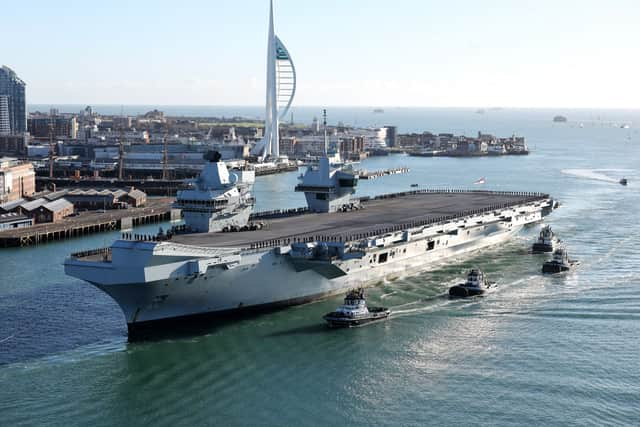

“Over the next four years, the Royal Navy will scale back its participation in overseas training outside the Europe, Atlantic, and Arctic theatre. This shift reflects its evolving global posture, aimed at supporting modernisation efforts and prioritising this theatre as part of NATO and homeland defence. By financial year 2027-28, an increase in participation and support for NATO is anticipated, aligned with NATO's strategic objectives.”
Why are overseas Royal Navy training drills declining?
First Sea Lord General Sir Gwyn Jenkins set out the Royal Navy’s new focus at the Sea Power Conference on December 8. He expressed concerns regarding the growing threat of the Russian submarine fleet, which threatens critical undersea infrastructure in the North Atlantic.
A defensive pact was signed with Norway to patrol the region and scope out Russian submarines, with Britain pushing to utilise autonomous vessels and submersibles to track and respond to these threats. “We’re definitely in a competition in the Atlantic,” Sir Gwyn previously said.
“If you look at Russian capabilities, their funding has continued to grow despite the war in Ukraine. They consider it an area of expertise and advantage for them. We’re trying to stay ahead. I wouldn’t say we’re behind them at the moment, but we are stretched. I think we should always be testing the Russians. We will deploy our capabilities where we are entitled to deploy them. We’ll not be intimidated by the Russian rhetoric.
“We have the freedom of the seas which is enshrined in law that we believe in as law-abiding nations. We can’t afford to be hemmed in by the rhetoric and escalatory language you see coming out of President Putin’s regime. We should have some confidence in the capabilities we’ve got. We need to continuously evolve, develop, and pioneer new capabilities so we can prove that we can stay a step ahead of where the Russians are.”
The lack of assets in the Royal Navy fleet also puts pressure on the decision. HMS Lancaster, a Type 23 warship that served with distinction for 34 years, has been retired and will be decommissioned in Bahrain. There are currently seven frigates left in service, with modern alternatives being built. The British Army will also be focusing on Nato activities.
Mr Carns added: “From financial year 2026-27, the Army, in collaboration with international partners, plans to reduce the number of overseas training exercises. This adjustment will enable a greater focus on NATO commitments and enhancing land warfighting capabilities.”