
‘Responsive’ new Ancilia missile launcher put through paces for Type 26, 31 and 45 warships

Deemed as a cutting-edge system, the Ancilia missile launcher aims to make warships more lethal
Extensive tests have been carried out on a new missile launcher before being fitted to Royal Navy ships.
Electromagnetic Warfare experts have got their hands on the Ancilia decoy missile launcher and put it through its paces. The system will soon be fitted to the current crop of Type 45 destroyers, as well as the new Type 26 and 31 frigates.


The quartet of specialists Electromagnetic Warfare Directors - drawn from the Electromagnetic Warfare Training Element at HMS Collingwood in Fareham and elsewhere - believe the new launcher has better controls and is marked improvement on its predecessor.
Leading Seaman (EW) Lewis Rollason from the Joint Electronic Warfare Operational Support Centre (JEWOSC), said: “The Electronic Warfare Countermeasures interface offers an exciting glimpse of the future of deploying Royal Navy countermeasures. It’s intuitive, responsive and easy to use, helping operators and maintainers build detailed system knowledge and make full use of its capabilities.”
The Ancilia launcher was tested at the home of manufacturers SEA in Barnstaple. Personnel looked over the control interfaces and provided feedback to make improvements. This new launcher will replace the existing fixed launcher on the Daring-class warships. They are fixed to the upper decks of frigates and destroyers.
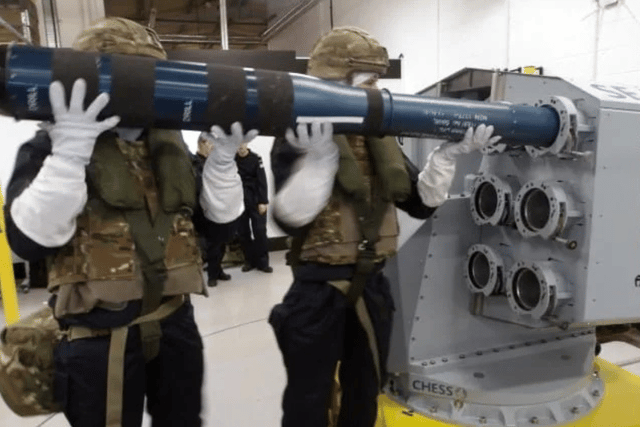
Ancilia is a small and lightweight launcher which is capable of firing multiple countermeasures - with the ability to swivel rapidly and adjust so missiles can be fired at different angles. Electromagnetic Warfare is used to identify enemy forces, equipment and movement. It is key to jamming weaponry in combat, defeating enemy firepower or draw threat away from the ship.
Ancilia is considered trainable, so it can move and angle itself towards a target. It’s considered more accurate and can deal with radio frequencies and other methods used to divert a missile away from its target. The system has open architecture so it can use future munitions and upgrades.
Over two days of trials, operators tested the system wearing various layers/levels of Personal Protective Equipment from standard anti-flash and CBRN gloves to General Service Respirator and protective eye wear. This was done to simulate chemical biological, radiological and nuclear environments, as well as day and night operations.
The Royal Navy said personnel found the new equipment a major step forward.