
‘It’s not science fiction’: Royal Navy’s new hybrid force explained amid push ‘towards the next level’

With threats increasing across the globe, the Royal Navy is at a turning point
Drone boats and un-crewed vessels that can be controlled from far away will be in the Royal Navy’s arsenal going forward.
In an age where Russia and other adversaries are becoming more emboldened, top brass believe that advancing technology is the answer to meet the latest threats head on. Set out both in the Strategic Defence Review (SDR) and Defence Investment Plan (Dip), the force is pushing towards a hybrid model.
Conventional warships will be supplemented by un-crewed surface vessels, remote-controlled submersibles, autonomous systems and drones. Major platforms like HMS Queen Elizabeth will have these futuristic warships and smaller craft sailing alongside them.

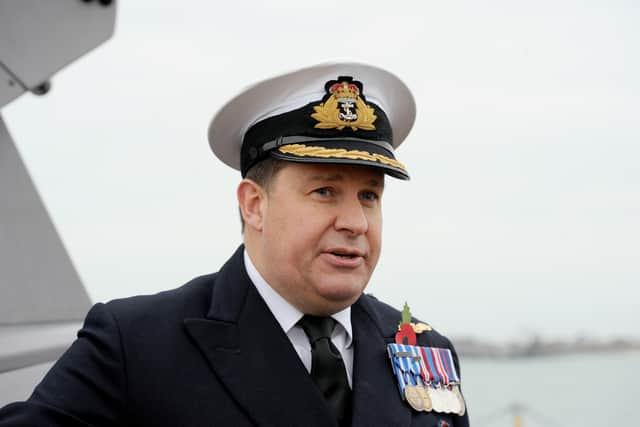
For Fleet Commander Vice Admiral Steve Moorhouse, this push is necessary to become more lethal at sea and cover more ground faster. Even though vessels monitoring the movements of Russian spy ships and submarines is often considered routine, such operations are becoming more commonplace and contested.
Nato allies recently had to react to a Kremlin bomber flying close to HMS Prince of Wales and the UK Carrier Strike Group (UKCSG). First Sea Lord General Sir Gwyn Jenkins has persistently stressed that greater resources are needed in the North Atlantic and High North to protect undersea cables and British interests.
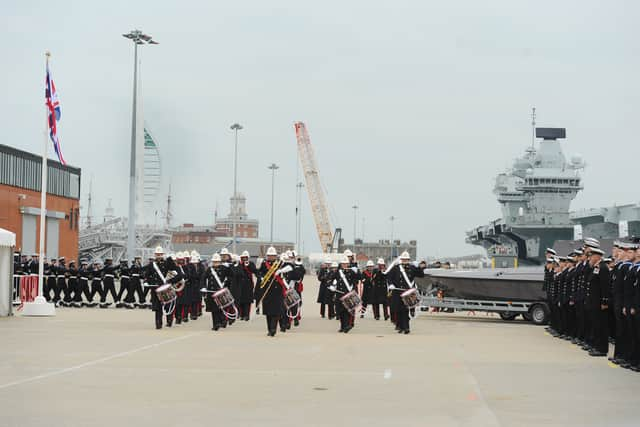
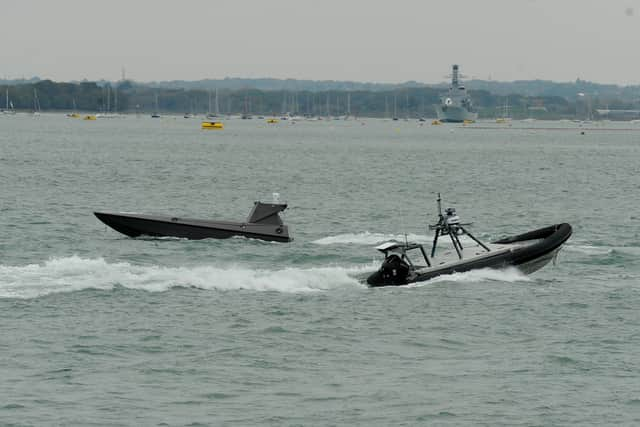
The mission statement is clear, respond faster with greater numbers and more technology. K3 Kraken Scout vessels and Rattler-class boats, showcased during the commissioning of the 1st Autonomous Squadron at HMNB Portsmouth, may soon be deployed alongside other kit to track Kremlin vessels in the future.
How will autonomous ships be used by the Royal Navy?
“Your imagination is simply the limit of what you may want to put on these sorts of vessels,” Vice Adm Moorhouse said. “We can design radar or a weapons systems really quickly.
“You can solve all sorts of problems. It’s getting the blend between crewed and un-crewed right as we bring this to life. You can imagine the range of tasking we do in UK waters with Russian vessels.
“You can use these sorts of craft, You don't necessarily have to use a Type 23, Batch 1 patrol vessel or something else. You can use something like this.
“This is the start. The challenge we have set ourselves is to accelerate capability into the frontline as quickly as possible. The future of the hybrid navy is to go bigger.
“You’ll have quality crewed vessels at its heart. Arguably, I’m going to need more sailors and more marines to do this. You want them augmented and integrated with un-crewed systems.
“It’s not fantasy or science fiction that un-crewed vessels could be sailed from a UK port, operated with Norwegians and berth, refuel and resupply in Oslo or Denmark. That’s the direction we’re going on.”
“Act as a swarm”
The war between Ukraine and Russia has seen autonomous systems at the heart of the conflict, whether that’s aerial drones or un-crewed vessels. Captain Adam Ballard, Deputy Commander Surface Flotilla, said the K3 Scout has a top speed of 50 knots, and can sail for up to 1,100 miles if extended fuel tanks are installed - the equivalent range from Portsmouth to Tallinn in Estonia.
“I’ve described them before as the Toyota Hilux of the seas,” he said. “Whatever you want to add to them, you can, and that’s what makes them great. You’ve got a base hull and you can use your imagination for what you want to put on it.”
Capt Ballard said they can be controlled as a unit. One can have a GRX radar to scope out threats, while others will have counter drone interceptors to track and shoot down targets. “We will act in a swarm and you can push yourself ahead of the carrier or destroyer to create an air defence screen,” he added.
“The theory is that you take out the incoming Shahed drone or something similar, and that means you’re preserving expensive munitions for the expensive threats. That’s powerful as the cost exchange of munitions has been a problem for the west for a while.
If you’re firing a £2m missile at a £10,000 enemy drone, that’s challenging to maintain. If I can use my own cheap effectors - at around the £5k-£10k mark - I’m on parity.”
Capt Ballard said the flexibility and versatility is key for the new boats. Equipment can be changed on the K3 Scouts within 90 minutes. Possible operations include protecting high value task groups, security patrols and anti-submarine warfare operations to name a few.
“I’m not talking about filling it with 500kg of explosives and ramming into somebody,” Capt Ballard said. “We’re going to use these as a repeat system. We’ll look at the threat and the mission, and we’ll build it, design it and go fast. You will start to see us using these actively in all the areas you have traditionally seen crewed ships.”
Further trials are expected in due course, which will include drone boats being airdropped from planes. There are concerns that these ships will be targeted and attacked as they’re crewless. Capt Ballard believes the hybrid force is mor threatening to opponents. “The Russians have seen things like this sinking their assets,” he added.
“If I was Russian, I’d be thinking ‘oh, the Royal Navy has these now’. You cannot fight now and just say I’m just going to be a crewed navy. You’ve got to be hybrid. As we move forward, we will see bigger capabilities, but the smaller ones will play a key role.
“I now have a large fleet of these I can deploy at my time and choosing against an enemy. I’m no longer beholden to just deploying a frigate or destroyer. I can deploy these very discretely and very rapidly, and that gives me a significant advantage.”
Looking ahead
With the Royal Navy fleet shrinking to its smallest size, with just 11 frigates and destroyers alongside the aircraft carriers and patrol vessels, it’s a race against time to supplement the force. With current capabilities aging out, the pressure to build crewed Type 26 and 31 frigates is mounting.
Alongside the Kraken and Rattler-class boats, a £90m contract was been agreed to supply drones to protect undersea cables - part of the Atlantic Net. Similar un-crewed systems were also recently deployed on RFA Lyme Bay to the Middle East.
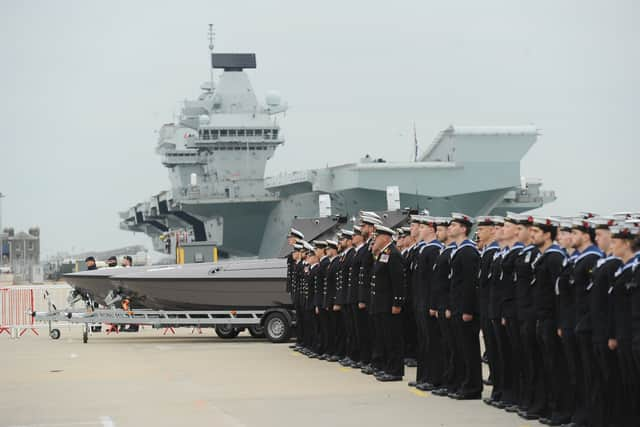
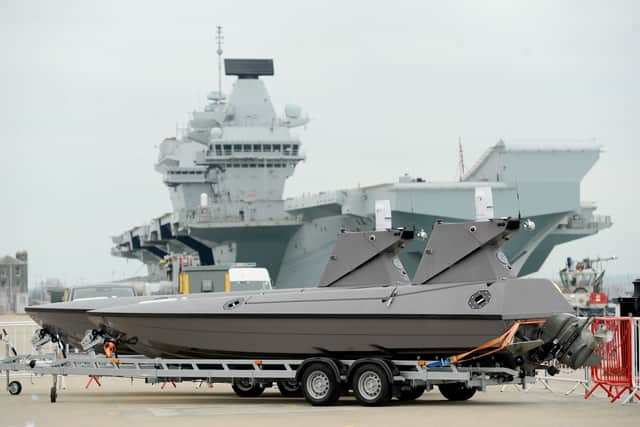
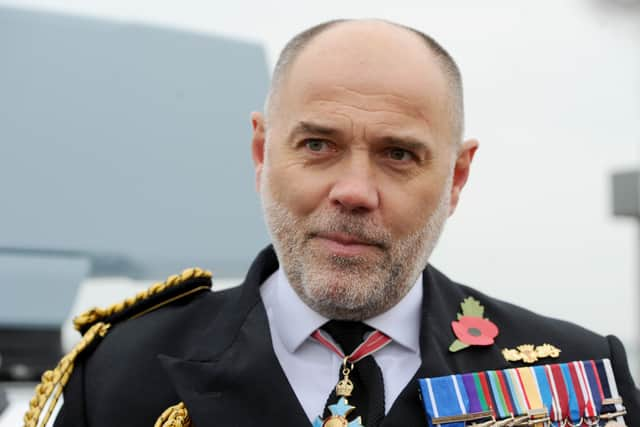
Second Sea Lord Vice Admiral Paul Beattie said the UK will be able to respond faster to threats under this new model. “It was obvious to me that if we didn’t adapt, the risk would be significant,” he said.
“When you look at how you defend against the scale of autonomy, that’s quite a challenge in all domains. I think we’re ahead and world leading in this, but it won’t be long before others catch up. You need to drive that forward. That 1st Autonomous Squadron is going to bring a whole set of asks and demands. Those people will rightly be demanding they have the best capabilities to drive things forward.
“To traditionally reinforce the Falklands for example, it would take us weeks to get ships and submarines down there. With a hybrid model, you can get capabilities there in hours.”
Vice Adm Moorhouse added: “There is constant competition in the Atlantic and people have to be ready. We’ve got to set ourselves for what we know is coming, Type 26s and 31s, and we’ve got to be ready to integrate and embrace where technology is going. It’s exciting, but you’ve got to be ready for what may come tomorrow.”