
'Great privilege': Royal Navy completes vital Nato security mission using German ship FGS Sachen

It was originally planned that HMS Dragon would be used in the role, but she was deployed to the Middle East instead
British command of a hugely important Nato mission in northern Europe has been handed over to an ally.
The Royal Navy has been in charge of the alliance’s premier security task force for four months. Commodore Maryla Ingham passed the leadership of Standing NATO Maritime Group One (SNGM1) over to French Rear Admiral Nicolas Molitor in Reykjavik, Iceland.
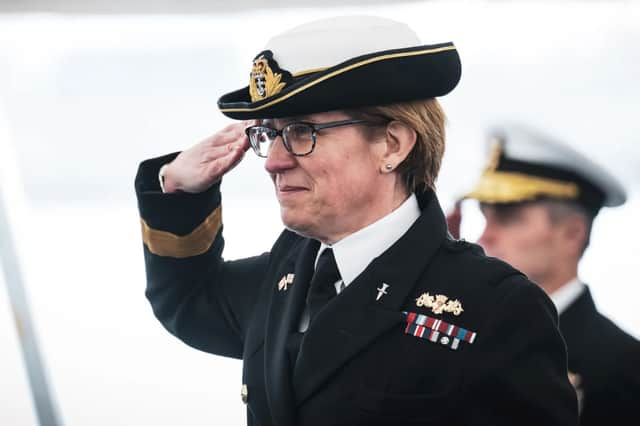

This was after the security task force conducted various operations across the Baltic Sea, Arctic, High North, and as far as the Eastern Seaboard of the USA. Under Cdre Ingham’s leadership, the task group conducted a demanding programme of operations and exercises.
She said: “Leading Standing NATO Maritime Group One has been a great privilege. I am incredibly proud of my Battle Staff and the ships from across the Alliance that have served alongside us, demonstrating NATO’s unwavering commitment to collective defence and deterrence.
“Throughout my tenure, we have shown that our strength at sea comes not from any one Nation, but from the unity, trust and professionalism that bind us together as Allies. In an increasingly complex security environment, that solidarity remains our greatest strategic advantage.”
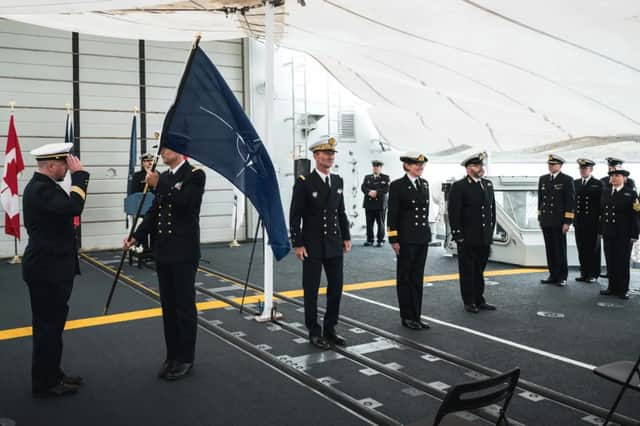
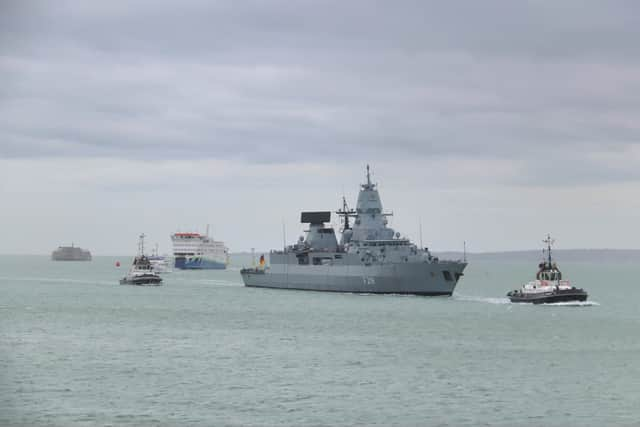
Controversy surrounded the operation at the time given that the German frigate FGS Sachsen was used as a flagship. The original plan was for HMS Dragon to head up the operation, but she was deployed to the eastern Mediterranean after conflict erupted between Iran and the US-Israeli coalition. No other ship was deemed available, so British forces named the German vessel as the flagship at a ceremony in HMNB Portsmouth.
SNMG1 conducted a demanding programme of operations and exercises, which included anti-submarine drills during Exercise Dynamic Mongoose. The task group was also involved in Fleet Exercise 250 off the coast of Virginia and North Carolina. Cdre Ingham and her multinational battle staff later led SNMG1 from the Canadian warship HMCS Ville De Quebec.
The Royal Navy also provided a Wildcat helicopter to strengthen the group’s maritime aviation through surveillance and reconnaissance. Various drills took place throughout the four months including manoeuvring exercises, boarding operations, gunnery, anti-submarine warfare, the protection of critical national infrastructure, cross-deck integration serials and casualty evacuation. Other nations that contributed were France, Germany, Belgium, Denmark, the Netherlands, Portugal, Turkey, Spain, Norway, Canada, and the United States.