

A grand ceremony at HMNB Portsmouth marked the Royal Navy assuming command of a Nato operation - but not by using one of its own ships.
British personnel have taken charge of Nato’s premier naval security force in Northern European waters today (April 10). Commodore Maryla Ingham and her staff will lead Standing NATO Maritime Group 1 (SNMG1) on patrols across the North Atlantic, Arctic and Baltic. Royal Navy Vice Admiral Robert Pedre, the Commander of Allied Maritime Command (MARCOM), presided over the ceremony as Spanish Navy Rear Admiral Joaquín Ruiz Escagedo handed leadership of SNMG1 to Cdre Ingham.
"I am delighted to formally assume command of the task force,” she said. “Embarking with the Royal Navy Battle Staff in Sachsen, we look forward to working closely alongside our Allies to support our common goals."
The flagship for the mission will be FGS Saschen, a German Saschen-class frigate that sailed into HMNB Portsmouth yesterday afternoon (April 9). She took the place of HMS Dragon after the Type 45 destroyer was deployed in the eastern Mediterranean, after the British base on Cyprus, RAF Akrotiri, was hit by a kamikaze drone.
After a busy three week period for the destroyer, she has been forced into port following a technical issue to her water supply systems. SNMG1 is made up of up to six warships and aircraft which patrol critical waterways and chokepoints, with the aim of increasing security and maintaining stability in Northern Europe.
The task force is one of such groups, each providing a continuous maritime presence in peacetime, crisis, and conflict. Saschen is one of the German Navy’s most capable air-defence frigates. The Spanish Navy has been in charge of SNMG1 for the last four months, patrolling the Baltic Sea to monitor critical sea lanes and protect undersea cables.
During this period, for the first time in its history, SNMG1 deployed in support of NATO’s high-vigilance mission Arctic Sentry – extending its operational reach into the High North. This tested the ability of personnel to work in bitterly cold conditions.
Rear Admiral Escagedo said: "Collaboration between our nations is essential to ensure regional stability, strengthen NATO’s deterrence, and maintain security across the Baltic and Arctic regions. The Spanish Navy, through its active participation in SNMG1, plays a key role in these efforts, contributing to maritime security, reinforcing NATO’s deterrence posture, and demonstrating our firm commitment to collective defence in the region."
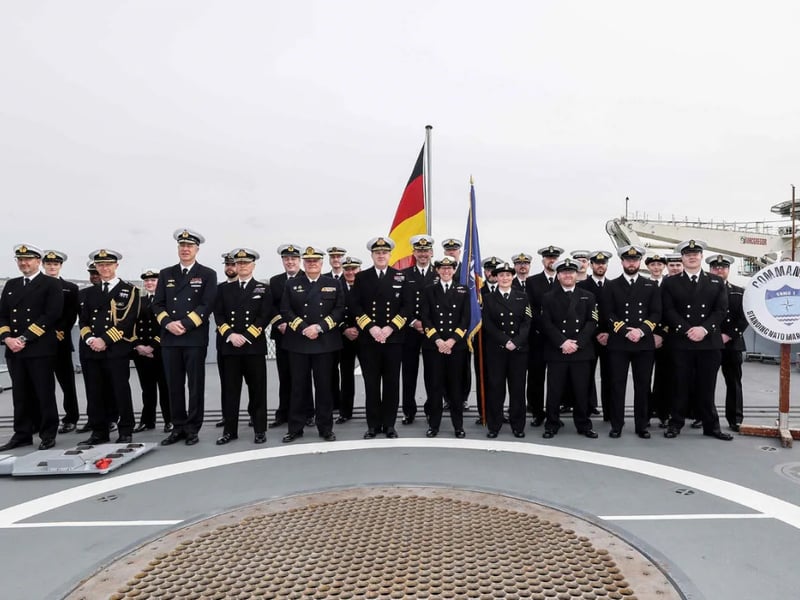
1. Brits take charge of German frigate and Nato op
The Royal Navy has today taken command of NATO’s premier naval security force in Northern European waters during a ceremony in Portsmouth Naval Base. Pictured Commander Allied Maritime Command, Vice Admiral, Robert G Pedre, Incoming Commander for Standing NATO Maritime Group One (SNMG1), Commodore Maryla Ingham RN, Outgoing Commander for SNMG1, Rear Admiral Joaquin Ruiz Escagedo Spanish Navy, SNMG1 Staff and guests for the Change of Command Ceremony on the flight deck of FGS Sachsen at HMNB Portsmouth. | Royal Navy
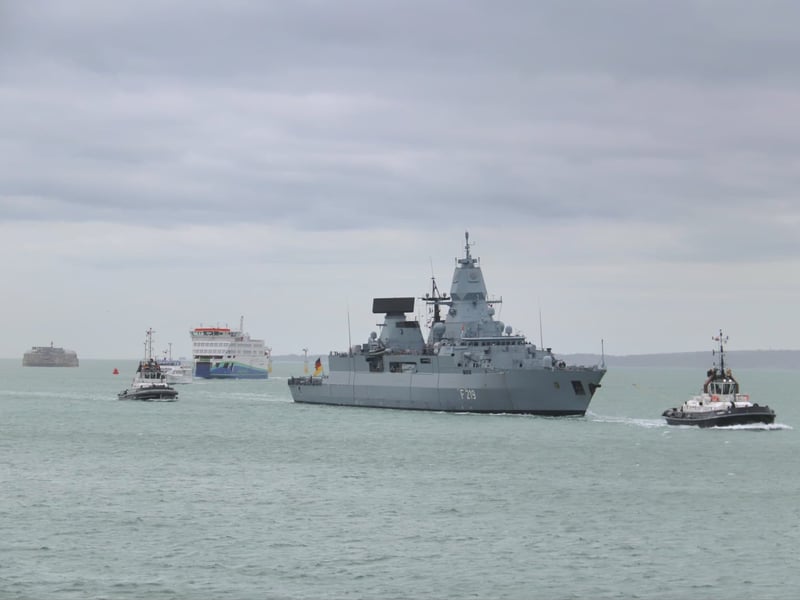
2. Brits take charge of German frigate and Nato op
German frigate Sachsen, which has replaced the Royal Navy destroyer HMS Dragon as the flagship of a Nato operation, arriving into Portsmouth on April 9. | Habibur Rahman
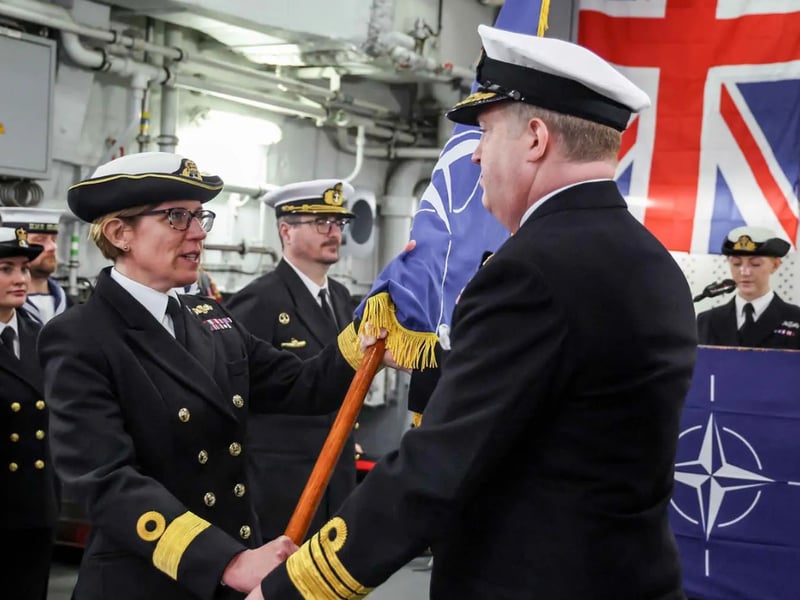
3. Brits take charge of German frigate and Nato op
Pictured is Incoming Commander, Commodore Maryla Ingham RN, Standing NATO Maritime Group One Commander, takes hold of the NATO flag and command from Commander Allied Maritime Command, Vice Admiral Robert G Pedre CB RN at the Change of Command Ceremony, on board FGS Sachsen at HMNB Portsmouth | Royal Navy
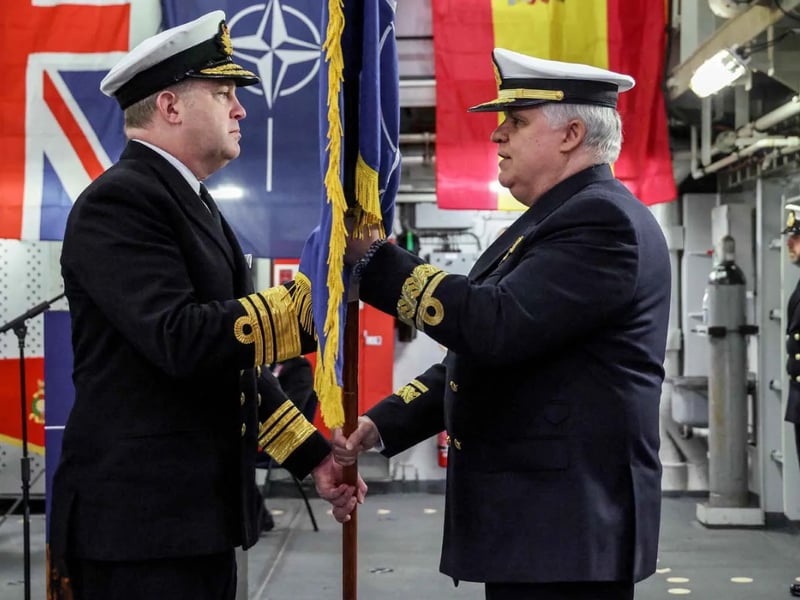
4. Brits take charge of German frigate and Nato op
Pictured is Commander Allied Maritime Command, Vice Admiral, Robert G Pedre CB RN and Outgoing Standing NATO Maritime Group One Commander, Rear Admiral Joaquin Ruiz Escagedo Spanish Navy, handing over command for the Change of Command Ceremony, on board FGS Sachsen at HMNB Portsmouth.” | Royal Navy