
Huge submarine XV Excalibur that can sail by itself becomes largest un-crewed vessel in the Royal Navy

A huge submarine has been handed to the Royal Navy and becomes its largest autonomous submersible.
XV Excalibur, the UK’s first un-crewed submarine, has now been officially handed over to the Navy. She is expected to play a vital role in Britain’s Atlantic Bastion programme, where conventional warships and un-crewed systems will protect undersea cables in the North Atlantic and respond to the Russian submarine fleet.
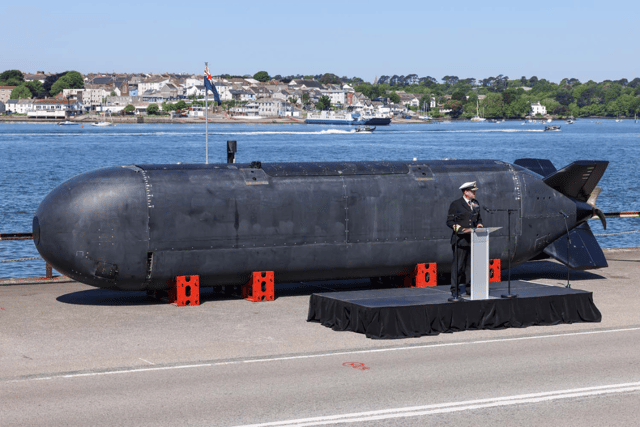

The SDA’s Autonomy Unit will take charge of the mammoth submersible, who will continue the ongoing test and evaluation programme. Personnel will seek to learn more about the vessel and how it can be used in an operational capacity.
“This year’s progress heralds an exciting future in which autonomous underwater vehicles and nuclear submarines work in unison to provide exceptional underwater capability for the Royal Navy,” the Ministry of Defence (MoD) said. “Excalibur’s capability positions the UK as a leader in underwater autonomous technology and showcases the SDA’s ability to exploit the latest technologies in the interests of national security.”
What is XV Excalibur and how has she been used so far?
XV Excalibur is classified as a Extra-Large Uncrewed Underwater Vehicle, 12 metres long with a displacement of 19 tonnes. It was designed under Project Cetus, developed in under three years by the SDA in partnership with MSubs Ltd.
She was named and unveiled in a ceremony in Plymouth in May. Extensive trials will take place over the next two years. Her highlights so far was her use during Exercise Talisman Sabre, a huge series of drills in Australia with HMS Prince of Wales and the UK Carrier Strike Group at the helm.
Personnel in a remote operating centre in Australia controlled XV Excalibur from more than 10,000 miles away. This was followed with a world-first trial, as Excalibur went to sea with a quantum optical atomic “Tiqker” clock on board.
This marked the first time such a device has been operated at sea in an underwater vessel. Unlike surface vessels, submarines cannot rely entirely on Global Positioning System (GPS) for navigation. Traditional microwave-based clocks provide stability but can drift over time, making them less accurate. With an increased ability to maintain accurate timing and navigation, the vessel can stay submerged and covert for longer.