
"Blatantly ignoring rules": Freedom “concern” in Pacific after China harasses Royal Navy's HMS Prince of Wales

Essential navigational freedoms for ships in the Indo-Pacific could be at risk after China harassed British warships.
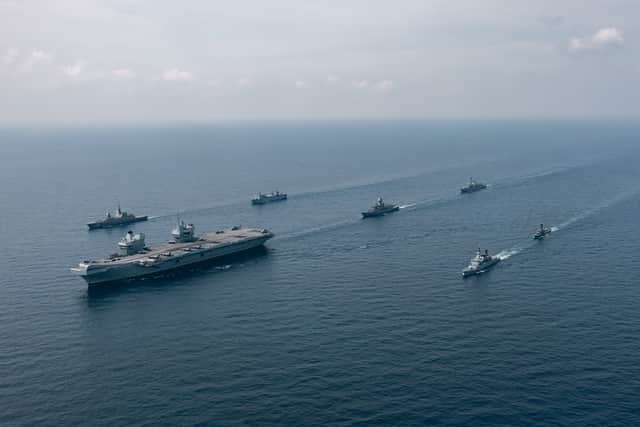
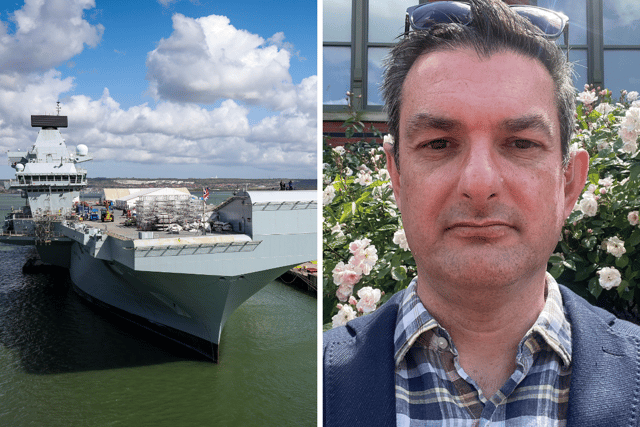
HMS Prince of Wales and her UK Carrier Strike Group were subject to dummy attacks and “constructive kill” drills while transiting through the South China Sea. Dr Dafydd Townley, Senior Teaching Fellow in International Security at the University of Portsmouth, is concerned about the freedom of navigation for merchant ships in the area - something which the Royal Navy aims to uphold.

He told The News: “China is trying to extend its dotted line and its sovereignty over the maritime domain around its various islands. It’s against international law, but we’ve dealt with this since 2016. It’s another instance of the norms of international behaviour being challenged by authoritarian states, if you want to look at it like that.
“I don’t think the UK will put their naval assets in a position where they’re deliberately at risk, but at the same time, the UK is determined to ensure it’s seen around the globe as a nation which is willing to stand up for international law. As far as the freedom of passage is concerned, that could be a concern for international trade. It’s important the UK and its allies and regional partners there ensure that access continues despite China's assertion that it’s no longer available.”
Warnings by Beijing
Chinese fighter jets performed simulated missile attacks on HMS Richmond as it passed through the Taiwan Strait. The UKCSG were tracked as they sailed through the the disputed Spratly Islands, an archipelago which nations including The Philippines holds claims to. Loud radio messages were blared at Royal Navy sailors in English, shouting at them to leave.
Beijing has issued various warnings to the UK and USA about sailing in the South China Sea, and Taiwan Strait. President Xi Jinping has ramped up the country’s navy, pressure on Taiwan’s independence - claiming the land through the One China policy - and has acted against laws made by the United Nations.
A 2016 ruling from the Permanent Court of Arbitration in The Hague, Netherlands, said the South China Sea is governed by international maritime laws under the United Nations Convention on the Law of the Sea (UNCLOS). Dr Townley said China is “blatantly ignoring the rulings of the United Nations”, which is a worry for regional and international states.
Discussing the drills against HMS Prince of Wales, he added: “It’s about China showing the UK what it's capable of doing. I wouldn’t have thought it was of any significant risk to the safety of anybody on board. If anything, it can actually help those on the carrier strike group to go through some live drills and understand what their potential adversary might be capable of doing.
“The South China Sea is one area where the UK is going to project its power to reassure its allies that it can be relied upon. It’s concerning for those on board, but it’s also an opportunity for them to become more aware of the actual manoeuvres and capabilities our adversary has.”
Should the Royal Navy deploy more ships to the Indo-Pacific?
The military education expert said Royal Navy action depends on if the UK views China as a competitor, or as an adversary. He believes they’re currently a competitor, but this could change.
“The UK will not deliberately stoke the fires with China,” he added. “There are mutual benefits to be had in finding some sort of consensus around trade access. At the same time, we do have a commitment to holding a presence around the globe.
“That’s difficult to do given the resources the Royal Navy has at its disposal, amid possible priorities elsewhere. If we want to be seen as a serious partner for nations in that region, we have to have a presence to reassure them, otherwise we tend to fail to follow through with our promises.”