
Royal Navy ship HMS Bangor finally back at sea after devastating crash with millions spent bringing her home

HMS Bangor was out of action following a crash in Bahrain, side-lining her for two and a half years
A Royal Navy minehunter is finally back at sea after a disastrous crash kept her away from operations for more than 900 days.
HMS Bangor conducted post-refit trials in Rosyth in late July after being on the side-lines for two-and-a-half-years. The last remaining Sandown-class vessel was severely damaged in a crash in Bahrain which left her close to sinking.
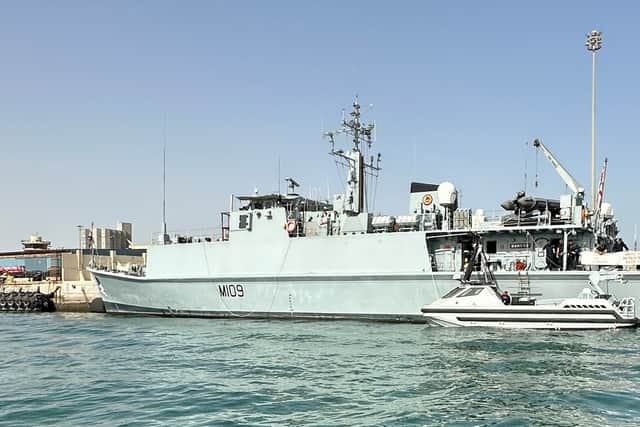

Sailors were left fighting to save the ship after HMS Chiddingfold collided into the vessel in January 2024. Reports at the time said a gaping hole was left on the side of her. HMS Bangor’s galley and bedrooms were also destroyed, though no one was injured.
A mechanical fault caused HMS Chiddingfold’s steering to malfunction, causing the collision. While the Portsmouth-based minehunter was officially decommissioned in July this year - at the cost of £10.896m - work was underway to bring HMS Bangor back to sea. Reports at the time suggested that the collision caused an estimated £25m worth of damage.
It was originally planned for all the Sandown-class ships to be decommissioned in 2026, but the decision was made to extend her life. Specialist publication Navy Lookout said HMS Bangor is being kept in service due to the need to retain an assured deep water mine-hunting capability.
Months of repairs took place before the ship was taken back to the UK in December 2025. It was revealed in the Ministry of Defence’s Annual Report and Accounts 2025-26 that it cost £5m in “fruitless payments” to bring HMS Bangor home from the Middle East, where she had been serving on Operation Kipion.
The ongoing conflict in Iran involving the US-Israeli coalition meant a commercial charter was scheduled. This was to avoid deploying military personnel.
A Royal Navy spokesperson said: “The original costs incurred for the return of HMS Bangor could not be avoided due to the deteriorating security situation in the region, when all Miliary activity was paused based on the threat assessment at the time.
“Contractual terms for hire and removal by a civilian vessel meant payment of the full freight value was required. The Ministry of Defence worked to reduce any additional costs to the public purse.”
Shortly after the crash, specialist personnel were deployed to the UK Naval Support Facility in Bahrain to conduct an “accident investigation and damage assessment”. Further updates regarding the investigation have yet to be issued.