
"Impact on family life" causing Royal Navy sailors to leave as many left dissatisfied by state of warships

Heavy burdens being placed on family members have been cited as the main reason why Royal Navy sailors are leaving the force.
The recently published Continuous Attitude Survey found that more than six in ten military personnel cited the “impact of being in service on their family and personal life” as the main reason for plans to leave. This covered 64 per cent of respondents from all three armed forces and the Royal Marines.
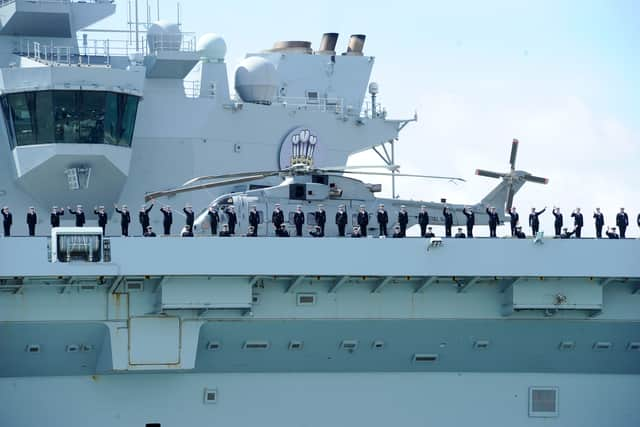

Opportunities outside of the service (58 per cent), impact on a spouse or partner’s career (48 per cent), pay (46 per cent), service morale (43 per cent), and childcare (41 per cent), were the main concerns raised by the 9,360 respondents. Military families previously spoke to The News about their experiences before HMS Prince of Wales left Portsmouth for the an eight-month deployment to the Indo-Pacific on April 22.
The main reason for personnel wishing to stay were job security (81 per cent), dental provision (73 per cent), and healthcare provision (71 per cent).
Equipment and deployment problems
Out of the thousands of people that responded to the survey, 24 per cent are Royal Navy sailors and 21 per cent are Royal Marines. Overall satisfaction with service life remains at 42 per cent - similar to last year - with 36 per cent of naval personnel being satisfied with working on the force.
Service morale was reported as low by 59 per cent of total respondents, with 29 per cent having low self confidence - only nine per cent said this was high. Personnel were asked how they would rate the level of morale of their self, their unit, and their service as a whole, with responses grouped as “high”, “neutral”, and “low”.
The survey found satisfaction with the standard of major equipment available to personnel so they could do their jobs fell to its lowest reported level in 2025. From the responses, only 30 per cent of Royal Navy sailors and 18 per cent of Royal Marines were satisfied with this.
Royal Navy personnel were the least positive about how change is managed in their service at 55 per cent disagreeing that it’s managed well. Sailors were asked about deployments. Among the naval respondents, 53 per cent were dissatisfied with their deployment notice, but 64 per cent believe the number of missions were “about right”.
Personnel in the force are the lest satisfied with post-deployment support. Only 16 per cent satisfied with Post Operational Stress Management, with only 21 per cent satisfied with decompression and post operational tour support. Out of the Royal Navy respondents, 40 per cent state they can maintain a work-life balance.

A Royal Navy spokesperson said regular briefings, family days, and support groups, are made to mitigate the impact of deployments on family life. Unit forums and other online methods are regularly used to keep loved ones informed during lengthy operations.
Trauma Risk Management/Operational Stress Management (TRiM/OSM) trained individuals are on board every ship which is deployed for an extended period of time. Surface fleet mental health nurses and other wellbeing teams are on hand to support personnel. A mental health first aid initiative is being rolled out, alongside access to the Headspace app.
The spokesperson said: “People are at the heart of everything the Royal Navy does. The Royal Navy senior leadership team are committed to understanding what is affecting our people based on all areas of the survey and are making improvements where necessary. The statistics from this survey are similar to ones published in recent years.”