
“Extraordinary" meetings filled with people "not facing accountability" blocking Royal Navy and defence reform

Packed meetings with people who were “not going to face accountability” are disrupting defence reforms, the former head of the armed forces said.
Admiral Sir Tony Radakin, who previously held the position of Chief of Defence Staff, complained about sprawling meetings which were hindering much needed change. The Strategic Defence Review’s (SDR) recommendations call for major changes within the Royal Navy, Army, and RAF - bolstered by government pledges to raise defence spending to 2.6 per cent by 2027 alongside an ambition to reach three per cent during the next parliament.
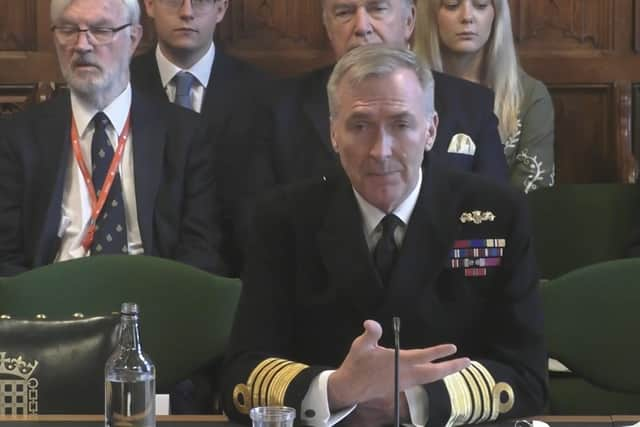

Despite this, decision-making has been slower than expected. As reported in The Guardian, Adm Radakin complained about “extraordinary Teams calls with 20 or 30 people” during a speech which had been blocked by Downing Street. The number of senior MoD civil servants has increased by 85 per cent by 2018.
Video meetings, which involved dozens of ministers and officials, were huge. Each of them had the power to veto any outcomes, Adm Radakin added, which led to delayed decision-making. He said people who were “not going to face the accountability if something goes wrong or it doesn’t happen” had the ability to say no. Online meetings are commonplace within the Ministry of Defence (MoD) and across government.
The former Chief of Defence Staff said reform was “not happening as strongly and as quickly as it needs to”, despite the efforts of current and previous governments. He added that this “speaks to a personal failure to defeat bureaucracy”.
Speaking at the Institute for Government, Adm Radakin praised defence secretary John Healey for wanting to make changes to civil service bureaucracy, but were battling a system where accountability “becomes cloudy”. he added that it was too easy for politicians and officials to delay anything non-urgent, citing repeated delays to green-lighting replacements for the Royal Navy’s Trident nuclear submarines in 1998, 2010, and 2016.
“There is something wrong,” he said, when governments say maintaining the UK’s nuclear arsenal is the highest priority “but our sailors are having to put to sea for extraordinarily long patrols in some of the most complex machines on the planet that are beyond their original design life.”
Peers responsible for the Strategic Defence Review have intermated that anyone who isn’t fully behind the reforms would be removed. Sir General Richard Barrons told the Defence Select Committee on June 11 that he would be surprised if all MoD leaders make it through the SDR intact, and it was not optional for recommendations to be left behind.
Radakin advised for the number of people involved in taking procurement decisions to be drastically reduced. He added: “If the person leading a project and one other are willing to say ‘yes’ and are comfortable they can justify their decisions to the Public Accounts Committee and the secretary of state for defence, then let the programme move forward.”