
'Substandard pay offers' force Royal Fleet Auxiliary sailors to strike in blow to Royal Navy

’Unresolved concerns’ have forced Royal Fleet Auxiliary sailors to strike after rejecting the most recent pay offer.
Members of the Rail, Maritime and Transport union (RMT) voted to walk out on April 7 and 16, although they will continue to ensure the safety of vessels is maintained. The union said seafarers can routinely work up to 12 hours a day but complained there was no clear formula setting out how pay is calculated against those hours.
Initial industrial action was paused by the RMT and Nautilus International unions when new information on salaries was provided to them, but this did not stop irritated Royal Fleet Auxiliary (RFA) seafarers from walking out. RMT general secretary Eddie Dempsey said: “Our members in the Royal Fleet Auxiliary have made their position clear time and time again.
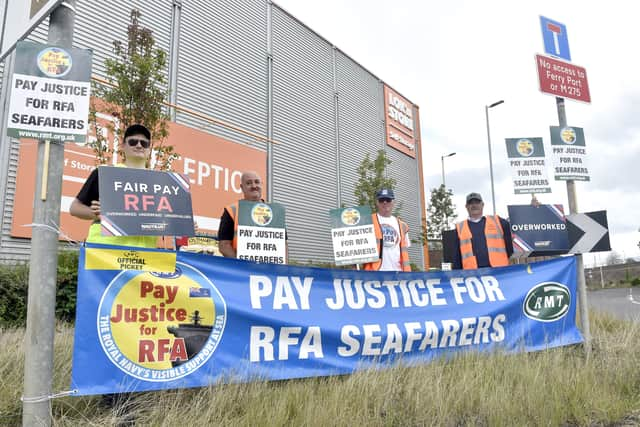

“They will not accept substandard pay offers and are prepared to take strike action to get what they deserve. Our members play a vital role in supporting the Royal Navy in some of the most dangerous working conditions. They have faced years of below-par pay and unresolved concerns about conditions.
“The Ministry of Defence and the employer need to make a long-term commitment on improving pay and conditions, including ensuring national minimum wage compliance, if they are serious about retaining staff.”
What’s the situation so far?
RFA personnel are civilian seafarers who play a vital role in support the Royal Navy on various deployments. Their job is to extend the reach of warships and keep them at sea for longer by providing them with fuel, equipment, supplies, mechanical engineering expertise and other tools.
They were the unsung heroes of HMS Prince of Wales’ deployment on Operation Highmast, where the UK Carrier Strike Group conducted various exercises and diplomatic engagements in the Indo-Pacific. RFA Tideforce recently carried out a replenishment at sea exercise with HMS Dragon when the Type 45 destroyer was en-route to the eastern Mediterranean.
Seafarers previously took to the streets in Portsmouth in 2024 on several occasions amid a bitter row over pay and conditions. At the time, seafarers said they were dealing with their pay falling by more than 30 per cent in real terms over the last decade. Other issues included poor staffing levels and people being “harassed” into returning to work early to plug gaps in deployments.
A pay offer was accepted in January 2025 amid promises to reform the force. Those changes have failed to materialise throughout that year, the unions said. A 4.5 per cent pay increase was offered in January this year, which was rejected after being described as “wholly inadequate and failing to address years of below-inflation offers, minimum wage concerns and a growing retention crisis across the service”.
Speaking in parliament on March 17, Kim Johnson, Labour MP for Liverpool Riverside said improving pay and conditions is the right thing to do and essential to resolving the “recruitment and retention crisis” plaguing the force.
Minister for veterans and people, Louise Sandher-Jones, previously said the RFA “makes a unique contribution to defence”, and the Ministry of Defence is implementing a “workforce recovery programme” in a bid to bolster the workforce.
The Nautilus International union has been approached for comment as to whether members are joining the strikes.