
"World-class" Sea Venom missiles delivering "lethal combination" to be used by HMS Prince of Wales helicopters

Advanced new missiles that deliver a “lethal combination” of uses will be attached to naval helicopters soon.
The Royal Navy will soon be arming maritime attack helicopters with Sea Venom anti-ship missiles. Initial Operating Capability (IOC) has been reached, which means the weapon can now be used on Wildcat helicopters on front-line operations.
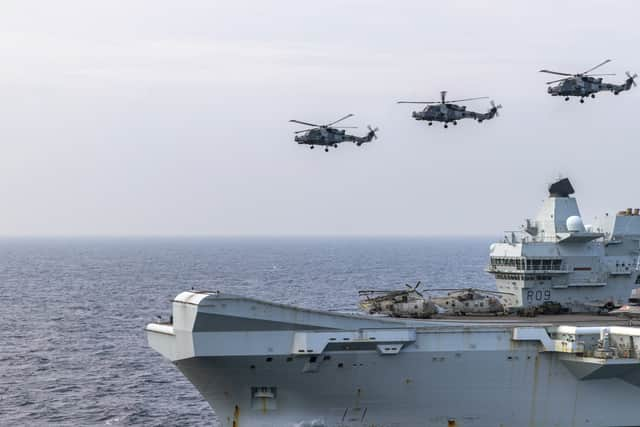

These aircraft are a regular fixture of the UK Carrier Strike Group, which is currently being lead by HMS Prince of Wales. Commanding Officer of 815 Naval Air Squadron, Commander James Woods, said: “The introduction of Sea Venom is a step-change in our combat power.
“It delivers a lethal combination of precision, reach, and flexibility that allows us to strike decisively against a wide spectrum of threats in the maritime, coastal, and land domains. Most importantly, it gives us the ability to neutralise those threats at range. This is a transformational capability for the Fleet Air Arm, and ensures that we are ready to defend and protect NATO and Allied interests at home and abroad.”
What are the new Sea Venom missiles?
A Wildcat helicopter can carry up to four Sea Venom missiles. It can be used to attack multiple targets in one sortie, or a salvo against one enemy. The explosive projectile carries enough destructive power to target larger warships like corvettes and patrol ships.
Smaller Martlet missiles will be used to deal with swarming boats and lightweight vessels. IOC was achieved during Operation Highmast in the Indo-Pacific. Four Wildcats from 815 Naval Air Squadron are armed with Sea Venom on the deployment, spread across HMS Prince of Wales, HMS Dauntless, and Norwegian frigate HNoMS Roald Amundsen.
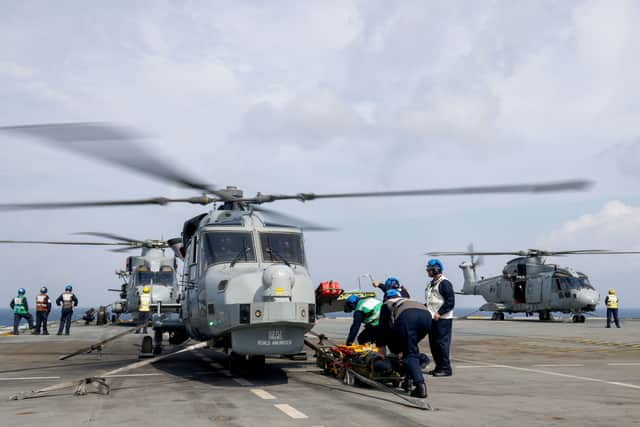
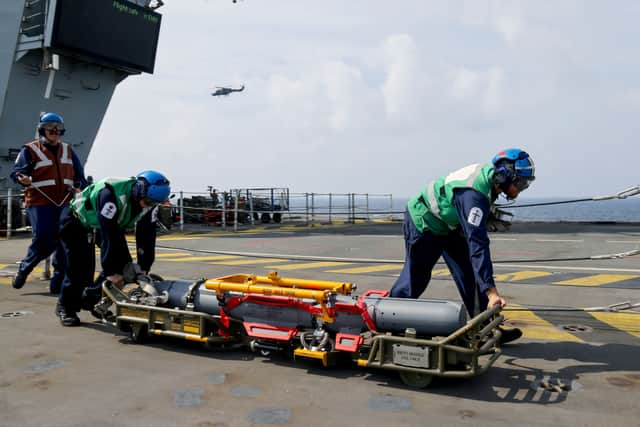
Sea Venom is described as an advanced weapon which can utilise an ‘operator-in-the-loop’ system, where the rocket’s trajectory can be adjusted mid-flight. An infra-red image is transmitted from up to four weapons simultaneously back to the operator, allowing them to control targeting.
Commander UK Carrier Strike Group, Commodore James Blackmore, said: “Achieving Initial Operating Capability with Sea Venom is another milestone in ensuring the Carrier Strike Group remains a world-class, combat ready force. It strengthens our ability to safeguard the maritime environment, reassure allies, and deters adversaries. This capability ensures our aircrew can operate with confidence against a wide spectrum of threats, reinforcing the UKs commitment to delivering decisive air power at and from the sea.”
Commander of the Wildcat Maritime Force, Commander Andrew Henderson, added: “The integration of Sea Venom into a Ship’s Wildcat Flight at sea represents a significant enhancement to the Royal Navy’s lethality via its ability to strike targets at range. It’s precision, range, and versatility ensures that our frontline crews are equipped to meet the challenges of a multi domain and complex environment.”