
New revolutionary underwater mine-hunting vehicle handed to Royal Navy in £142m deal boosting Portchester jobs

The aim is for the new system to keep trade routes open and keep sailors out of harm’s way
An advanced underwater vehicle designed for mine-hunting operations has been handed to the Royal Navy.
New REMUS 620 Unmanned Underwater Vehicles (UUVs) have been procured as part of a £142m deal. Built by HII - an American firm that operates in Portchester - the technology is designed to scour the seabed for explosives.
Defence secretary Wes Streeting MP said: “This investment strengthens our ability to protect freedom of navigation, which is critical to our security and our economy. By using the biggest sustained increase in defence spending since the Cold War to put the latest technology in the hands of our sailors, we are taking them out of harm’s way and giving them the tools to keep vital shipping routes open, keeping us all safe in a more dangerous world.”
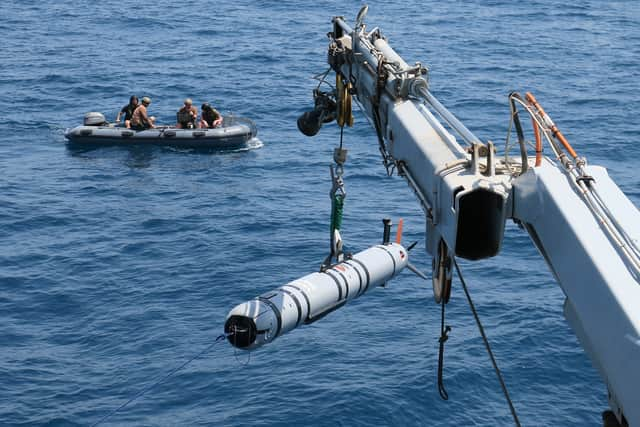

The aim is for these vehicles to keep vital sea routes open and protect the freedom of navigation for merchant ships. Vital passages such as the Strait of Hormuz in the Middle East have been littered with mines, all of which limits the movement of cargo vessels.
Such technology also helps protect sailors by keeping them out of harms way, free some of them up for other operations. The REMUS 620 can scout ahead to identify the mines before determining if a crewed vessel is needed. Small and portable, they can be launched from boats or warships in coastal waters and the deep sea.
They can travel at up to eight knots, dive to depths of 600 metres and operate for up to 110 hours on a single mission. Using sonar, they can map large areas of water and information can be analysed by sailors at a safe distance. REMUS can find sea mins, survey the seabed and locate shipwrecks.
The Ministry of Defence (MoD) said the contract supports jobs in Portchester, and is a further step towards the hybrid navy: conventional warships working alongside un-crewed vessels and autonomous systems.
President of HII’s Unmanned Systems group, Duane Fotheringham, said: “HII is proud that the Royal Navy has selected the REMUS UUV and Sea Launcher to support its critical mine countermeasures missions. This selection reflects the Royal Navy’s confidence in our proven technology and our shared commitment to maritime security. We are honoured to support the Royal Navy and to help keep sailors out of harm’s way.”
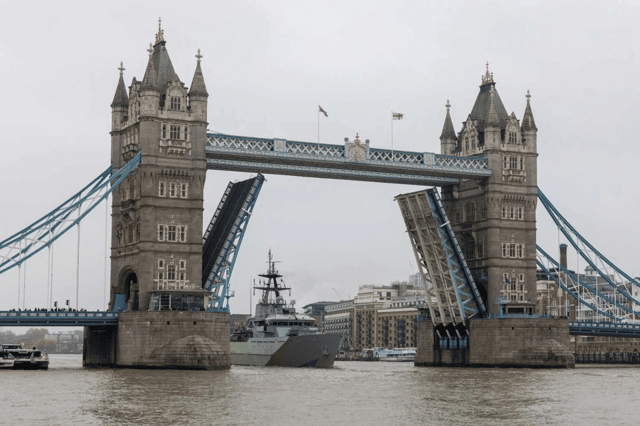
To advertise the announcement, Portsmouth-based patrol vessel HMS Tyne was sent to London to showcase the autonomous capabilities used by the Royal Navy. These include the Kraken K3 Scout ship and smaller Rattler-class boats. Personnel from the force’s 1st Autonomous Squadron were on board, ready to showcase the latest technology.
Lieutenant Commander Sam Fields, Commanding Officer of HMS Tyne, said: “HMS Tyne is proud to demonstrate how the Royal Navy is evolving to meet future threats and showcase how emerging technologies and autonomous systems can work alongside our people to create a more capable, resilient and adaptable navy.”