
'A messy situation': Royal Navy faces pressure to replace HMS Dragon as Houthis advance in 'crucial' Red Sea

Portsmouth-based warship HMS Dragon has departed the region, but an increasingly unstable situation could force Britain to act further
The Royal Navy could be forced to bolster a “crucial” Middle East waterway due to expanding militias, experts have said.
University of Portsmouth academics believe the situation in the Red Sea is becoming more unstable. Iranian-backed Houthi rebels in Yemen have been attacking pro-government forces run by Saudi Arabia, which is having wider implications for Britain.
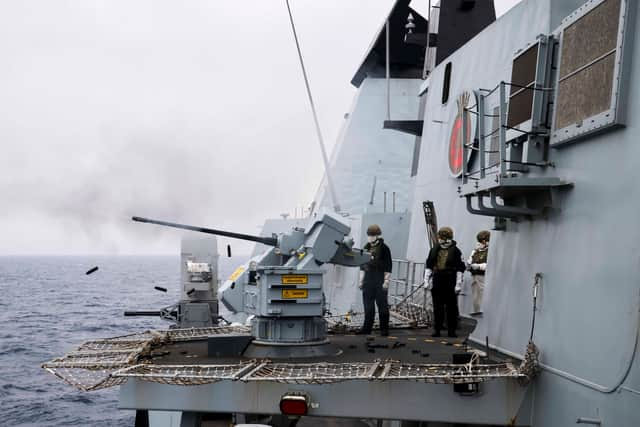

The militias previously said they’ll be targeting Riyadh-flagged vessels, but have struck other commercial ships in the past. With US peace talks with Iran to reopen the Strait of Hormuz stalling, the economic impacts of commercial shipping being cut off from the Red Sea would be stark.
Portsmouth-based warship HMS Dragon recently departed from the Middle East following a lengthy deployment. Dr Matthew Heaslip, Senior Lecturer of Naval History at the University of Portsmouth, said he’s not surprised by the decision.
It was originally planned for the Type 45 destroyer to be part of a multinational effort to keep the Strait of Hormuz open after the Iran conflict ends. “It’s clear that the mission isn’t going to happen soon,” Dr Heaslip told The News.
“Having HMS Dragon there while waiting for Donald Trump to solve his war is a waste of resources. Given the advances the Houthis have had on land, one British warship is going to be of limited value.
“There needs to be a bigger multinational effort there. There is the question of whether that is the right thing to do, as it may just escalate the situation. It’s a healthy management decision to move HMS Dragon on to more valuable tasks.”
The route is not only key for transportation oil, but critical subsea cables which sustain the world’s internet also flow through the waterway. Houthi rebels have attacked Royal Navy warships in the past. HMS Diamond had to fend off barrages of missiles and drones during operations between late 2023 and early 2024.
Britain is currently supporting Saudi Arabia in a defensive capacity, using an RAF Voyager for air-to-air refuelling. Dr Heaslip said regional allies may soon be asking the UK to do more.
This contradicts previous comments before the Iran war began by Fleet Commander Steve Moorhouse, who said ships were removed from the region because it’s what British partners wanted.
“We’ve gone through three different phases in a year,” Dr Heaslip said. “The scale of Houthi advances will be very concerning to British allies. It wouldn’t be surprising for the Saudis to make further requests, but then it’s a question of what resources are best suited to the situation.
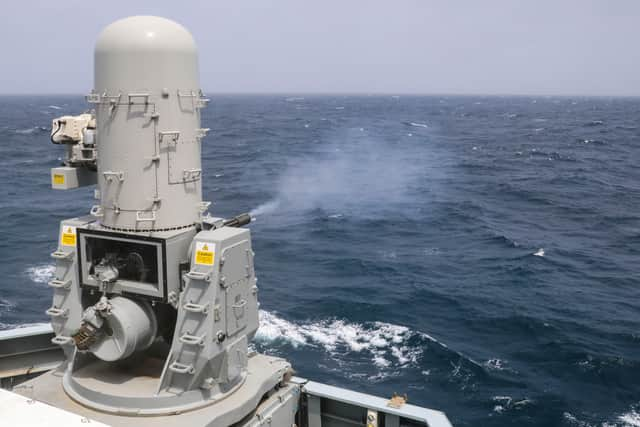
“The most logical is an air defence destroyer because of the drone and missile threat, which is unlikely to go away. If that is being cycled out for sensible reasons, we’ll have to see what the next evolution is. If there is a naval presence, it will need Type 45.”
He added: “It’s a crucial waterway that really affects our economy and our lives. A diplomatic solution is needed to unlock the Red Sea, at which point that is where the navy becomes really available at making sure it stays open and is safe.”
Houthi rebels seized the vital port city of Mokha earlier this month. The group also attacked and took control of various strategic Red Sea islands, including the Hanish Islands north of the Bab el-Mandeb Strait and Perim Island.
Dr Heaslip said Iran’s resurgent support of the Houthi rebels is an “unsurprisingly clever play”, as sending even more ships there would “end up with a British version of what has happened in the Strait of Hormuz”. “it's the ground forces that have to resolve the situation in Yemen,” he added. “I don’t think there’s any appetite from the UK to do that, nor do we have the resources to do that either.”
The defence expert said the current level of support for Saudi Arabia is sufficient, and the situation needs to calm down to establish an extensive Red Sea naval presence.
“It’s not beyond the realms of possibility that the Houthis could sever those subsea cables,” Dr Heaslip added. “You might need a naval presence there in the long term. It’s a rather messy situation. Now the Houthis have expanded so much, you either have to solve it diplomatically or go bigger than what the Americans have done in Iran. Obviously, Britain is not going to do that.”
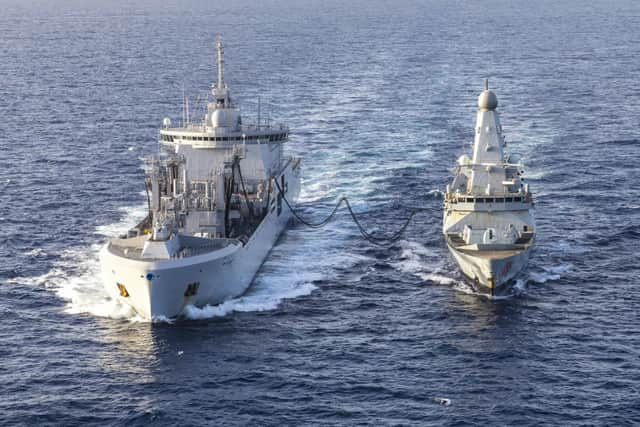
Dr Dafyyd Townley, Senior Teaching Fellow at the University of Portsmouth and leading expert on US-UK politics, said Britain has stepped into the void left by the US. “The Saudis were expecting the US to do something similar,” he added.
“The UK does lots of operations like this. It’s what they’re trained for and something Britain would be eager to do to reinforce those relationships in the Middle East. The UK, like most other nations reliant on energy supplies flowing through there, are eager to secure the supply.
“It has already had a dramatic impact on the price of petrol in this country. I cry everyday when I fill up my diesel tank. It’s getting increasingly more expensive. It’s something which will have a massive economic impact long term. It’s unlikely to be finished anytime soon.
Dr Townley said he’s not convinced by Trump’s comments that the situation will be resolved after the November elections. “We’re under considerable pressure to get involved,” he added. “We’re reluctant to get whole-heartedly involved as we’re likely to get dragged into the wider implications of the conflict with Iran.
“If you can focus on supporting the Saudis in Yemen and around the Red Sea, it sends a clear message to Iran that we won’t get involved in the wider conflict.”